

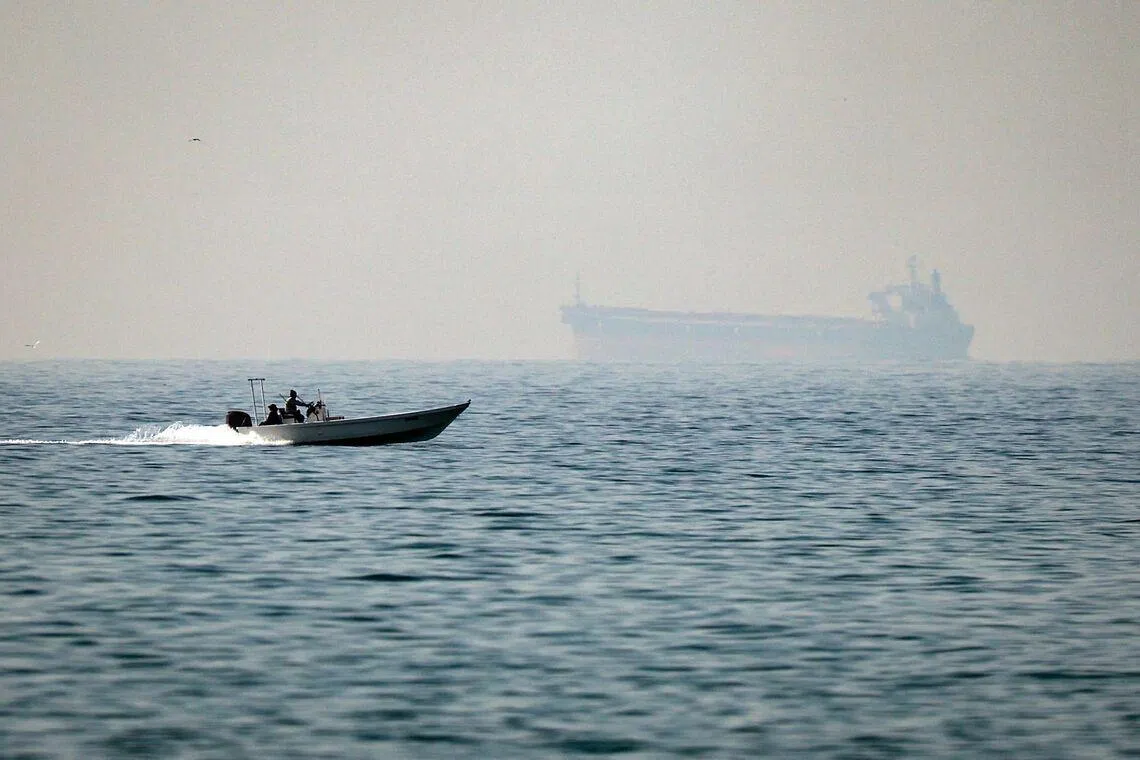
Some oil majors and top trading houses have suspended crude oil and fuel shipments via the Strait of Hormuz amid ongoing U.S. and “Israeli” attacks on Iran and Tehran’s retaliation, Reuters reported on Saturday, citing four trading sources.
“Our ships will stay put for several days,” one top executive at a major trading desk said.
The United States and “Israel” launched strikes on Iran, targeting its leadership and plunging the Middle East into a new conflict. The attack could also lead to a closure of the Strait of Hormuz, a major oil export route, for days.
Tehran responded by launching missiles at “Israel.” Explosions also rang out in nearby oil-producing Gulf Arab countries, which said they had intercepted missiles from Iran after Tehran warned it would strike the region if it was attacked.
Bahrain said the service center of the U.S. Fifth Fleet had been subjected to a missile attack. Video footage from witnesses in Bahrain showed a thick grey plume of smoke rising from near the small island state’s coastline as sirens wailed.
It is noteworthy that the U.S. Navy’s 5th Fleet command is responsible for securing the shipping lanes around the oil-rich Middle East.
Those waters include the Persian Gulf, the Red Sea and parts of the Indian Ocean. The region contains three key chokepoints: the Suez Canal and the Bab al-Mandeb on either end of the Red Sea, and the Strait of Hormuz between Iran and Oman.
“If we don’t see signs of de-escalation over the weekend, risk premiums could still drive Brent (crude) up by $10–$20/bbl (a barrel) on Monday,” said Jorge Leon, head of geopolitical analysis at Rystad Energy.
The strait of Hormuz lies between Oman and Iran and links the Gulf north of it with the Gulf of Oman to the south and the Arabian Sea beyond, with about a fifth of the world’s total oil consumption passing through it.
Data from analytics firm Vortexa showed that more than 20 million barrels of crude, condensate and fuels passed through the strait daily last year on average.
OPEC members Saudi Arabia, Iran, the UAE, Kuwait and Iraq export most of their crude via the strait, mainly to Asia. Qatar, among the world’s biggest liquefied natural gas exporters, sends almost all of its LNG through the strait.