
Algeria and Egypt Sign Agreements to Develop Hassi Bir Rekaiz Field

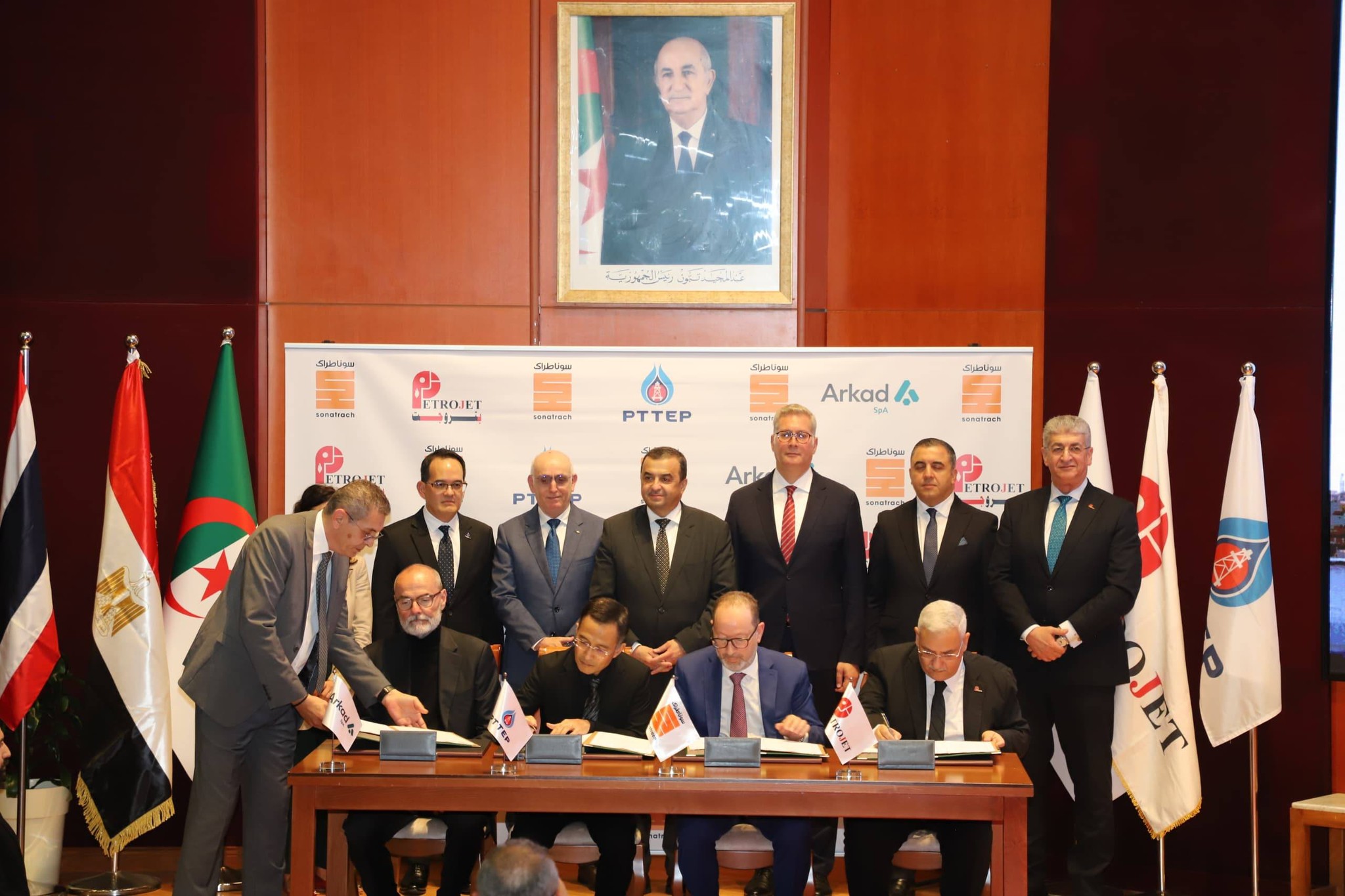
Algeria and Egypt signed on Tuesday a contract launching the second phase of the Hassi Bir Rekaiz field development project, along with the signing of a memorandum of understanding to frame discussions on contracts for marketing crude oil and petroleum products.
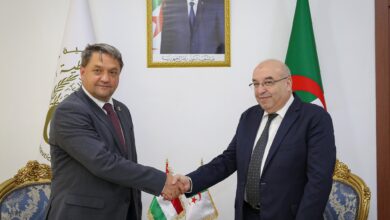
The signing ceremony was held under the supervision of the Algerian Minister of State, Minister of Hydrocarbons, Mohamed Arkab, and the Egyptian Minister of Petroleum and Mineral Resources, Karim Ibrahim Ali Badawi, at the headquarters of the Sonatrach Group’s General Directorate.
Mohamed Arkab stated that the signing of these agreements falls within the framework of the distinguished fraternal cooperation relations between Algeria and Egypt, in line with the directives of the leaders of both countries. He added that it reflects the shared determination to strengthen Arab and African cooperation and to enhance strategic partnerships among the countries of the continent.
Arkab noted that the signing of this contract comes within the framework of the partnership between Sonatrach and Thailand’s PTT Exploration and Production Company, the Algerian Ministry of Hydrocarbons said in a statement, adding that an engineering, procurement, and construction contract was concluded with a consortium comprising the Egyptian company PETROJET and the Italian company ARKAD, to launch the second phase of the Hassi Bir Rekaiz field development project, located north of the Berkine Basin, in the wilayas of El Oued and Ouargla.
A memorandum of understanding was also signed between Sonatrach and the Egyptian General Petroleum Corporation, aimed at structuring discussions related to contracts for the marketing of crude oil and petroleum products. This is intended to strengthen commercial cooperation between the two sides and open new prospects for partnership in the energy marketing sector.
The second phase of the Hassi Bir Rekaiz field development project aims to build a new crude oil processing unit with a production capacity of 31,500 barrels per day, in addition to facilities for treating associated gas and produced water, along with various related installations. The project is scheduled for completion within 39 months. This project is expected to help increase production capacity and improve processing efficiency, thereby strengthening Algeria’s export capabilities and consolidating its position as a reliable energy supplier.
For context, the first phase of the development of this field, whose works began in March 2019 under the partnership between Sonatrach and PTT, aims to reach an initial production capacity of about 13,000 barrels per day of crude oil.
The statement emphasized that the project is part of Sonatrach’s strategy aimed at expanding its production capacities and enhancing the value of its energy resources, through balanced partnerships that combine Algerian expertise with international know-how, thereby supporting added value for the national economy and contributing to sustainable development.
This momentum comes within a promising economic and legislative context, supported by reforms undertaken by the state, particularly through Hydrocarbons Law 19-13 and Investment Law 22-18. These laws have provided a modern and incentive-driven legal framework based on transparency and aimed at enhancing investment attractiveness.
In this context, the Algerian Minister called on companies—particularly Egyptian ones—to seize the available investment opportunities in Algeria and take part in the “Algeria Bid Round 2026” licensing round, organized by the National Agency for the Valorization of Hydrocarbon Resources, with active participation from Sonatrach Group.
He stressed that this project represents an additional step toward strengthening Algeria’s hydrocarbons capacities, ensuring its energy security, increasing its reserves, boosting exports, and enhancing its position in the global energy market. He also reaffirmed Algeria’s commitment to further developing its strategic partnerships within a framework of transparency and mutual benefit.