

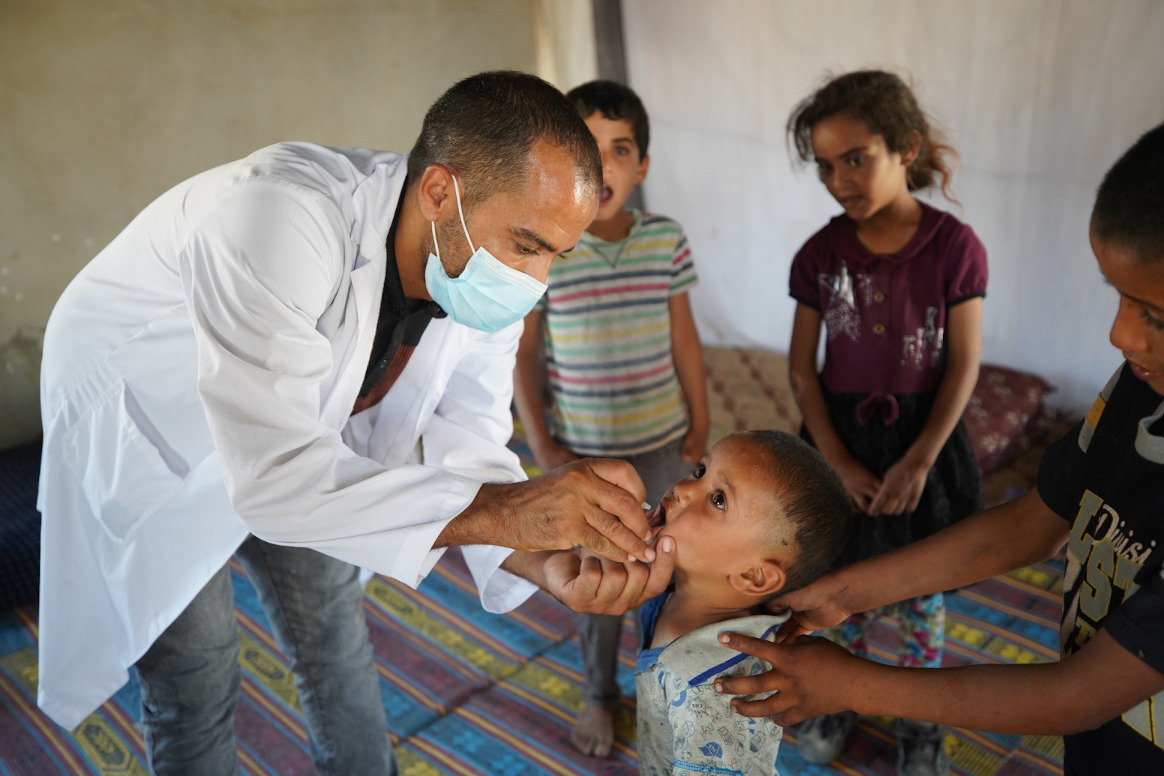
Dr. Tedros Adhanom Ghebreyesus, Director-General of the World Health Organization (WHO), announced today that the organization will send over one million doses of polio vaccine to Gaza. This decision follows the recent detection of the disease in the area.
In a press statement, Dr. Ghebreyesus explained that these vaccine doses would be distributed over the coming weeks to prevent children from contracting the infection. The virus was found in sewage samples in the Palestinian territory, which has been under Zionist aggression since October 7, 2023.
“While no cases of polio have been recorded yet, without immediate action, it is just a matter of time before it reaches the thousands of children who have been left unprotected,” he warned.
The WHO Director-General pointed out that children under five years old are at the highest risk, especially infants under two, due to the disruption of routine vaccination campaigns caused by the ongoing war over the past nine months.
He further noted that the presence of the poliovirus in sewage samples in Gaza last week is alarming but not surprising, given the fragmented state of health systems in the region after nine relentless months of war.
Ghebreyesus emphasized that without an immediate ceasefire and a significant increase in humanitarian aid—including a targeted vaccination campaign focusing on young children—preventable deaths and treatable injuries will continue to rise.
He also mentioned that most hospitals in Gaza are no longer operational, with diseases such as diarrhea, respiratory infections, and hepatitis A spreading throughout the region. Nearly everyone in Gaza faces severe food insecurity and catastrophic hunger, with thousands of malnourished children more susceptible to diseases.
Approximately 2.3 million people live in the densely populated Gaza Strip, which spans 365 square kilometers (141 square miles). They suffer from limited access to clean and safe water and worsening sanitary conditions.