
Nearly 900 Million Poor People Directly Exposed to Climate Shocks, UN Warns

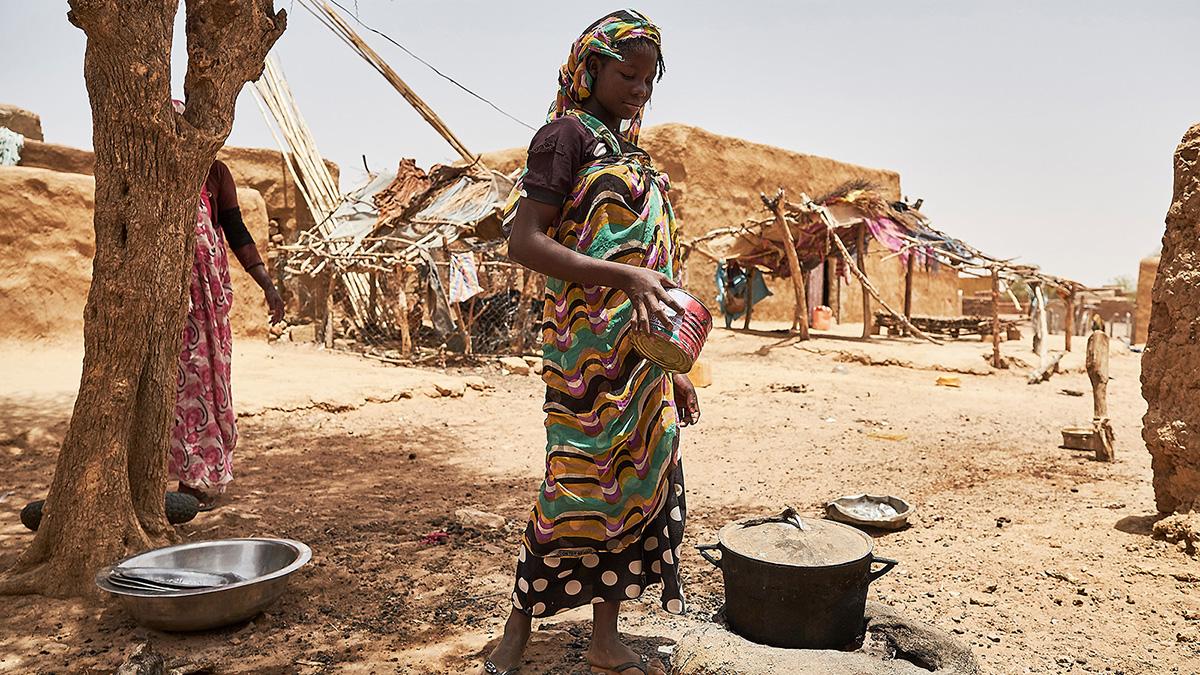
Almost 80 percent of the world’s poor — nearly 900 million people — are directly exposed to intensifying climate hazards, according to a new UN report that describes a “double burden” of poverty and environmental vulnerability.
The United Nations Development Programme (UNDP) and the Oxford Poverty and Human Development Initiative (OPHI) released the latest Global Multidimensional Poverty Index (MPI) on Friday, highlighting the intertwined crises of inequality and climate change.
“Nearly eight in ten people living in multidimensional poverty — 887 million out of 1.1 billion globally — are directly exposed to climate hazards such as extreme heat, flooding, drought, or air pollution,” the UNDP said.
A double exposure
UNDP Acting Administrator Haoliang Xu warned that poverty and climate risk now reinforce each other:
“Our new research shows that to address global poverty and create a more stable world for everyone, we must confront the climate risks endangering nearly 900 million poor people,” he said.
“No one is spared from the increasingly intense and frequent impacts of climate change, but the poorest among us are the hardest hit.”
The report draws on data from 109 countries, covering 6.3 billion people, and measures poverty through multiple dimensions such as health, education, and living standards.
Regional inequalities
In 2024, about 1.1 billion people lived in “acute multidimensional poverty,” half of them children. The situation remains largely unchanged from the previous year.
Two regions bear the heaviest burden: sub-Saharan Africa, home to 565 million poor people, and South Asia, with 390 million. Both are especially vulnerable to heatwaves, floods, and droughts.
According to the report, 78.8 percent of poor populations — 887 million people — face at least one climate threat.
- Extreme heat: 608 million exposed
- Air pollution: 577 million
- Flooding: 465 million
- Drought: 207 million
“Of the 887 million poor people exposed to at least one climate hazard, 651 million face two or more concurrent hazards,” the UNDP noted.
“This report shows where the climate crisis and poverty are intersecting. Understanding where the planet is under greatest strain and where people face additional burdens created by climate challenges is essential to creating mutually reinforcing development strategies.”
A global challenge
The overlap of poverty and climate vulnerability, the study stresses, is now a defining global issue. In some countries of South Asia, for instance, more than 99 percent of people living in poverty are exposed to at least one major climate risk.
The authors argue that poverty reduction efforts must now integrate climate resilience.
“The concurrence of poverty and climatic hazards is clearly a global problem,” the report concludes.
As governments prepare for the upcoming COP30 climate summit, the UNDP and OPHI call for “urgent, integrated action” to protect vulnerable populations and prevent climate change from reversing decades of progress in human development.