
Mongolia’s Steppe Road Initiative Gains Momentum with Support from Russia and China

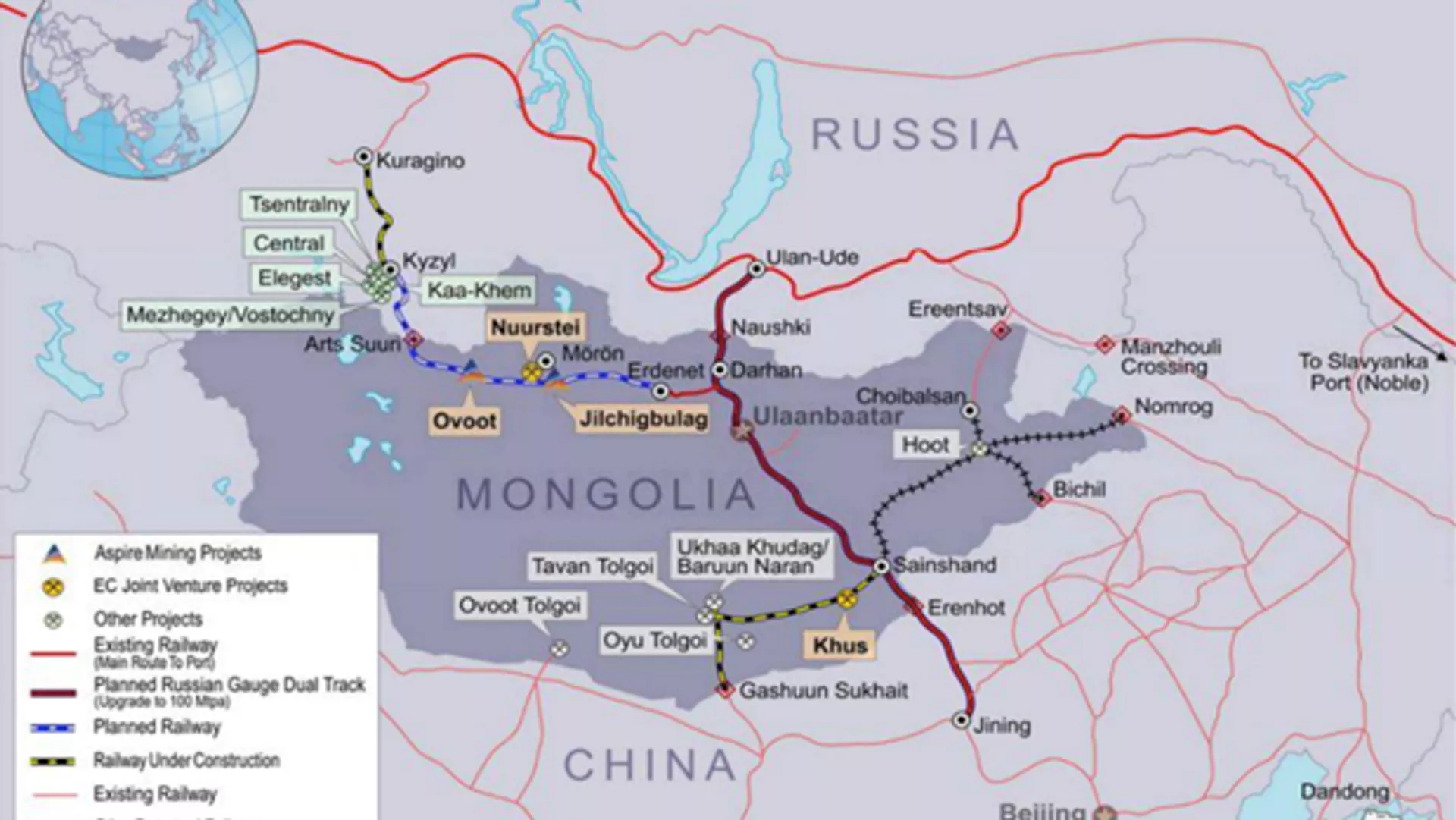
During his visit to Islamabad for the Shanghai Cooperation Organization (SCO) Summit, Russian Prime Minister Mikhail Mishustin emphasized the significance of Mongolia’s “Steppe Road” initiative. He highlighted the importance of regional cooperation between Russia, China, and Mongolia in building a new multipolar architecture in Eurasia. Mongolian Prime Minister Luvsannamsrai Oyun-Erdene announced that Ulaanbaatar has agreed on 33 key projects as part of an economic corridor linking Russia and China, designed to coordinate with the Eurasian Economic Union and China’s Belt and Road Initiative.
The Steppe Road initiative, originally conceived in 2014, includes ambitious infrastructure projects such as a 997 km-long transnational expressway and over 1,100 km of electrified rail lines between Russia and China. The first priority is constructing a new railway between Altanbulag, on the Russian border, and Zamyn-Uud, near the Chinese border, which is seen as critical to establishing a successful economic corridor. Additionally, the initiative will expand the Trans-Mongolian Railway and build oil and gas pipelines, aiming to boost Mongolia’s telecom, tourism, mining, and energy sectors.
The project aligns closely with Russia’s Trans-Eurasian Corridor and China’s Belt and Road Initiative, both of which aim to improve infrastructure and promote regional trade. Experts believe the collaboration could yield significant benefits for all parties involved, with China expected to contribute technology, labor, and capital to the ambitious initiative.