
Australia : Sydney University Hosts Landmark Forum on Western Sahara and Self-Determination


The University of Sydney hosted a high-level public forum titled “Western Sahara: Self-Determination, Conflict, and the Path Forward”, bringing together international law experts, academics, and Sahrawi representatives to examine the ongoing dispute over Western Sahara, described by participants as Africa’s last unresolved decolonisation case.
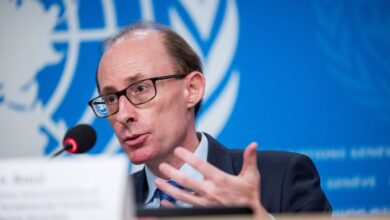
Held at the university’s New Law School Building and co-sponsored by the Indigenous Studies programme (SSESW, FASS) and the Australia Western Sahara Association, the event attracted a wide audience of researchers, students, and supporters of the Sahrawi cause. The panel featured Ben Saul, Challis Chair of International Law and UN Special Rapporteur, Kamal Fadel, and was chaired by Randi Irwin.
In his intervention, Saul delivered a legal analysis of the conflict, stating that Morocco’s claim to sovereignty over Western Sahara is “manifestly illegal” under international law. He referenced UN Security Council Resolution 2797 and argued that the broader framework of international law, including the prohibition on the use of force and the right to self-determination, supports the Sahrawi position as affirmed by the International Court of Justice. He also criticised settlement policies in the territory, describing them as violations of the Fourth Geneva Convention.
Saul further rejected recent attempts to classify the Polisario Front as a terrorist organisation, noting that it has never been listed as such by the UN Security Council, the United States, or the European Union.
Kamal Fadel highlighted the humanitarian dimension of the conflict, stressing that Sahrawi refugees have lived in exile for nearly five decades. He described worsening conditions in the camps in southwestern Algeria, including food insecurity and climate-related pressures, while emphasising what he called the resilience of the Sahrawi population.
Fadel also referred to recent preliminary discussions held in Madrid and Washington involving Morocco, the Polisario Front, Mauritania, and Algeria as observers. He noted that despite renewed contacts, Morocco continues to uphold its 2007 autonomy proposal as the basis for settlement. The Polisario Front, he said, maintains its proposal submitted to the UN Secretary-General in October 2025, which includes independence, integration, or autonomy options in line with UN principles on decolonisation.
He reiterated that “autonomy under occupation is not self-determination,” describing it instead as legitimising annexation. Both speakers raised concerns about human rights conditions in the occupied territories, citing reports of restrictions on media access, arbitrary detention, and harassment of activists.
The forum concluded with calls for a UN-supervised referendum including independence as an option, and for stronger international engagement to resolve the conflict in accordance with international law.