
World leaders gather for historic NATO summit with unity and defence spending in spotlight

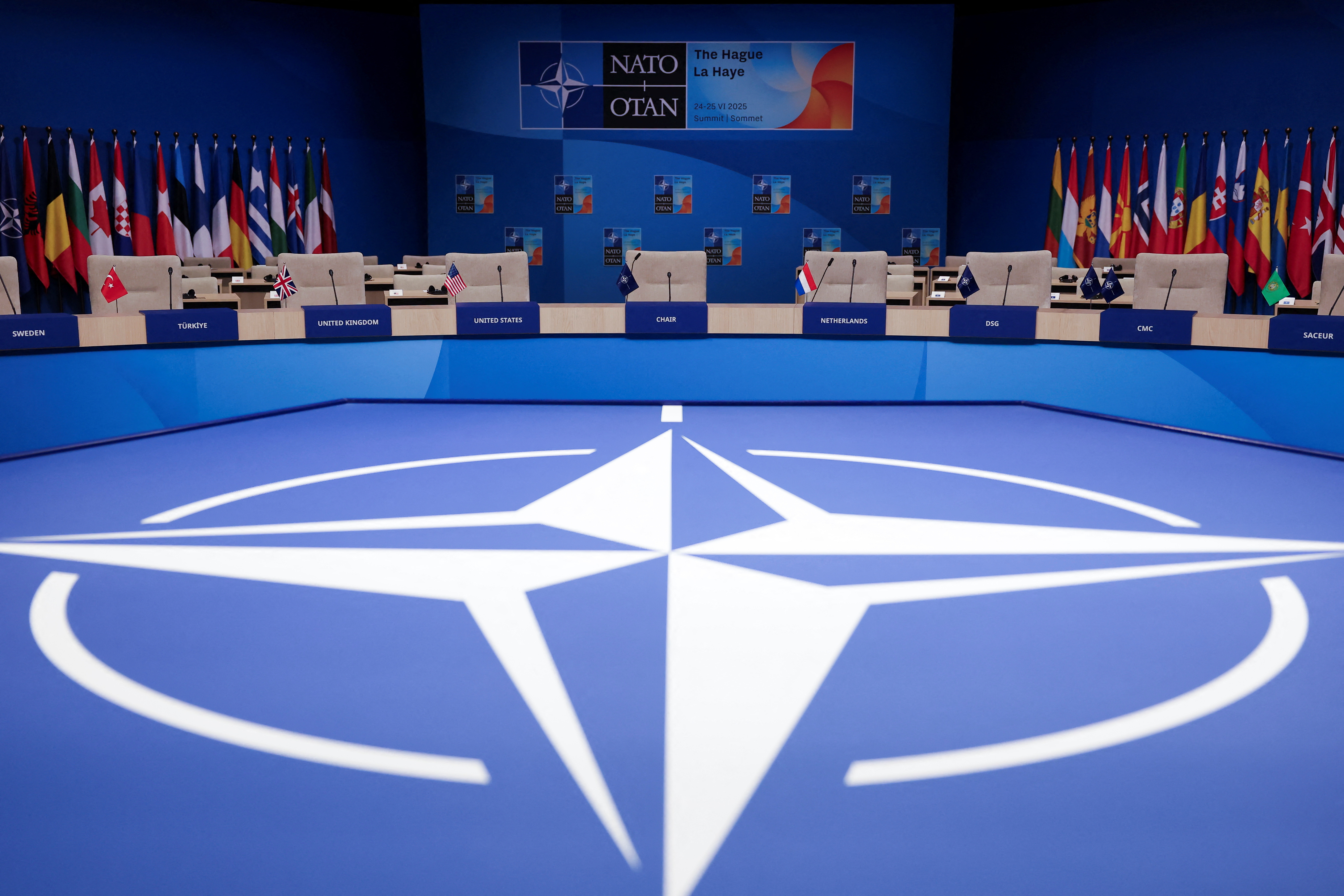
World leaders were gathering in the Netherlands on Tuesday for the start of a historic two-day NATO summit that could unite the world’s biggest security organization around a new defence spending pledge or widen divisions among the 32 allies.
The allies are expected to endorse a goal of spending 5% of their gross domestic product on their security, to be able to fulfil the alliance’s plans for defending against outside attack.
U.S. President Donald Trump’s first appearance at NATO since returning to the White House was supposed to centre on how the U.S. secured the historic military spending pledge from others in the security alliance — effectively bending it to its will.
But in the spotlight instead now is Trump’s decision to strike three nuclear enrichment facilities in Iran that the administration says eroded Tehran’s nuclear ambitions, as well as the president’s sudden announcement that “Israel” and Iran had reached a “complete and total ceasefire.”
Speaking before the summit, the chief of the military alliance, Mark Rutte, said the European allies should not worry about the United States’ commitment to NATO, but such backing came with an expectation that European countries and Canada spend more on defence.
Rutte described the spending issue as “this huge pebble in the shoe, this huge irritant, which is that we are not spending enough as Europeans and Canadians, and they want us to equalise with what the U.S. is spending”.
Separately, Ukrainian President Volodymyr Zelenskiy said he planned to meet Trump in The Hague, although Zelenskiy will not take part in the summit itself, as NATO officials have sought to avoid any clash between Trump and other leaders over the war in Ukraine.
Zelenskiy told a Sky News interview broadcast on Tuesday that the two leaders’ teams were working on organisational details and the timing of the meeting.
Asked about the possibility of an end to the three-year war in Ukraine, Rutte said, “I cannot predict when it will happen.” He also praised Trump for engaging with Putin.
The Kremlin, on the other hand, said on Tuesday that NATO was on a path of rampant militarisation and bent on portraying Russia as a “fiend of hell” in order to justify committing to a big increase in member states’ defence spending.
Russia denies any plan to attack NATO, but Kremlin spokesman Dmitry Peskov said it was “largely a wasted effort” to assure the alliance of this because it was determined to demonise Russia.
“It is an alliance created for confrontation… It is not an instrument of peace and stability,” Peskov said.
In a separate speech on Tuesday, Russian Foreign Minister Sergei Lavrov accused NATO of moving beyond its traditional area of responsibility in an attempt to gain a foothold in the Middle East, the South Caucasus, Central Asia, the Arctic and the Asia-Pacific region.
He said Russia-China relations were an “important stabiliser” in Euro-Asian security.