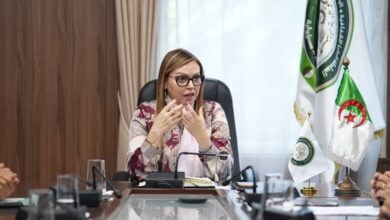


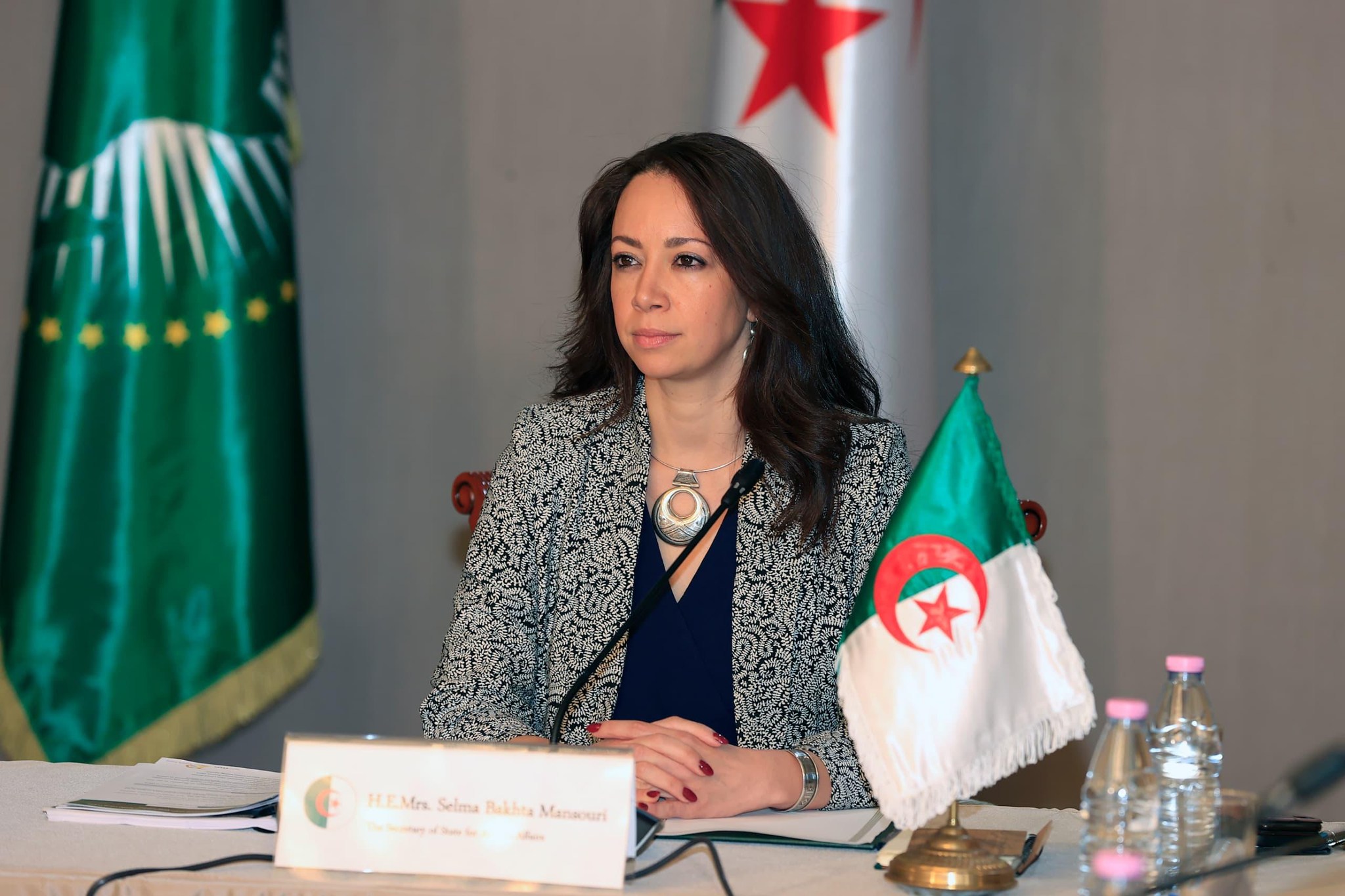
ALGIERS – The Algerian Secretary of State to the Minister of Foreign Affairs, in charge of African Affairs, Selma Bakhta Mansouri, expressed on Sunday her regret over Africa becoming an active arena for silent wars, where information has shifted from being a tool of enlightenment and knowledge to an unconventional weapon used to dismantle societies, influence state decisions, and steer public opinion toward suspicious agendas under the guise of freedom of expression and digital openness.
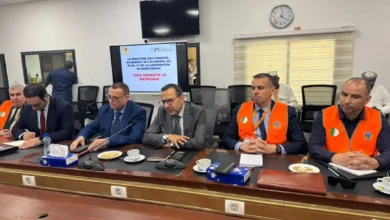
During the regional workshop of the Liaison Office for North Africa of the Committee of Intelligence and Security Services of Africa (CISSA), Mansouri pointed out that elections have become a favored target for disinformation campaigns in more than 20 African countries in recent years.
“These campaigns are used to undermine public trust in electoral processes, cast doubt on the legitimacy of institutions, and fuel chaos and division,” she said, adding that “We all know from on-the-ground experience how digital platforms are used to spread false news and distort national symbols (…) as has happened in several Sahel countries during transitional periods marked by systematic digital breaches.”
The Algerian diplomat noted that “the battle over information is a battle over sovereignty, state legitimacy, and the unity of societies,” emphasizing that Africa, which once resisted classical colonialism and continues to confront terrorism, is now called upon to protect itself against a new form of colonialism—namely, cognitive colonialism and media disruption.
Mansouri emphasized that the workshop’s theme — “Disinformation, Fake News, and Their Impact on the Security and Stability of States” — is of critical importance and comes at a pivotal moment for the region. She highlighted the value of the specialized framework, which facilitates the exchange of insights and expertise among African intelligence and security services at a time when non-traditional threats — particularly disinformation — have become among the most significant cross-border challenges facing African nations.
“We are facing what can be described as a war on perception, carried out at times by non-governmental fronts on behalf of certain states, using media networks, smart bots, and fake influencers,” she added.
According to her, this requires a coordinated security and strategic response — but above all, awareness. Mansouri stressed that combating disinformation is not merely the responsibility of journalists or technical experts, but a sovereign duty and a core pillar of national security.
Mansouri proposed three levels of joint action for discussion:
– Vigilance and Information Coordination: She proposed the creation of a pan-African mechanism to monitor disinformation, powered by an African-developed artificial intelligence system. This platform would be built by local talent, aligned with the continent’s sovereign priorities, capable of analyzing big data, and designed to coordinate in real time with the security operation centers of African nations.
– Legal and Institutional Frameworks: Mansouri called for the adoption of an African Charter against Disinformation, to be integrated into the continent’s broader cybersecurity framework. This charter would require major digital platforms to cooperate with African governments in regulating and monitoring targeted and harmful content.
– Prevention and Societal Resilience: She emphasized the urgent need for a new form of media education—one that begins in schools and extends to universities and public media. This effort must also include civil society, youth, and cultural elites in order to foster an informed public that can discern truth from falsehood and resist narratives aimed at division and destabilization.
Mansouri called for collective action “with responsibility and courage to protect the promise made to our peoples, safeguard the symbolic stature of our states, and build a free, sovereign, and secure African information space.”