

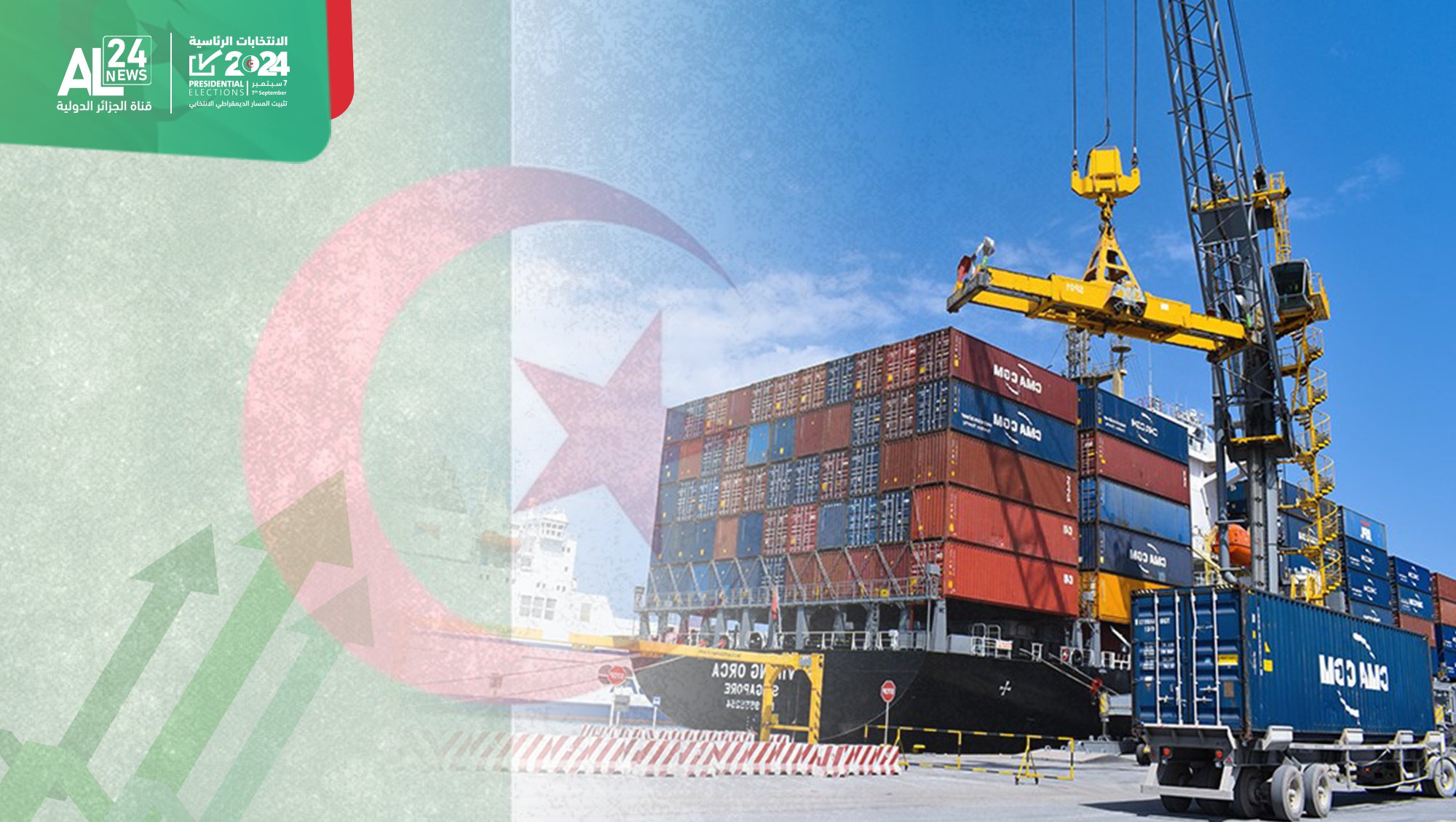
Despite ongoing geopolitical tensions and disruptions in the hydrocarbons market, the Algerian economy has shown remarkable resilience and growth in recent years. The International Monetary Fund (IMF) has ranked Algeria third among Africa’s leading economies for 2024, with the country’s gross domestic product (GDP) projected to rise to $266.78 billion and an anticipated growth rate of approximately 3.8%.
Political and institutional reforms have set the stage for extensive economic transformations aimed at diversifying income sources and reducing dependency on hydrocarbons. This shift is evident in the new investment law, which offers significant incentives for both domestic and foreign investors, and the creation of a digital platform to facilitate investments.
By the end of July, the Algerian Agency for Investment Promotion had registered over 8,400 investment projects valued at nearly 3.840 billion DZD, with expectations of generating 210,000 direct jobs. Notably, the agency recorded 154 foreign investor projects, comprising 55 direct foreign investments and 99 joint-ventures.
Recent years have seen Algeria launch several major investment initiatives. The Bellara steel complex in Jijel province, sprawling over 216 hectares, aims to produce 1.8 million tons of steel with an estimated turnover of 160 billion DZD, while continuously expanding its production capacity.
Tosyali Algeria’s iron and steel company has distinguished itself in Africa and the Mediterranean region by exporting to 24 countries and targeting $2 billion in exports. It houses one of the largest industrial furnaces in Africa.
The Gara Djebilet mine represents Algeria’s most significant mining investment since independence and is expected to drive substantial development in the southern region. Additionally, the 950 km railway project linking Bechar and Tindouf stands out as a critical infrastructure development.
A strategic partnership with China has led to an integrated phosphate project with investments surpassing $7 billion, aiming to elevate Algeria’s position among leading phosphate-exporting nations.
High-level authorities have also implemented various measures to bolster the agricultural sector, with aspirations for self-sufficiency and food security. Through collaboration with Qatari company Baladna, Algeria has initiated a large-scale project in the south to produce powdered milk worth $3.5 billion, creating around 5,000 jobs.
Moreover, a comprehensive project with an Italian partner seeks to produce durum wheat, legumes, seeds, and pasta in Timimoun province, involving an investment of €420 million. This initiative will enhance Algeria’s access to African markets and strengthen trade relations with neighboring countries through a road project connecting Tindouf (Algeria) to Zouerate (Mauritania), spanning 840 km, undertaken by Algerian companies.
Among the noteworthy regional projects is the trans-Saharan gas pipeline linking Algeria with Niger and Nigeria, designed to transport 30 billion cubic meters annually to Europe.
The cement and derivatives industry in Chlef has experienced significant growth due to an increase in production units. Similarly, the new calcium carbonate processing plant in Mascara demonstrates robust dynamism.
In Hassi R’Mel, home to Algeria’s largest natural gas fields, a consortium of 20 Algerian companies worked together to complete a cutting-edge gas boosting unit. Utilizing the latest technologies, this project aims to increase the production capacity of the field. Remarkably, the project was delivered on schedule.
The El Outaya salt complex in Biskra, part of the National Salt Company, produces 80,000 tons annually, meeting national market demands for industrial, food, and parapharmaceutical products. This reduces import costs and enhances export prospects to African and European countries.
The Central Bank of Algeria reported notable growth rates of 3.8%, 3.6%, and 4.1% for the years 2021, 2022, and 2023, respectively.