
EU retaliation proposal expected Monday, amid differing opinions on best response

European Union countries will seek to present a united front on Monday in the first EU-wide political meeting since Trump’s announcement of the sweeping tariffs, likely approving a first set of targeted countermeasures on up to $28 billion of U.S. imports from dental floss to diamonds, Reuters reported on Sunday.
EU diplomats said the main aim of the meeting was to emerge with a united message of a desire to negotiate with Washington a removal of tariffs, but a readiness to respond with countermeasures if that failed.
“Our biggest fear after Brexit was bilateral deals and a break of unity, but through three or four years of negotiations that did not happen. Of course, here you have a different story, but everyone can see an interest in a common commercial policy,” one EU diplomat said.
Countermeasures would mean the EU joining China and Canada in imposing retaliatory tariffs on the United States in an early escalation of what some fear will become a global trade war, making goods more expensive for billions of consumers and pushing economies around the world into recession.
“It’s a difficult balance. Measures cannot be too soft to bring the United States to the table, but not too tough to lead to escalation,” one EU diplomat said.
The 27-nation bloc faces 25% import tariffs on steel, aluminium and cars and “reciprocal” tariffs of 20% from Wednesday for almost all other goods.
Trump’s tariffs cover some 70% of the EU’s exports to the United States – worth a total of 532 billion euros ($585 billion) last year – with likely duties on copper, pharmaceuticals, semiconductors and timber still to come.
The European Commission, which coordinates EU trade policy, will propose to members late on Monday a list of U.S. products to hit with extra duties in response to Trump’s steel and aluminium tariffs rather than the broader reciprocal levies.
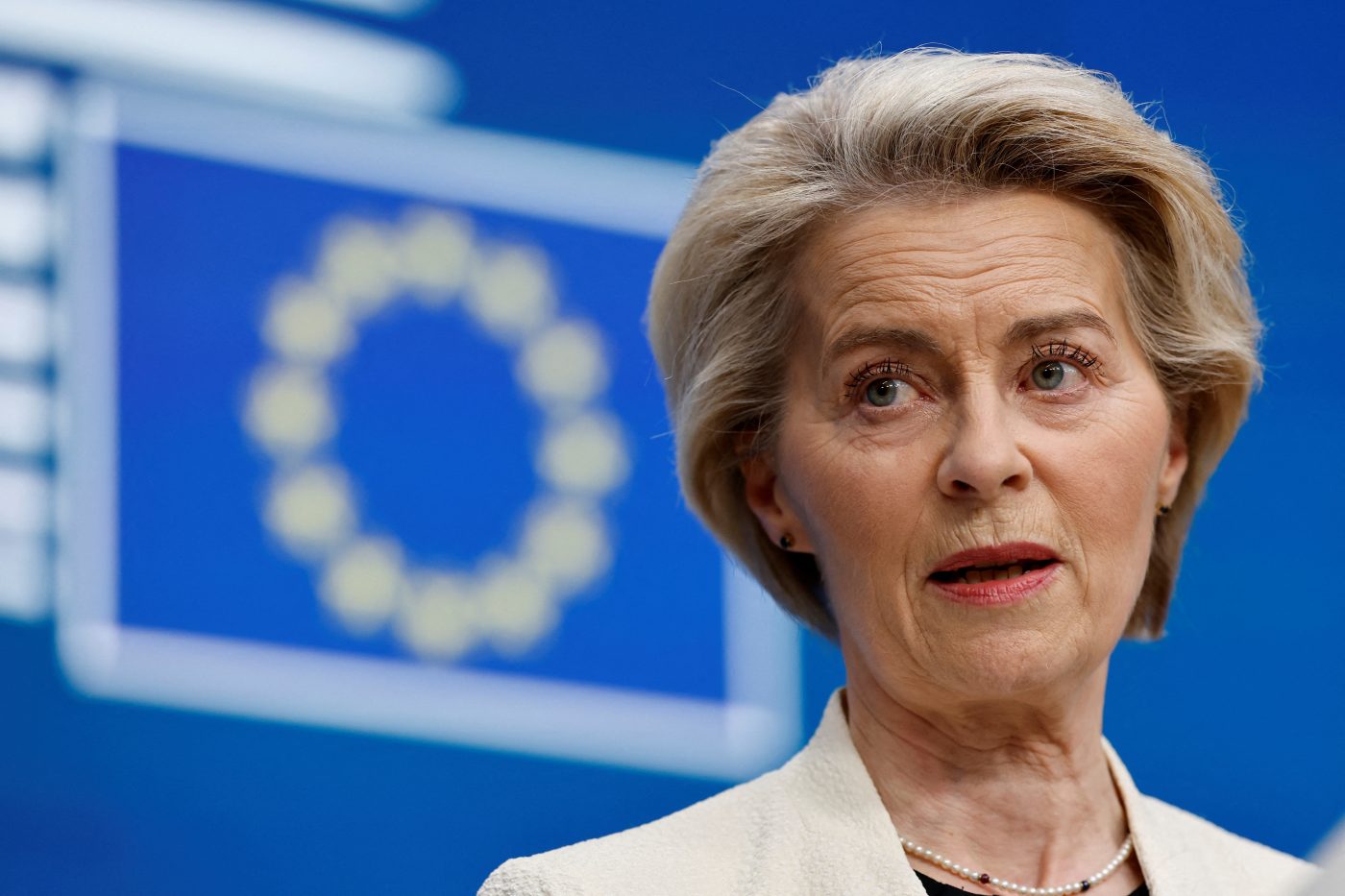
Commission President Ursula von der Leyen will also hold separate discussions on Monday and Tuesday with chief executives from the steel, automotive and pharmaceutical sectors to assess the impact of tariffs and determine what to do next.