
EU and UK leaders meet in Paris for urgent talks on shifting U.S. ties and defence budget

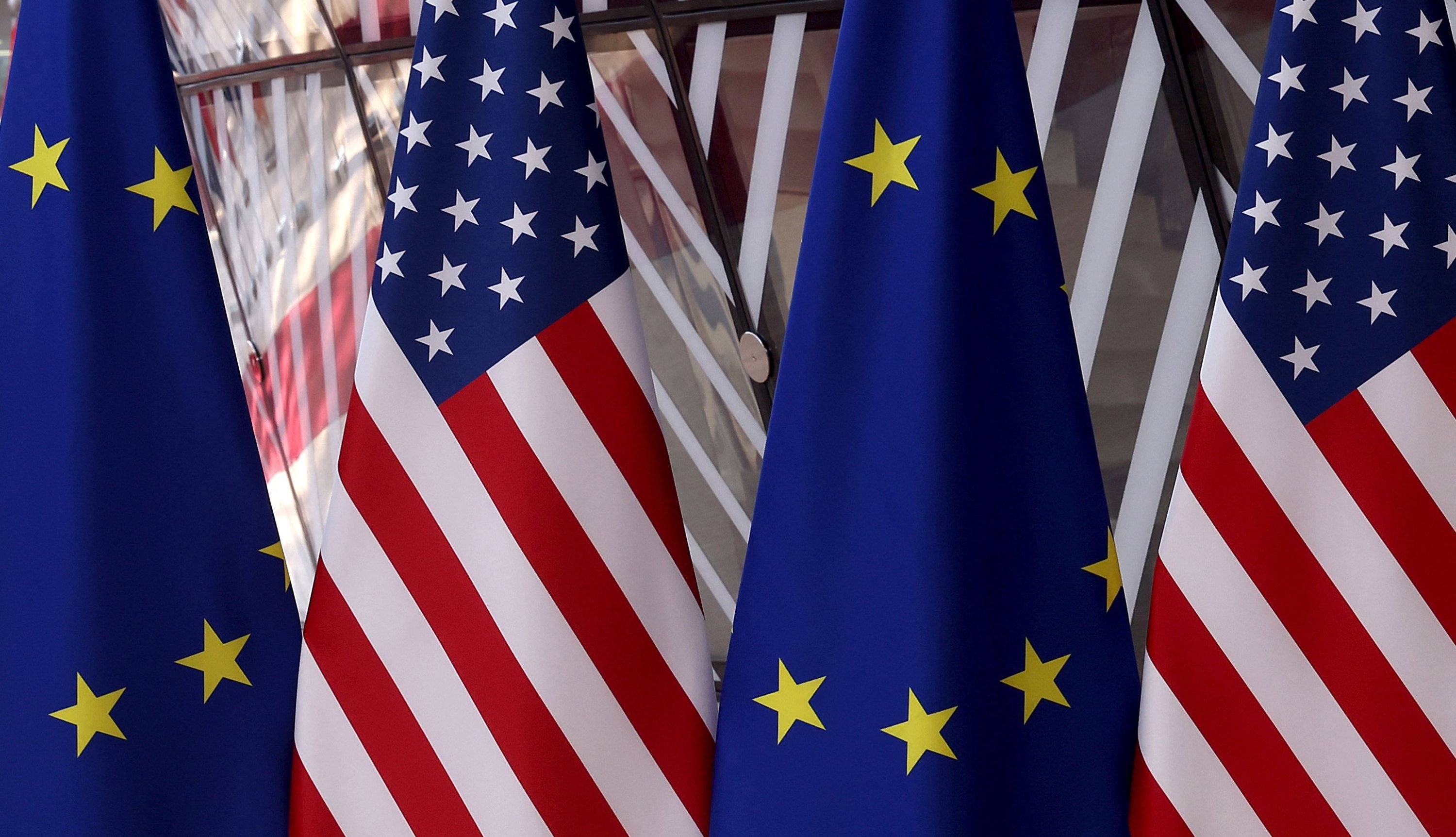
PARIS – Leaders from key European Union nations and the United Kingdom are expected to meet in the French capital on Monday for an emergency meeting on how to deal with the U.S., a once rock-solid partner.
The move follows a weeklong diplomatic blitz on Ukraine by the Trump administration that seemed to embrace the Kremlin while it cold-shouldered many of its age-old European allies.
According to the Associated Press, EU leaders ignored the ominous forebodings despite belligerent warnings for months ahead of Donald Trump’s re-election as U.S. president. They somehow hoped Trump would stand side by side with Europe, as it would finally start to act on beefing up its defences and become less reliant on the firepower of Washington.
But a flurry of speeches by Vice President JD Vance and Defence Secretary Pete Hegseth during their initial visits to Europe last week questioned both Europe’s security commitments and its fundamental democratic principles, the source said.
Annalena Baerbock, Germany’s foreign minister, described the week as “an existential moment,” emphasising that it is a time for Europe to take a stand. This is the context in which French President Macron aims to intervene with Monday’s meeting. While Jean-Noël Barrot, Macron’s foreign minister, downplayed the importance of the emergency summit involving Europe’s key leaders, the hurried efforts to organise the meeting highlighted something much more profound.
The meeting will feature afternoon talks with the leaders of Germany, the United Kingdom, Italy, Poland, Spain, the Netherlands, Denmark, and the European Union on how to deal with Europe’s security quandary. NATO Secretary General Mark Rutte will also attend.
Regarding defence spending, EU nations are largely in agreement about increasing their budgets. However, while there is a general consensus to surpass the goal of spending 2% of GDP on defence, it remains unclear how to reach the 3% target.
Some EU nations are insisting on an agreement on joint borrowing for massive defence projects, while others are insisting it is the task of the nations that lag in spending to get to the 2% threshold first. That issue is also set to be discussed at the meeting.