

ALGIERS – Algeria has witnessed, in 2024, important political milestones and key decisions that contributed to the strengthening of the democratic foundations, continuation of the overall reform process of the legislative and institutional system and the implementation of dialogue and consultation mechanisms while involving citizens in decision-making.
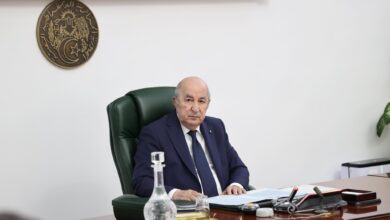
The year’s most notable political event was the early presidential election held on September 7, announced by the Algerian President, Abdelmadjid Tebboune, in March, explaining that the early timing was based on “purely technical considerations that would not affect the election or its conduct.”
The entire electoral process, from the call for voters on June 8 to the Constitutional Court’s announcement of final results on September 14, adhered to the principles of democratic governance, integrity, and transparency.
The election was held peacefully and orderly, following a clean campaign characterized by fair competition over policies and ideas. The three presidential candidates maintained mutual respect throughout this national event, which concluded with Abdelmadjid Tebboune securing a second presidential term.
Building on the participatory democratic approach he established in his first term, the President of the Republic announced on his September 17 inauguration speech the launch of a national dialogue initiative. This would involve extensive consultations with all vital forces of the nation, including youth, aimed at “establishing genuine democracy.”
He affirmed that the national dialogue, scheduled for late 2025 or early 2026, would focus on charting a collective path forward, following reforms to fundamental state legislation, including local governance laws at both municipal and provincial levels.
The comprehensive reform process of the country’s legislative and institutional frameworks continued throughout the past year, notably with the installation in October by the Algerian President of the National Commission for the Revision of Municipal and Wilaya Codes, chaired by former Interior Minister, Dahou Ould Kablia, in fulfillment of his commitment during the electoral campaign and at his swearing-in.
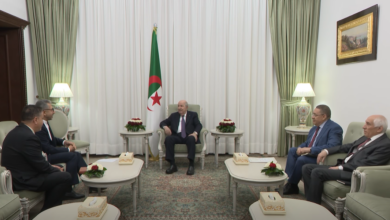
President Tebboune’s commitment to reinforcing dialogue and consultation was underlined several times throughout the year, highlighted by a significant May’s meeting with leaders from 27 political parties represented in national and local elected assemblies. The meeting provided a platform for these leaders to share their perspectives and proposals on key national issues.
Among the principles of participatory democracy established by the President of the Republic is his commitment to holding direct meetings with citizens and civil society’s representatives during his field visits to different provinces.
In this regard, during his two visits to Khenchela in May and Tizi Ouzou in July, he met with citizens, notables, and civil society representatives, and listened attentively to their concerns and proposals regarding support for state efforts in boosting local development.
Maintaining his commitment to direct citizen engagement, the President continued his regular press conferences throughout 2024, meeting with national media representatives to address both domestic and international issues.
For the effective implementation of policies aimed at improving living standards, the Algerian President conducted reshuffles among senior officials, to select the best national competencies and retain those who have proven their effectiveness and efficiency.
These priorities were evident in last month’s cabinet reshuffle, which brought significant changes to key sovereign and vital sectors, reflecting Algeria’s response to major economic and technological transitions.
President Tebboune instructed the new government during the first Council of Ministers to “focus all its efforts to ensure the well-being of citizens and ensure their needs are met.
The Algerian President renewed his confidence in some members of the governmental staff, particularly in sovereign ministries, and appointed new national competencies. He also decided to appoint the Chief of Staff of the People’s National Army, Army General Saïd Chanegriha, as Minister Delegate to the Minister of National Defense, in addition to creating the position of Minister of State, assigned to the Ministers of Foreign Affairs and Energy.
In implementation of Algeria’s approach to its African dimension, based on a comprehensive multidimensional vision, the Ministry of Foreign Affairs was strengthened by a State Secretariat for African Affairs in addition to the position of State Secretary for the National Community Abroad, to enhance the handling of concerns of Algerians established abroad.
And in support of the dynamics experienced by the national economy and strategic options for diversifying state resources, the Ministry of Energy was strengthened by a State Secretariat for Mining and a State Secretariat for Renewable Energy, in addition to the creation of a delegate ministry within the Ministry of Industry responsible for pharmaceutical production.