
US cuts $400 million in grants to Columbia University, raising concerns over academic freedom


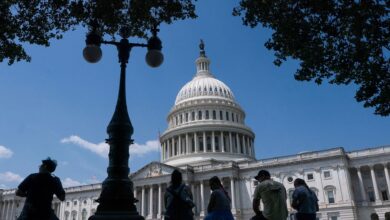
U.S. President Donald Trump’s administration announced it had cancelled grants and contracts worth about $400 million to Columbia University over accusations of anti-Semitism following pro-Palestine protests in the university’s campuses in reaction to the occupation’s ongoing violations against the war-torn Gaza Strip.
The Trump administration declined to specify the grants and contracts affected or its evidence of antisemitic harassment.
Friday’s announcement was made in a joint statement by the departments of Justice, Education and Health and Human Services as well as the General Services Administration.
The announced cuts would come out of what the administration said was more than $5 billion in grants presently committed to Columbia. Much of the funding goes to healthcare and scientific research but Reuters could not verify the figures.
The announcement of “immediate” cuts was likely to face legal challenges, with civil rights groups saying the contract cancellations lacked due process and were an unconstitutional punishment for protected speech.
The move comes amid a broader crackdown on pro-Palestine students, who have protested “Israel’s” war on Gaza and called for divestment from “Israel-linked companies.” The actions taken against student protesters have raised concerns about free speech on American campuses.
On Wednesday, a group of pro-Palestinian demonstrators staged a protest at Milstein Library in response to Barnard College’s decision to expel a third student for their activism in support of Palestine.
Earlier, more than 200 pro-Palestine students and activists protested outside Columbia University’s campus building as Naftali Bennett gave a speech inside.
Columbia University Apartheid Divest, a coalition of student groups behind the pro-Palestine protests that includes Jewish students and groups among its organisers, said that criticism of “Israel” is being wrongly conflated with antisemitism.
The latest protests are part of a broader wave of student activism that first gained momentum on April 16, 2024, when pro-Palestine students established a “Gaza Solidarity Camp” at Columbia to protest the university’s financial ties to companies supporting the occupation’s military actions. The following day, Columbia President Minouche Shafik requested police intervention, leading to the arrest of 108 students.
In January, fifty law faculty professors signed a letter calling for an investigation into the treatment of Professor Katherine Franke, who was dismissed due to her support for pro-Palestine campus protests.
Maura Finkelstein, a Jewish professor at Muhlenberg College in the US, was also dismissed for her anti-Zionist social media posts, in a “dangerous precedent” for higher education and freedom of speech in the US.
“I had only ever been taught about Israel. And all of a sudden, I had this incredible opportunity to learn about Palestine, and I took it very seriously,” she said. “And what I learned was that the myth of Israel circulated in the United States, the myth of Israel that Jews in the United States and across the world celebrated in the wake of the Holocaust, was complete fiction, and that actually it was a colonial project in which Palestinians were experiencing genocide and dispossession because of this entity that was Israel.”
The incident that led to her termination occurred in January of last year, when she shared on Instagram a post by Palestinian poet Rami Kanazi that said, “Do not normalize Zionism.”
A student leader at Hillel, a Zionist organization on campus, filed a complaint, claiming that Finkelstein’s anti-Zionist views made the student feel “unsafe” in class and violated “anti-discrimination policies.”
“I had never met this student,” said Finkelstein. Afterwards, the school decided to terminate her employment without compensation.
The American Association of University Professors (AAUP) criticised Finkelstein’s dismissal, noting that it was the first instance of a tenured professor being dismissed for comments or social media posts about Palestine.
Finkelstein warned that talking about Palestine in academia has always been dangerous, but that the current crackdown on free speech feels unprecedented.
“The far-right, white supremacist-like politicians in the US have weaponised antisemitism in order to shut down all criticism of Israel,” she said.
She cited the dismissal of faculty members, expulsion of students, and police intervention on campuses as alarming developments.
“I am an alum of Columbia University, and I’m not allowed on campus. It’s a pretty chilling new McCarthyism.”