
Polar Low Brings Strong Winds and Heavy Rain to Gaza, Threatening Displaced Families

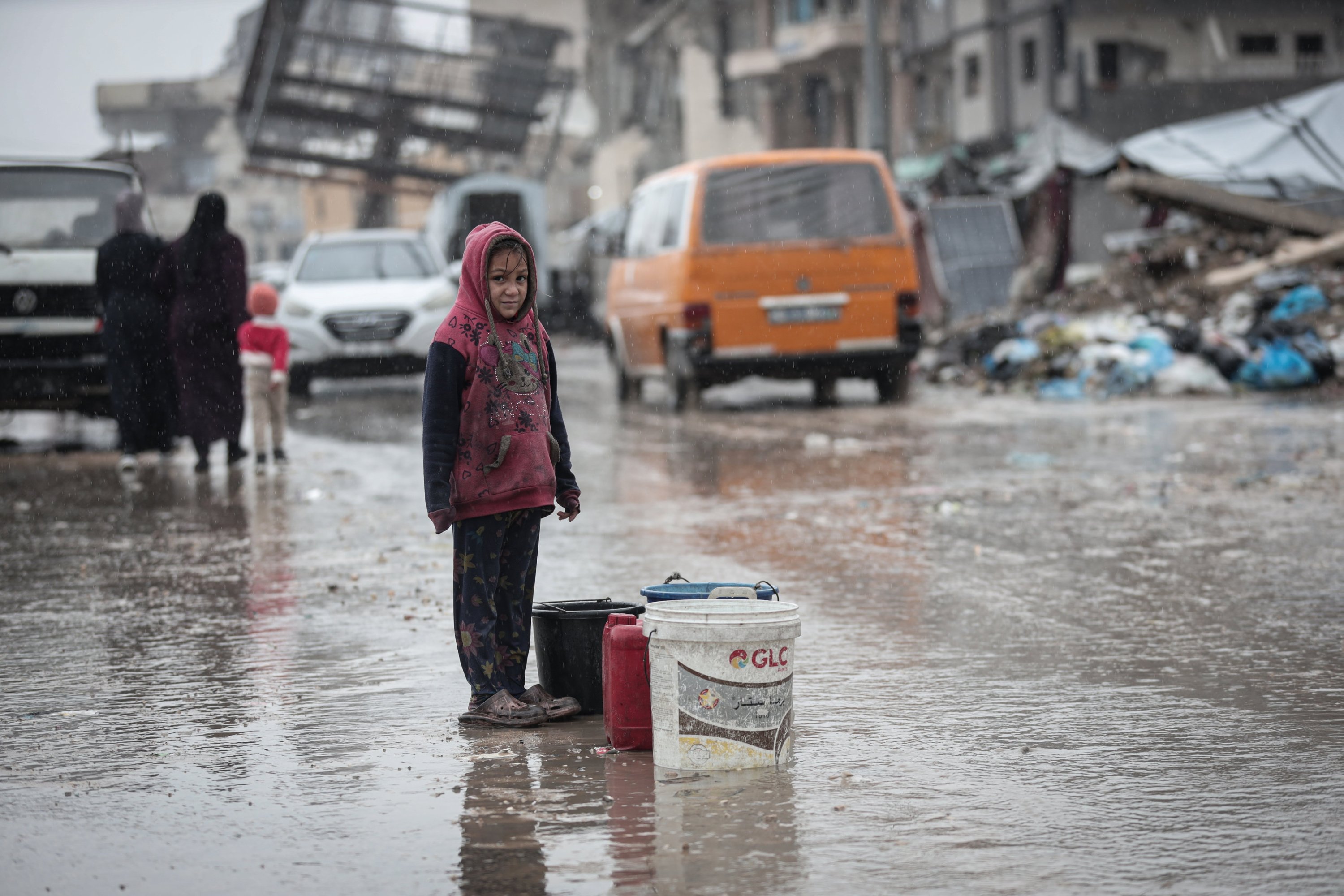
A polar low-pressure system accompanied by heavy rain and strong winds swept across the Gaza Strip on Saturday, adding to the suffering of Palestinians living in flimsy tents and overcrowded shelters that lack basic living conditions.
The system is the third polar low to affect the Palestinian territories this winter, beginning Saturday afternoon, and is expected to continue until Sunday evening, with a fourth low-pressure system forecast to hit the area starting Monday, meteorologist Laith al-Allami told Anadolu news agency.
The current system is expected to intensify later Saturday, though rainfall totals will likely be lower than those recorded during the last storm that hit Gaza about two weeks ago, he added.
He said the storm will be accompanied by strong wind gusts ranging from 70 to 80 kilometers (49 miles) per hour, with rainfall expected to be heavy at times and accompanied in some areas by hail.
Temperatures are expected to drop to around 10 degrees Celsius (50 degrees Fahrenheit) during evening hours, increasing the hardship faced by displaced people, he said.
Allami warned that the storm could significantly worsen humanitarian conditions, with rainfall likely to cause water pooling and flash flooding that could inundate displacement camps and lead to the collapse of already weakened walls and buildings.
He said strong winds pose an added risk of collapsing structures damaged by earlier “Israeli” bombardment over the past two years of genocide.
Since severe weather systems began affecting Gaza in December, 17 Palestinians, including four children, have died, and about 90% of displacement shelters have been flooded, according to a previous statement by Gaza’s civil defense.
More than 250,000 displaced people have been affected by winter storms out of roughly 1.5 million Palestinians living in tents and makeshift shelters that offer minimal protection, according to earlier figures from Gaza’s government media office.
Although the ceasefire took effect on Oct. 10, 2025, living conditions have not improved, as the occupation has failed to meet its commitments under the agreement, including allowing agreed quantities of food, aid, medical supplies and mobile housing into Gaza.
The occupation has also fallen short of fulfilling its obligations under the first phase of the agreement, particularly the halt to hostilities, killing at least 414 Palestinians and injuring 1,142 others since the ceasefire was announced.