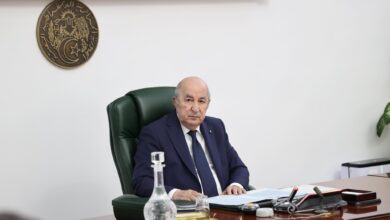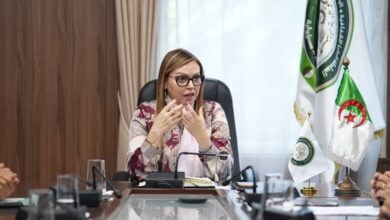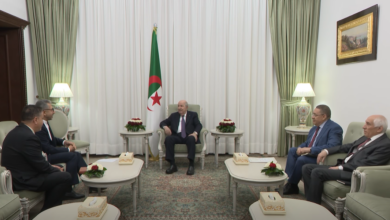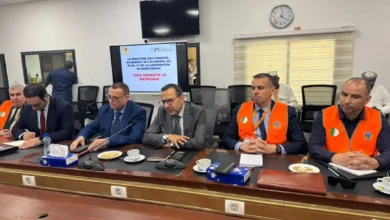



African leaders gathered at the International Conference on colonial crimes in Africa, which opened on Sunday in Algiers, forcefully renewed their demand for official and explicit recognition of the crimes committed against their peoples throughout centuries of colonial rule.
In his opening address at the Abdellatif Rahal International Conference Centre (CIC), held under the high patronage of the President of the Republic, Abdelmadjid Tebboune, the Minister of State, Minister of Foreign Affairs, the National Community Abroad and African Affairs, Ahmed Attaf, said that “Africa has every right to demand official and explicit acknowledgment of the crimes committed against its peoples during the colonial era.” He described such acknowledgment as “the bare minimum” and an essential first step toward confronting the enduring legacy of colonialism, for which African countries and peoples continue to pay a heavy price through exclusion, marginalization, and underdevelopment.
FM Attaf further asserted that Africa is fully entitled to demand that colonialism be unequivocally criminalized under international law, quoting the Algerian revolutionary thinker Frantz Fanon: “Colonialism is not a thinking machine, nor a body endowed with reason; it is violence in its natural state.” Echoing this call, participants stressed that the conference’s primary objectives were to deepen collective reflection and, above all, to consolidate unified African action aimed at criminalizing colonialism, slavery, racial segregation, and apartheid, and classifying them as crimes against humanity in line with the relevant recommendations of the African Union (AU).
The AU Commissioner for Political Affairs, Peace and Security, Bankole Adeoye, urged Africans to unite their efforts in this endeavour.
“We must strengthen unity among African countries and engage the African diaspora,” he said, adding that “it is imperative to accelerate the positive transformations underway on the continent to build a stronger Africa.” For his part, Angola’s Minister of External Relations Ant?nio Tete called on African countries to adopt a common approach to the lasting impacts of colonial systems to claim reparations for centuries of injustice more effectively.
“African countries must establish a solid foundation and a unified platform for reparations that former colonial powers are obliged to address,” he argued.
In this regard, he highlighted the importance of developing shared school curricula, celebrating cultural diversity, implementing genuine development policies, and strengthening ties with diasporas as key accelerators of this objective.
Speaking more pointedly during a panel on “The Criminalization of Colonialism in International Law,” the Sahrawi Minister of Foreign Affairs, Mohamed Yeslem Beissat, said that the current United Nations (UN) system “does not condemn colonialism firmly enough” and therefore remains a major obstacle to eradicating colonization, which persists in several countries.
He argued that the UN lacks both the effectiveness and the necessary mechanisms to hold colonizers accountable.
“The United Nations continues to treat colonialism as a mere phenomenon, whereas it is an entire system rooted in resource plunder, exploitation, and domination,” he stressed.
The representative of the Caribbean Community (CARICOM), Eric Phillips, emphasized that the still-tangible effects of colonialism on multiple levels demand concrete action to achieve justice.
“We must move from being victims to becoming architects of justice,” assured.