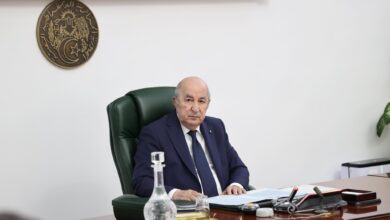


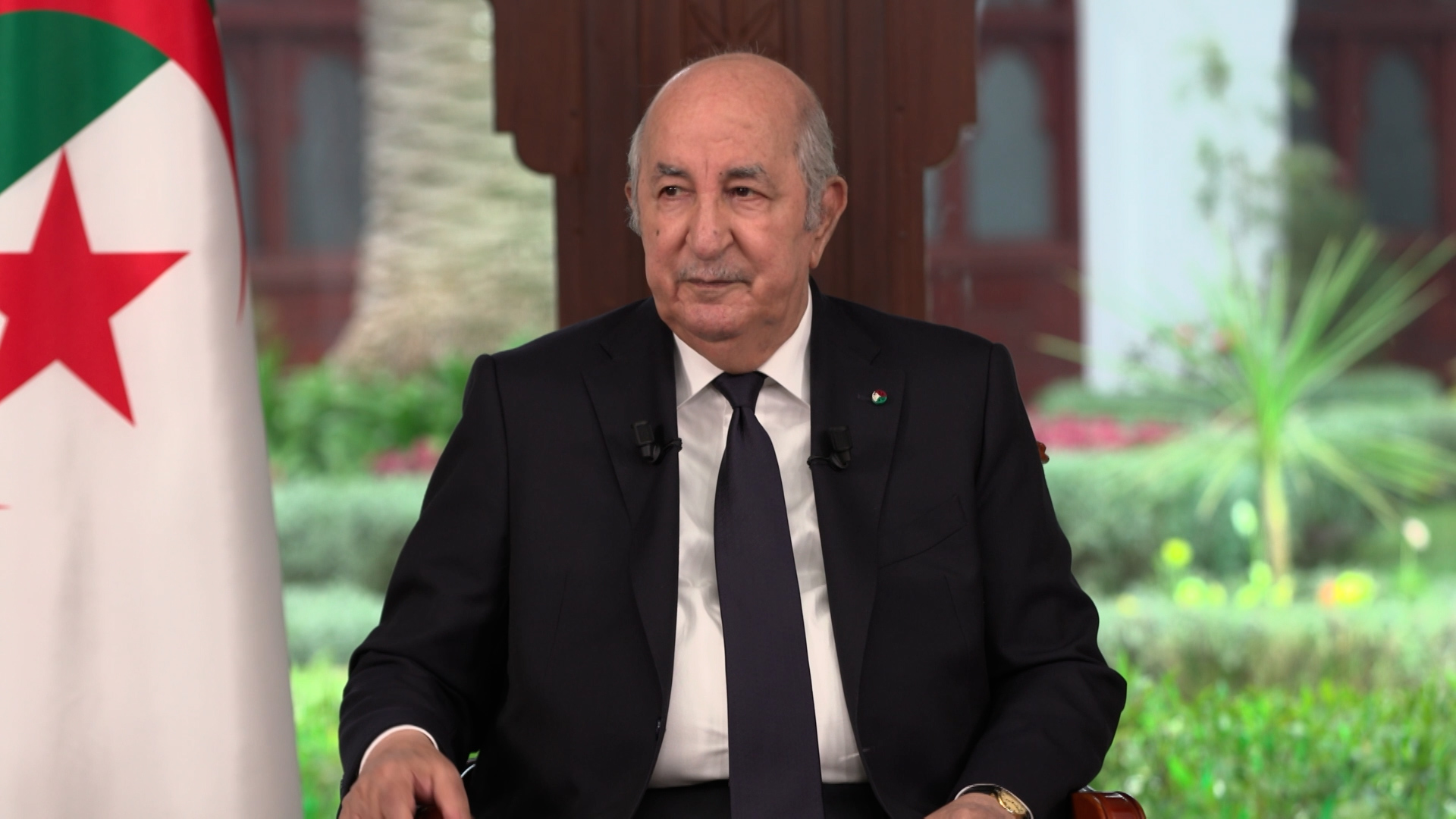
Algerian President, Abdelmadjid Tebboune, stressed the importance of the positive development indicators now being achieved by the national economy, highlighting the need to sustain this momentum by diversifying the economy and boosting non-hydrocarbon exports.
During his periodic media meeting with representatives of the national media, broadcast on Saturday evening on national television and radio channels, the President of the Republic said that the coming phase is based on bringing about a “real economic transformation” founded on developing national resources outside the hydrocarbon sector, particularly through developing processing industries, raising added value and creating jobs.
He affirmed that economic diversification “has today become a reality” after having remained “merely a slogan for long decades,” highlighting that the competitiveness of many industrial sectors has allowed for giving a strong push to non-oil exports.
In this regard, the President of the Republic said Algeria is targeting between 8 and 9 billion dollars in non-oil exports annually, noting that several industrial sectors, including household appliances, steel and food products, have seen rising demand in foreign markets, in sectors where Algeria was previously a major importer.
He also commended the Algerian Council of Economic Renewal’s target of reaching 30 billion dollars in non-hydrocarbon exports by 2030, saying such goals would put the State’s finances in a comfortable position.
The President of the Republic also noted that Algeria’s financial reforms have earned praise from the Financial Action Task Force (FATF), which “expressed satisfaction with Algeria’s progress,” with the country expected to be removed from the grey list once the remaining required steps are completed.
On electronic payment and invoicing, President Tebboune acknowledged that the shift away from cash “cannot happen overnight” and will be carried out “in stages.” He warned that cash transactions create an entry point for counterfeit currency, citing recorded cases of forged banknotes being brought in from certain countries to purchase Algerian livestock, and noting that money hoarded outside the banking system cannot be screened for counterfeits.
He said that among the fundamental principles adopted in this trajectory is not exporting raw mining materials in their crude form, but rather processing them locally, whether it concerns phosphate, iron, zinc or agricultural products, which contributes to creating wealth and strengthening the national industrial fabric.
In this regard, he pointed to major projects, such as Bled El-Hadba project which will provide considerable jobs and contribute to developing phosphate through the production of fertilizers and their derivatives, affirming that real development is based on “creating wealth and jobs outside the hydrocarbons sector.”
The President of the Republic revealed the existence of additional mineral deposits beyond those currently being exploited, saying they will be developed “at the right time,” a move he said will help transform Algeria into “a country that creates jobs outside the hydrocarbon sector.” He added that Algeria is pressing ahead with hydrocarbon exploration to boost production, while simultaneously preparing for upcoming demographic shifts, noting that the country is moving toward major projects in the hydrocarbons sector, particularly in offshore exploration and in the southern provinces.
While speaking about the integrated phosphate project at Bled El-Hadba (east of the country), the President of the Republic highlighted that the project, with its units for processing, concentration, phosphoric acid production, fertilizers, ammonia and urea, will provide “a large number of jobs” for the benefit of a region that “will bid farewell to unemployment.” He also stressed the importance of integrating university graduates, estimated at 250,000 graduates annually, into economic life, considering that this concerns “comprehensive integration” aimed at building an economy liberated from hydrocarbons and based on initiative.
He stressed that the goal “goes beyond phosphate exploitation alone, extending to a comprehensive rethinking of the entire economic system,” especially since the program being pursued by the State is “a comprehensive economic program” that will be detailed gradually in parallel with the progress of the projects.
In a related vein, President Tebboune underlined that mining projects and railway lines linking the north to the south “are part of a national vision,” emphasizing that these initiatives are not the product of chance, but were part of his commitments during the electoral campaign.