
Algeria Celebrates Labor Day: The Language of Numbers Upholds Workers’ Dignity Under President Abdelmadjid Tebboune

This year, May 1st in Algeria carries meanings that go far beyond a simple celebration of Labor Day. It reflects a new trajectory in the social policy adopted by the Algerian state, inspired by the spirit of the November 1, 1954 Declaration, which emphasized that independence was not merely about ending colonial occupation, but also about establishing a social system that guarantees the dignity and freedom of Algerian citizens.
While the world commemorates workers’ struggles, Algeria marks this occasion as part of a historical continuum—from workers’ contribution to the War of National Liberation to the construction of the “New Algeria,” where workers’ dignity stands at the heart of political commitments.
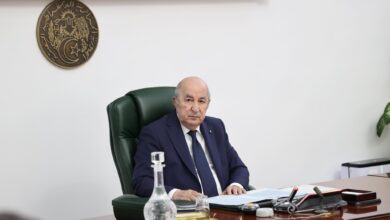
Today, Algeria’s celebration of International Workers’ Day is not merely a ceremonial observance, but rather an opportunity to assess years of implementing the 54 commitments made by President Abdelmadjid Tebboune. These commitments have served as a roadmap aimed at improving purchasing power and safeguarding the dignity of Algerian workers, transforming political promises into tangible achievements that reflect the state’s determination to protect social stability.
Wage Revolution: From Promises to Concrete Increases
Since 2020, Algeria’s wage system has entered a new era of unprecedented periodic revisions, unlike anything seen in the public sector for decades. Official indicators show that salary increases have followed an upward trajectory, reaching an overall rise of 47% by the end of 2024.
President Tebboune has also pledged to continue this path, with the goal of gradually reaching a 100% increase to ensure real balance with global inflation rates.
These reforms have not been limited to wages alone. They also included raising the national minimum guaranteed wage from 18,000 dinars to 24,000 dinars, supported by a historic decision granting full exemption from income tax (IRG) for workers earning less than 30,000 dinars, thereby directly boosting the income of millions of employees and laborers.
Social Protection: From Unemployment to Employment
As part of this social vision, attention has not been focused solely on active workers, but also on young job seekers, through the establishment of a regionally pioneering social protection system.
This policy materialized with the launch of unemployment benefits, initially set at 13,000 dinars and later increased to 18,000 dinars, while also providing full healthcare coverage for more than two million beneficiaries, thus reducing youth financial vulnerability.
At the same time, the labor market experienced remarkable dynamism, with the creation of more than 1.8 million jobs as a result of economic recovery. The issue of pre-employment contracts was also permanently resolved, with hundreds of thousands of contract workers integrated into permanent positions that guarantee full rights, including retirement and career advancement.
Retirement: Restoring Dignity to Retirees
In recognition of those who dedicated their lives to building the national economy, retirees’ welfare became a top priority within social policy.
President Tebboune ordered an immediate review of retirement pensions to ensure a minimum threshold that preserves retirees’ dignity. Pension benefits were thus raised to between 15,000 and 20,000 dinars for categories that had previously received modest sums.
This approach was not a temporary measure, but rather evolved into a lasting policy based on regular annual increases approved by the Council of Ministers, with the aim of aligning retirees’ purchasing power with the changing cost of living.
A Social Policy Built on Tangible Results
The language of numbers on the ground over the past six years confirms that “dignity” has not remained a mere slogan, but has become a disciplined financial and social policy that places Algerian workers at the center of economic transformation.
Today, Algeria stands as a model in consolidating social rights amid severe global economic turbulence.
Youssef Dhababi