
Trump leverages IEEPA to impose tariffs on Mexico, Canada, and China, a sanctions tool turned trade weapon

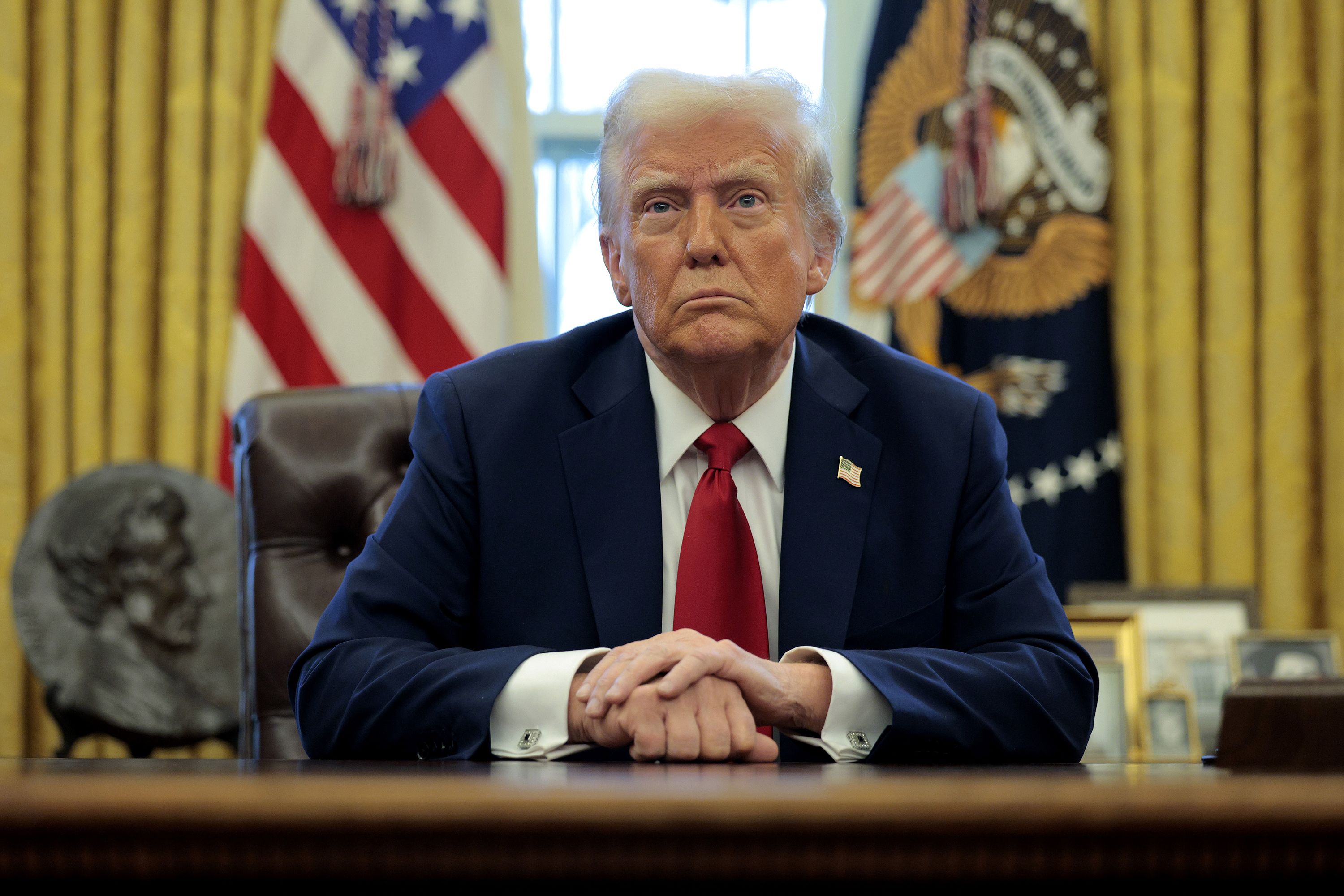
WASHINGTON – President Donald Trump has pushed into new trade law territory with an emergency sanctions law to justify punishing 25% tariffs on Canadian and Mexican imports and an extra 10% duty on Chinese goods to curb fentanyl and illegal immigration into the U.S.
Trade and legal experts said the International Emergency Economic Powers Act (IEEPA) is untested for imposing import tariffs, and Trump’s action will likely face swift court challenges that could set important precedents.
The U.S. President declared a national emergency under IEEPA on Saturday, citing the “extraordinary threat” from fentanyl and illegal immigration.
IEEPA gave Trump, in his second week of his second term in the White House, the fastest path to imposing tariffs, as trade laws he used in his first four years for duties on steel, aluminium, and Chinese goods would have required months-long investigations and public consultations.
“The courts have historically upheld the president’s power to take emergency actions, especially when they are related to national security,” said Tim Brightbill, who co-chairs the international trade practice at the law firm Wiley Rein.
“The question is, does that include tariffs, since IEEPA has only been used for sanctions,” Brightbill said. He added that companies or industry groups would be likely to seek an injunction but may face an uphill battle blocking the tariffs.
“Judges are not likely to second guess a president on what constitutes an emergency,” said William Reinsch, a trade expert at the Center for Strategic and International Studies in Washington, adding that the “emergency is whatever he says it is.”
It is noteworthy that the International Emergency Economic Powers Act (IEEPA) is a U.S. federal law enacted in 1977 that grants the President the authority to regulate or prohibit transactions with foreign countries or nationals during times of national emergency. The law is primarily invoked in response to threats to U.S. national security, foreign policy, or economy, enabling the swift and broad application of economic sanctions.
In response, Mexico and Canada, the top two U.S. trading partners, immediately vowed retaliatory tariffs, while China said it would challenge Trump’s move at the World Trade Organization and take other “countermeasures.”
Canadian Prime Minister Justin Trudeau said Canada would respond with 25% tariffs against $155 billion of U.S. goods, including beer, wine, lumber, and appliances, beginning with $30 billion taking effect Tuesday and $125 billion 21 days later.
Trudeau warned U.S. citizens that Trump’s tariffs would raise their grocery and gasoline costs, potentially shutting down auto assembly plants and limiting supplies of goods such as nickel, potash, uranium, steel, and aluminium. He urged his own citizens to forego travel to the U.S. and to boycott U.S. products.
Mexican President Claudia Sheinbaum, in a post on X, said she was instructing her economy minister to implement retaliatory tariffs but gave no details.
Canada and Mexico said they were working together to face Trump’s tariffs.
China’s Commerce Ministry did not specify its planned countermeasures. Its statement left open the door for talks between Washington and Beijing.
“China hopes that the US will view and handle its own fentanyl and other issues in an objective and rational manner,” it said, adding that Beijing wanted to “engage in frank dialogue, strengthen cooperation, and manage differences.”
U.S. tariff collections are set to begin at 12:01 a.m. EST (0501 GMT) on Tuesday, according to Trump’s written order. But imports that were loaded onto a vessel or onto their final mode of transit before entering the U.S. before 12:01 a.m. Saturday would be exempt from the duties.