

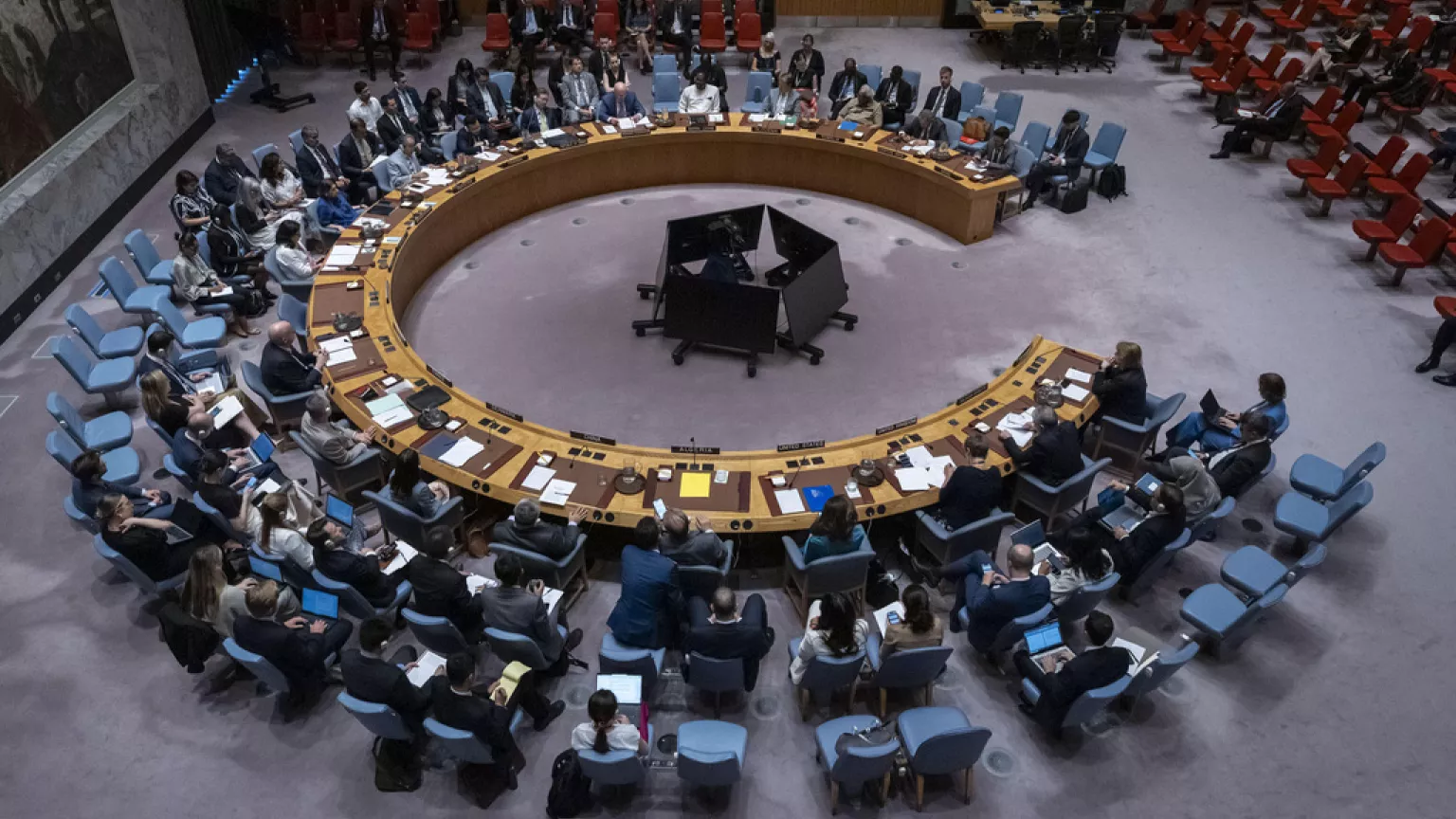
NEW YORK – The UN Security Council is holding today a high-level open debate on “Maritime Security: Prevention, Innovation, and International Cooperation to Address Emerging Challenges” under the agenda item “Maintenance of international peace and security.” The meeting, chaired by Panama’s President José Raúl Mulino, marks the signature event of Panama’s August presidency of the Council. Briefings will be delivered by Arsenio Domínguez, Secretary-General of the International Maritime Organization (IMO); Valdecy Urquiza, Secretary-General of INTERPOL; and Ricaurte Vásquez Morales, CEO of the Panama Canal Authority.
According to a concept note prepared by Panama, the debate aims to foster substantive dialogue among member states on the evolving threats to global peace and maritime security. It stresses the need for innovative, inclusive, and cooperative approaches that strengthen multilateralism and uphold the international legal framework. Panama’s Ambassador Eloy Alfaro de Alba has described the meeting as a global, multi-dimensional discussion connecting maritime security with international peace, economic stability, and environmental sustainability.
Maritime security has been an increasing focus for the Council as traditional threats—such as piracy, armed robbery at sea, and attacks on shipping—intersect with emerging risks, including cyberattacks on critical infrastructure, illegal fishing, wildlife trafficking, and environmental crimes. The concept note also warns that geopolitical disputes over maritime routes, disinformation campaigns, and violations of UN resolutions—such as illicit resource transport and sanctions evasion—are undermining stability.
The document highlights that disruptions to freedom of navigation threaten international trade and global economic stability, especially for countries facing food and energy insecurity. It calls for stronger compliance with international law, deeper cooperation, improved monitoring mechanisms, and the use of advanced technologies such as artificial intelligence and satellite monitoring to enhance maritime domain awareness.
Key questions for debate include how to advance a dedicated UN maritime security mechanism, strengthen prevention and emergency response systems, protect oceans while ensuring equitable economic growth, and leverage emerging technologies for security.
The Council’s last high-level debate on maritime security, held in May under Greece’s presidency, revealed consensus on the importance of cooperation but also divisions—most notably between China, Russia, and Western states—over the Council’s scope, maritime disputes, and issues like “shadow fleets” used to evade sanctions. These differences remain a backdrop to today’s discussions, underscoring the complexity of forging unified international action in the maritime domain.