
Federal appeals court denies TikTok’s request to halt enforcement of potential US ban

WASHINGTON – A federal appeals court on Friday upheld a mid-January deadline in a federal law requiring TikTok to either be sold or face a potential ban in the United States, rejecting the company’s request to delay enforcement until the Supreme Court reviews its challenge to the statute.
Accordingly, attorneys for TikTok and its China-based parent company, ByteDance, are expected to appeal to the Supreme Court to halt the pending ban.
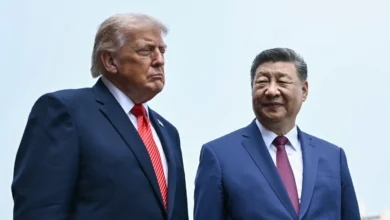
It remains uncertain whether the U.S. Supreme Court will take up the case, although legal experts suggest the justices may intervene due to the novel issues it raises regarding social media, national security, and the First Amendment. Meanwhile, TikTok is seeking potential support from President-elect Donald Trump, who vowed during his campaign to “save” the short-form video platform.
Additionally, the chair and top Democrat on a U.S. House of Representatives committee on China told the CEOs of Google-parent Alphabet and Apple that they must be prepared to remove TikTok from their U.S. app stores by January 19.
On Monday, TikTok and ByteDance had filed the emergency motion with the U.S. Court of Appeals for the District of Columbia, asking for more time to make their case to the U.S. Supreme Court, and warning that the law will impact over 170 million domestic monthly users.
Nevertheless, the court rejected the bid, saying TikTok and ByteDance had not identified a previous case “in which a court, after rejecting a constitutional challenge to an Act of Congress, has enjoined the Act from going into effect while review is sought in the Supreme Court,” Friday’s unanimous court order said.
Under the law, TikTok will be banned unless ByteDance divests it by Jan. 19. The law also gives the U.S. government sweeping powers to ban other foreign-owned apps.
The decision—unless reversed by the Supreme Court—puts TikTok’s fate in the hands of Democratic President Joe Biden, who will decide whether to grant a 90-day extension to the January 19 deadline for a forced sale. After that, the decision will pass to Republican President-elect Donald Trump, who takes office on January 20.