


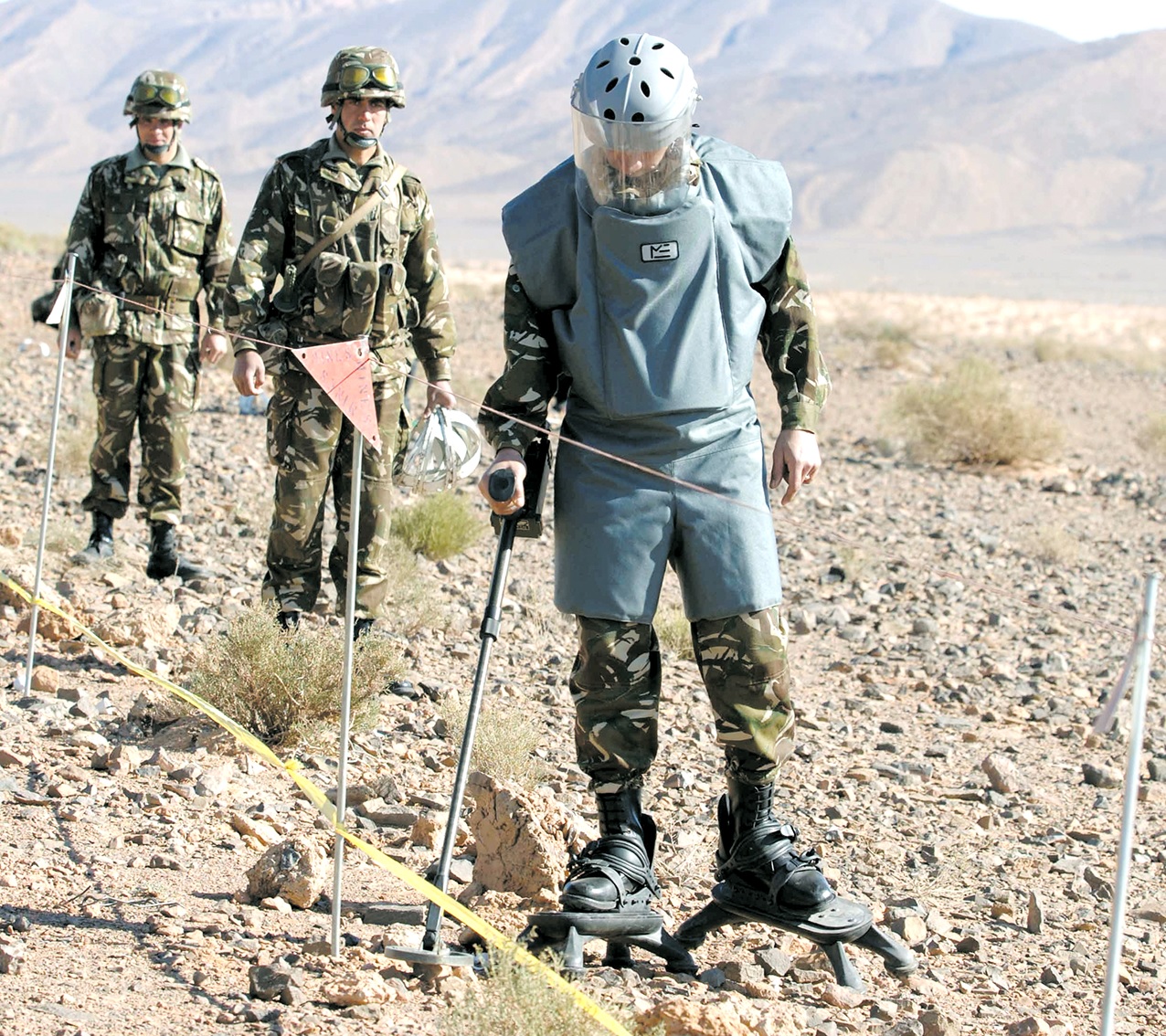
Rachid Bladehane, Algeria’s Permanent Representative to the United Nations Office in Geneva and other international organizations in Switzerland, called on the international community Friday to intensify efforts to eliminate landmines and ensure comprehensive support and inclusion for survivors and victims.
In a statement delivered at the 57th session of the Human Rights Council, Bladehane urged UN member states to “strengthen their commitment to relevant international treaties and unite towards building a mine-free world. This includes awareness campaigns and information dissemination regarding mines, particularly through the ratification and implementation of the Convention on the Prohibition of Anti-Personnel Mines.”
He also appealed for the international community to “accelerate demining efforts and ensure holistic assistance for victims, while closely collaborating with international organizations, civil society, and other partners to share knowledge, resources, and best practices in demining and victim assistance.”
In this regard, Bladehane emphasized the need for all countries to “promote education and awareness about the dangers posed by landmines.”
The Algerian representative in Geneva stated that “our responsibility extends beyond conflict prevention; it also includes addressing the damages caused by these weapons. Anti-personnel mines represent a tragic legacy that we must eradicate,” adding that “respect for human dignity compels us to act with determination and compassion to ensure a future where no one falls victim to these inhumane devices.”
He noted that anti-personnel mines constitute “a blatant violation of human rights. Beyond the inviolable right to life, they infringe upon the rights to health and education, preventing communities from accessing essential resources such as food and water.”
Bladehane explained that the degradation of explosive munitions can lead to “soil or groundwater contamination, trigger forest fires, and generally harm the environment.”
“No state can justify the use of these weapons, which strike indiscriminately and cause disproportionate harm,” he asserted.
He affirmed that “each year, anti-personnel mines claim numerous victims; innocent lives are lost, families are torn apart, and entire communities are plunged into despair.” He emphasized that “in many areas affected by this scourge, disabled survivors of mine explosions endure profound physical and psychological wounds. They often face significant barriers to accessing essential medical care, rehabilitation services, and opportunities for social reintegration.”
He further highlighted that “women and children, who are frequently the most vulnerable, are especially at risk in mine-affected regions.”
“The presence of mines hinders access to education, healthcare, and opportunities for cultural and economic participation, perpetuating cycles of poverty and exclusion,” he concluded.