Algerian Minister of State, Minister of Hydrocarbons and Mines, Mohamed Arkab, emphasized on Monday that adopting a policy of energy transition does not, in any way, mean abandoning fossil resources — foremost among them natural gas — which is considered a key transitional fuel in the global energy equation, as it is the cleanest, most efficient, and most suitable of the fossil fuels for the energy transformation phase.
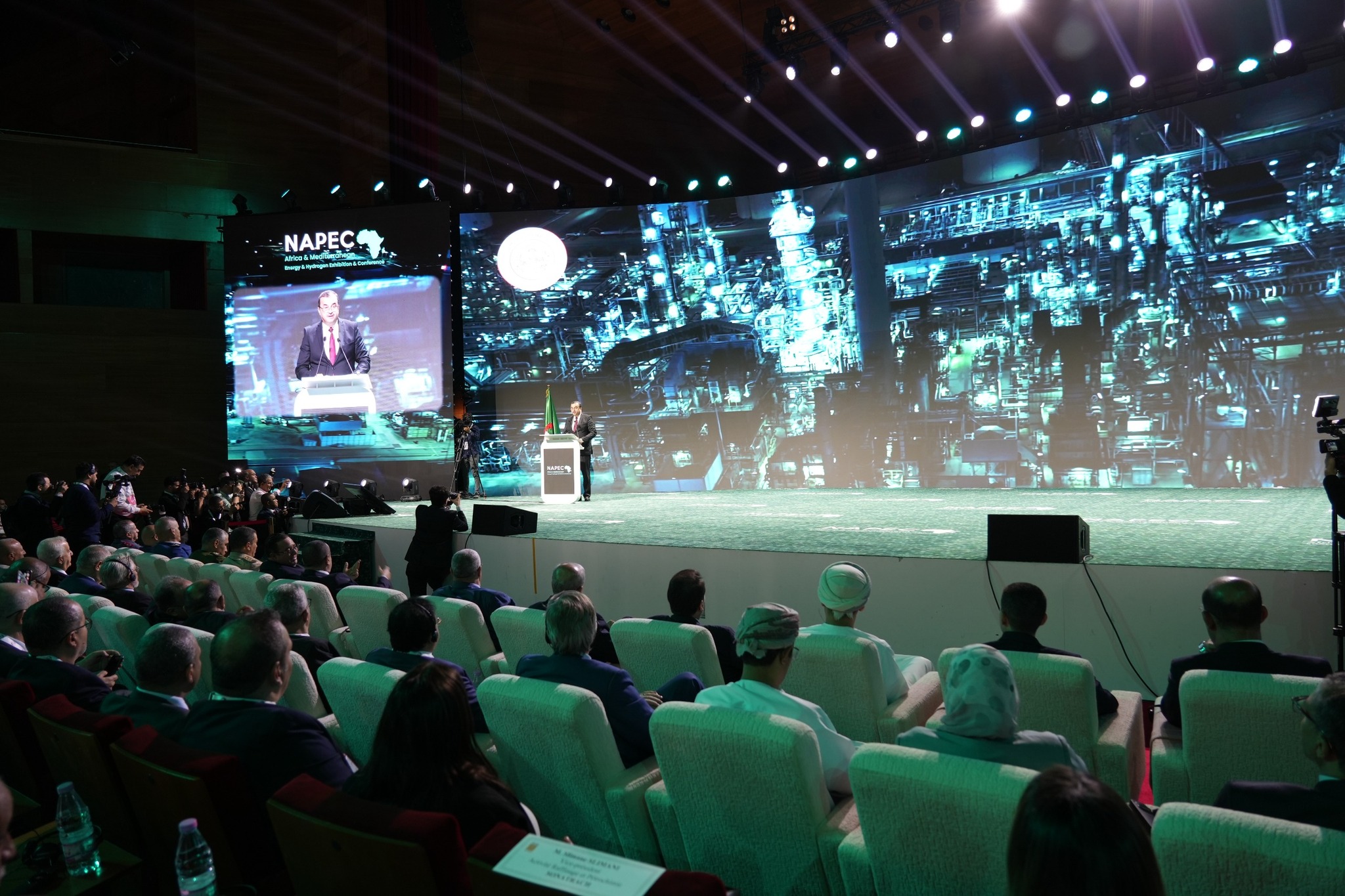
In his opening speech on the occasion of Africa & Mediterranean Energy & Hydrogen Exhibition and Conference (NAPEC 2025), Arkab noted that the recent report by the International Energy Agency calls for increased investment in the oil sector, adding that there will be a need for more than 45 million barrels of oil per day and around 2,000 billion cubic meters of natural gas by the year 2050.
“Based on this conviction, Algeria continues to work on the responsible and sustainable development and exploitation of all its hydrocarbon resources, in a way that strengthens its position as a reliable energy supplier and contributes to the country’s comprehensive development,” he said.
In this regard, Arkab affirmed that the sound policy pursued by the Algerian government, in accordance with the guidance of the President of the Republic, has contributed to shaping a clear vision for the development and modernization of the hydrocarbon sector through intensive investment in oil and gas infrastructure. This aims to increase production and storage capacities, boost exploration efforts, and expand the reserve base, enabling Algeria to respond with flexibility and efficiency to global shifts in energy markets.
In order to optimize the valorization of national potential, “the legal framework for hydrocarbons has been restructured through a new law that is more attractive and conducive to investment in exploration, research, and production — including in offshore areas. This has been accompanied by the adoption of modern technologies such as enhanced recovery, aimed at increasing recovery rates and ensuring the optimal exploitation of all our hydrocarbon resources,” he added.
Growing Energy Sector
Minister Arkab highlighted Algeria’s continued efforts to strengthen its exploration and production capacities, and to develop the petrochemical industry and oil refining, in a way that ensures the creation of added value and reduces dependence on the import of derivatives.
He added that during the period 2025–2029, Algeria plans to implement strategic projects, 80% of which are directed towards upstream activities, with the remainder allocated to refining and petrochemical projects, such as the Hassi Messaoud refinery, methanol and lead-free gasoline plants, diesel, and other major industrial units.
Arkab reiterated that Algeria is working to strengthen its gas transportation networks both domestically and internationally to ensure a secure and flexible flow of supplies. This is being achieved through strategic projects such as the Trans-Saharan Gas Pipeline (TSGP), which links Nigeria and Europe via Algeria and Niger, with an export capacity reaching up to 30 billion cubic meters annually.
“This project is considered a model of regional integration and constructive African partnership, as it will enhance local development in transit countries and achieve shared energy security between the North and the South.”