Trans-Saharan Gas Pipeline: 4th Trilateral Steering Committee Ministerial Meeting Commences in Algiers

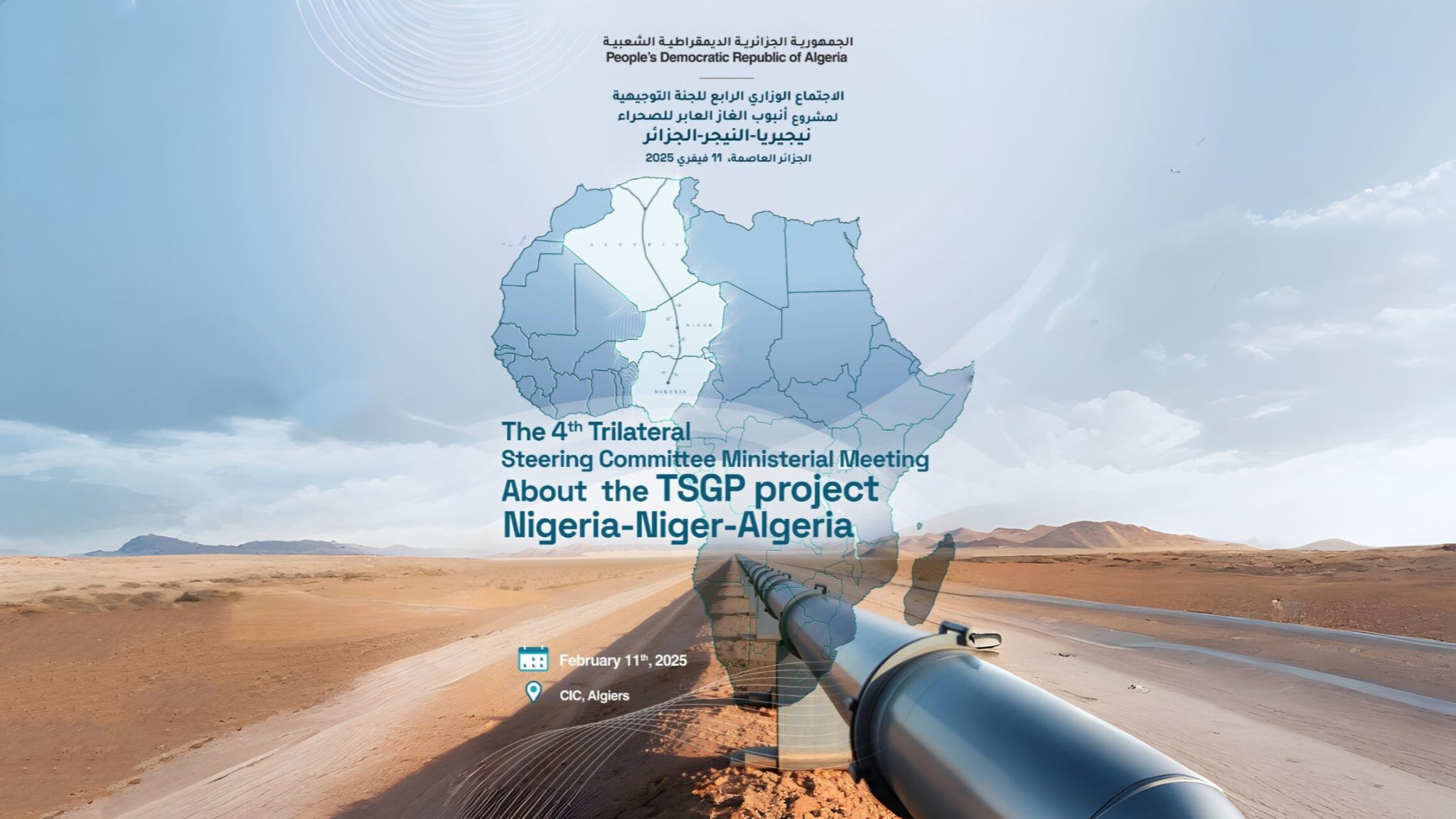
ALGIERS, February 11, 2025 – The fourth ministerial meeting of the steering committee for the Trans-Saharan Gas Pipeline (TSGP) project began on Tuesday in Algiers. This meeting convenes the Ministers of Energy and Petroleum from Algeria, Niger, and Nigeria to discuss the progress made in implementing the roadmap established during the previous meeting held in Abuja, Nigeria.
Taking place at the Abdelatif-Rahal International Conference Center, the meeting features participation from Mohamed Arkab, the Algerian Minister of State, Minister of Energy, Mines, and Renewable Energy; Sahabi Oumarou, the Minister of Petroleum of Niger; and Ekperikpe Ekpo, the Minister of State for Petroleum Resources of Nigeria.
This gathering is dedicated to reviewing various aspects of this strategic project, with a particular focus on the advancements achieved since the last meeting in Abuja.
Prior to this session, a preparatory meeting was held that included working groups and experts from the three countries, featuring representatives from Sonatrach (Algeria), Sonidep (Niger), and NNPC (Nigeria).
Algeria hosted the third ministerial meeting regarding this project in July 2022, resulting in the signing of a memorandum of understanding among the three nations, which reaffirmed their commitment to ongoing coordination and collaborative efforts for the successful realization of this significant initiative.
The TSGP is a strategic endeavor aimed at establishing a continental gas pipeline to transport natural gas from Nigeria through Niger to Algeria, facilitating exports to European markets and other international destinations.
This project aligns with the “New Partnership for Africa’s Development (NEPAD)” and plays a crucial role in enhancing Africa’s position as a key global energy supplier.
Ultimately, the Trans-Saharan Pipeline project aims to achieve multiple strategic objectives, including creating a new and vital route for exporting African natural gas to international markets, fostering economic development, strengthening the energy capacities of the three participating countries, and contributing to global energy security by diversifying sources of natural gas.