South Korea says nuclear‑powered submarine plans are not about fueling an arms race

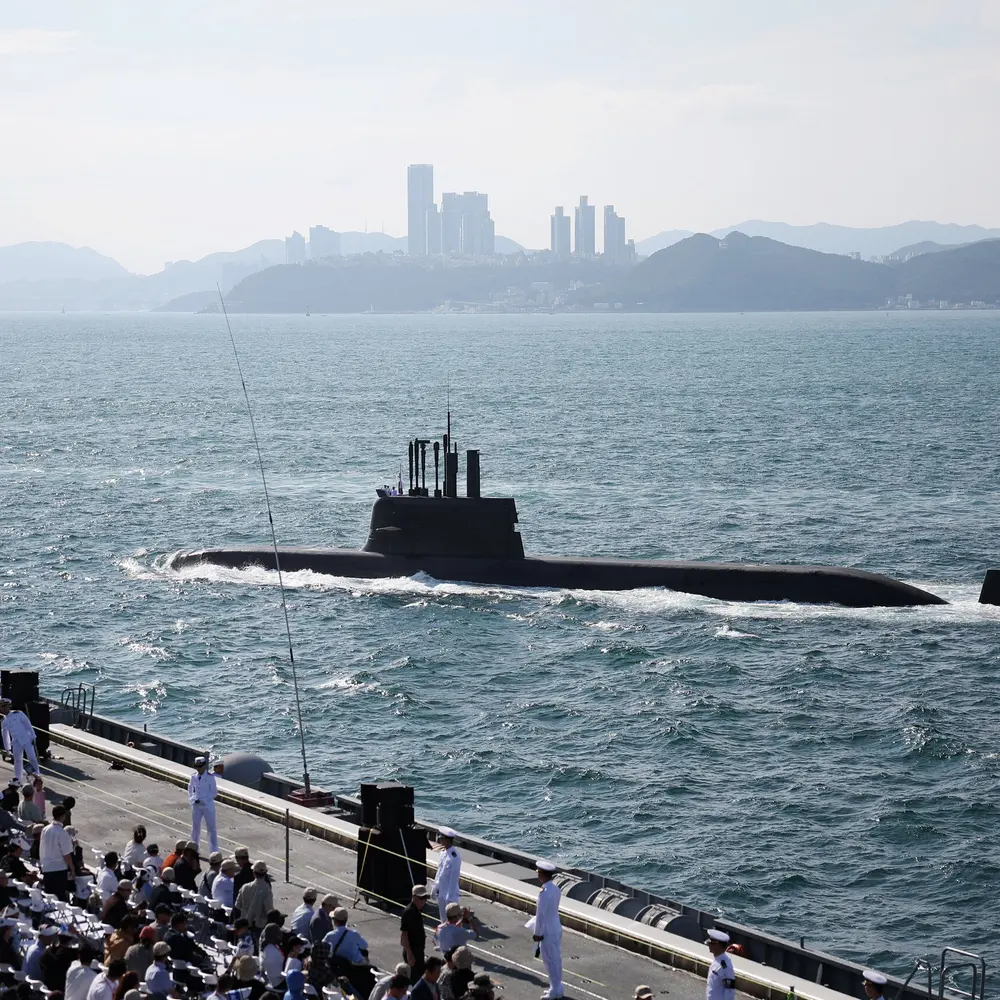
South Korea said on Monday its push to obtain nuclear-powered submarines was not intended to fuel a broader arms race, and that it had reassured Washington and Beijing that they were needed to respond to North Korea’s submarine programme.
U.S. President Donald Trump said on Thursday he has given South Korea approval to build a nuclear-powered submarine, a dramatic move that would admit Seoul to a small club of nations possessing such vessels.
“It is not to generate more of an arms race… but the result of persuading China and the U.S. that North Korea has announced (its own) nuclear submarines and we need to prepare correspondingly,” presidential chief of staff Kang Hoon-sik told reporters.
South Korea’s national security adviser Wi Sung-lac had said on Saturday that Seoul had asked for U.S. help so it could use fuel for its proposed nuclear-powered submarines, since it would be for military purposes, and the U.S. had approved it.
Asked whether that meant the U.S. would supply fuel for nuclear-powered submarines or if South Korea could enrich uranium for military purposes, the spokesperson for South Korea’s defence ministry said on Monday more discussion was needed between Washington and Seoul on the issue.
Separately, U.S. Defense Secretary Pete Hegseth visited the Demilitarised Zone along the border with North Korea as part of a trip to South Korea on Monday.
His visit to the heavily fortified DMZ came ahead of talks expected to involve Washington’s goal of reshaping the role of U.S. troops in Korea, according to Reuters.
Hegseth and South Korean Defence Minister Ahn Gyu-back are scheduled to hold the annual Security Consultative Meeting on Tuesday, the highest-level forum at which the two countries chart the course of their military alliance.
The two sides would discuss combined defence readiness and cooperation on regional security and cyber and missile defence, the South’s Defence Ministry said, adding that they are expected to discuss plans to respond to the “changing security environment and threats” by developing the alliance between the two countries.