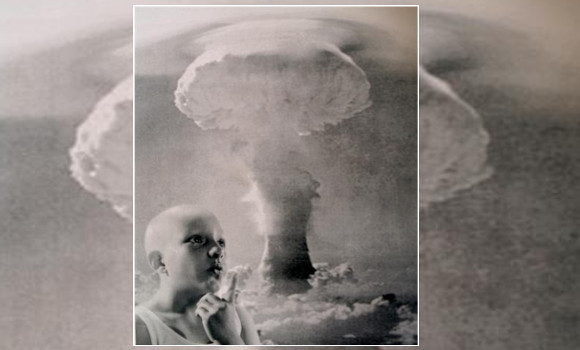
PARIS – French historian Christophe Lafaye has denounced the use of chemical weapons during the National Liberation War, saying that he has identified “450 military operations” using such weapons over the period of 1957-1959.
“Christophe Lafaye has managed to identify 450 military operations using chemical weapons in Algeria, mainly in mountain areas in High Kabylia and in the Aures region,” said actu.fr, the news website that interviewed him.
However, “the picture needs to be completed by opening archives that are still currently classified.”
“A number of documents are accessible, but not operation reports, march and operation logs, that is, the unit’s logbook,” Christophe Lafaye told the website.
“Consultation of such documents is essential, however, for the assessment of the number of victims and, by cross-checking, to identify missing victims.”
“It is important for families” as well as for “drawing up an exhaustive map of the sites where these weapons were used and the places exposed to fallout,” he added.
Despite these constraints, the work done by Christophe Lafaye traces the history of the use of chemical weapons by the French army.
“I was still able to find certain political decisions. It was the minister Maurice Bourgès-Maunoury who signed the authorization for the use of chemical weapons. The fourth Republic and the fifth Republic took full responsibility for, ordered and organised the conduct of chemical warfare” in Algeria, he said.
“One of the key figures in this chapter of history was General Charles Ailleret,” the historian said.
“He went down in history as the military father of the French atomic bomb, and when he served as Special Weapons Commander, he promoted the use of chemical weapons in Algeria. He wrote a book in 1948 in which he depicts the use of science in war as a factor of superiority in the conduct of operations,” Lafaye lamented.
“He has a deep conviction in the virtues of science as a weapon and as a means of achieving victory in the field.”