Firefly Aerospace scores lunar touchdown with Blue Ghost lander amid global moon race

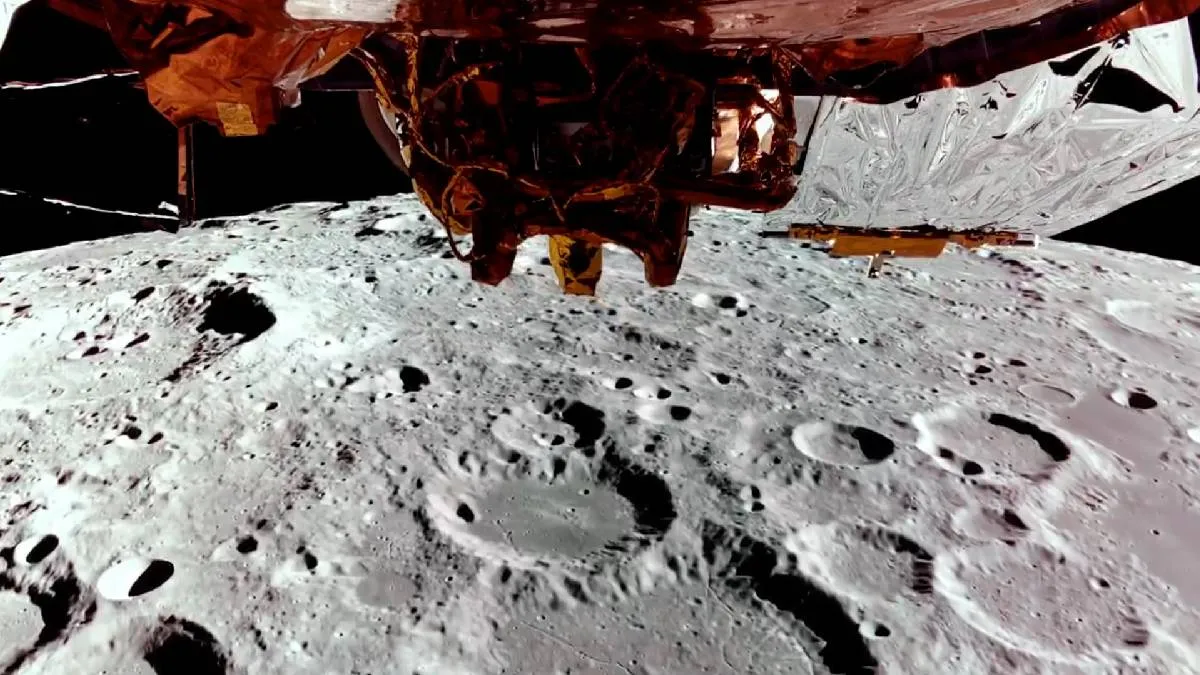
A private lunar lander carrying a drill, vacuum and other experiments for NASA touched down on the moon on Sunday, the latest in a string of companies looking to kickstart business on Earth’s celestial neighbour ahead of astronaut missions.
Firefly Aerospace’s Blue Ghost lander descended from lunar orbit on autopilot, aiming for the slopes of an ancient volcanic dome in an impact basin on the moon’s northeastern edge of the near side.
Confirmation of successful touchdown came from the company’s Mission Control outside Austin, Texas, following the action some 225,000 miles (360,000 kilometres) away.
“We’re on the moon,” declared Will Coogan, Blue Ghost Chief Engineer at Firefly Aerospace, from mission control.
Firefly became the second private firm to score a soft moon landing. Houston-based Intuitive Machines’ LUNR.O Odysseus lander made a lopsided soft touchdown last year. Five nations have made successful soft landings in the past—the then-Soviet Union, the U.S., China, India, and, last year, Japan.
“Every single thing was clockwork, even when we landed, and then after, we saw everything was stable and upright,” Firefly CEO Jason Kim said on stage at a company watch event in Austin. In the audience were hundreds of Firefly employees, space industry officials and senior NASA leaders, including the agency’s acting administrator Janet Petro.
On Blue Ghost, two onboard instruments will study the lunar soil and its subsurface temperatures in experiments by Honeybee Robotics, a firm owned by Blue Origin, which is developing its own lunar lander to send humans to the moon for NASA’s Artemis program later this decade.
NASA’s Langley Research Center has a stereo camera on board to analyze the lunar dirt plumes kicked up by Blue Ghost’s landing engine, gathering data to help researchers predict the dusty surface material’s dispersal during heavier moon missions in the future.
It is noteworthy that missions like Firefly’s Blue Ghost represent low-budget precursor missions to the moon that will enable research into the lunar environment before the U.S. sends its astronauts there. Firefly has a $101 million NASA contract for the mission.
China is also making swift progress in its own moon efforts, with its robotic Chang’e lunar program and plans to put Chinese astronauts on the moon’s surface by 2030. Also eyeing the moon are U.S.-aligned Japan and India, which made its first soft lunar landing in 2023.