Algerian President: Hostile statements from French politicians create a toxic atmosphere

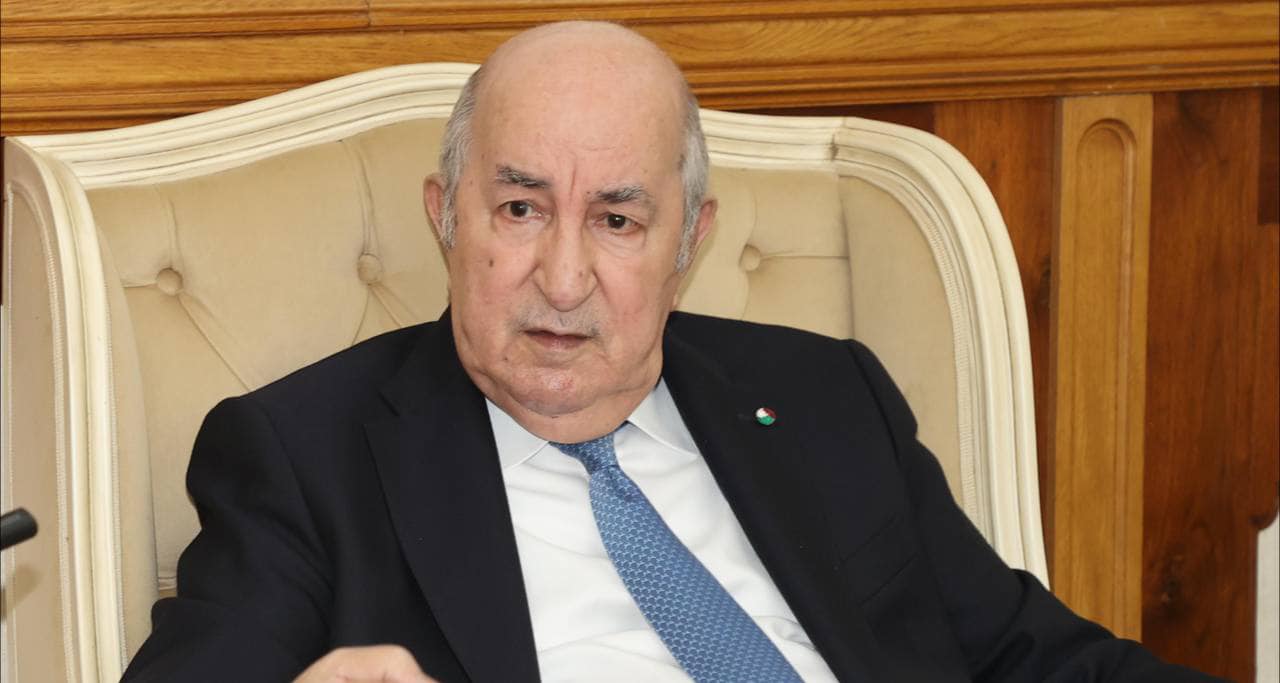
Algerian President Abdelmadjid Tebboune emphasised that the hostile remarks made by French politicians against Algeria have created a toxic environment, leading to a deterioration in bilateral relations between Algeria and France.
In an interview with the French newspaper L’Opinion, President Tebboune said, “the atmosphere is toxic, and we are wasting time with President Emmanuel Macron. We had high hopes of overcoming the disagreements related to the Memory, and that is why, on my initiative, we created a joint committee to write this history, which still causes us pain.”
“In an effort to depoliticize the issue, I met historian Benjamin Stora twice, who I respect greatly. He is working diligently with both French and Algerian colleagues using various archives, although I regret that we have not delved deeper into the subject,” President Tebboune added.
President Tebboune also mentioned that, following President Macron’s visit in August 2022, he outlined an “ambitious roadmap,” which was followed by a visit from then-Prime Minister Élisabeth Borne, whom he described as “a competent woman who handles her files well.” However, he noted that “no progress has been made, except in trade relations.”
In this regard, “political dialogue has almost come to a halt,” the Algerian President said, pointing to the “hostile statements made daily by French politicians, such as those from MP Éric Ciotti from Nice and National Rally member Jordan Bardella.”
“These individuals aspire to one day lead France. Personally, I distinguish between the majority of French people and a minority of reactionary forces, and I will never insult your country,” he said.
President Tebboune also questioned how Marine Le Pen would behave if she were to come to power, asking, “Does she intend to carry out a new Vel’ d’Hiv-style roundup and deport all Algerians?”
When asked about his willingness to resume dialogue, provided there are “strong political statements,” he responded, “Of course. It is not for me to make these statements. For me, the French Republic is, above all, its president.”
Besides, the Algerian president acknowledged the presence of intellectuals and politicians in France whom Algeria respects, including “Jean-Pierre Chevènement, Jean-Pierre Raffarin, Ségolène Royal, and Dominique de Villepin, who has a strong reputation across the Arab world for reflecting the image of a France that once carried weight,” adding that these individuals should be allowed to express their views. Meanwhile, “those who claim to be journalists should not be allowed to interrupt or insult them, especially in the media outlets of Vincent Bolloré, which seem to have the daily task of tarnishing the image of Algeria.”
“We have no issues with other media, whether public or private,” President Tebboune added.
Regarding the criticism of the 1968 agreements by some French political figures, President Tebboune regarded it as “a matter of principle,” questioning why the text, which had been revised in 1985, 1994, and 2001, should be dismissed.
“Some politicians use doubts about these agreements as a pretext to attack the Evian Accords that shaped our post-war relations. The 1968 agreements are merely an empty shell, used to rally extremists, as was the case with Pierre Poujade,” he added.
On the topic of Algeria’s influence over the Grand Mosque of Paris, President Tebboune said, “The Algerian state did not want dubious associations to infiltrate the mosque and has always overseen its maintenance.”
He recalled that, during his time as Minister of Communication and Culture, he had approved funding for restoration efforts, explaining that “official France had no objections and regularly responded to invitations from the mosque’s rector.”
“The Grand Mosque is not a propaganda office,” he said, adding that “the current rector, Chems-Eddine Hafiz, was chosen in consultation with his predecessor, Dalil Boubakeur, and the French state.”