Algeria/Slovenia: The two countries sign a joint declaration, paving the way for deeper bilateral cooperation
Ljubljana – The Algerian Foreign Minister Ahmed Attaf and Slovenian Deputy Prime Minister and Minister of Foreign Affairs and European Affairs Tanja Fajon signed a joint declaration affirming their mutual commitment to continue deepening bilateral relations and exploring new avenues of cooperation.

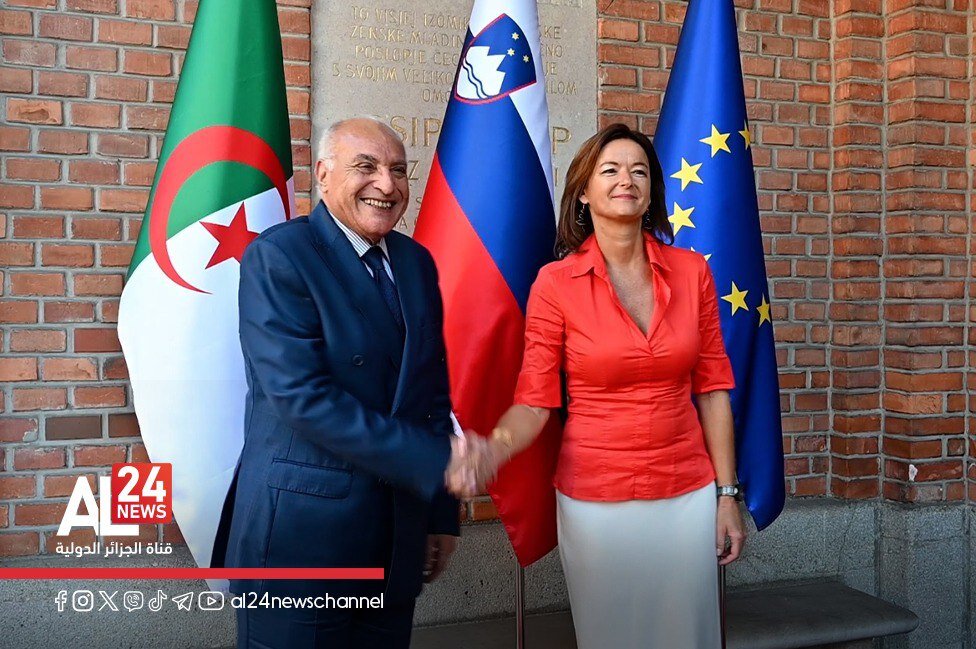
During his working visit to Slovenia, commissioned by President Abdelmadjid Tebboune, Mr. Attaf, alongside Ms. Fajon, emphasised the importance of further enhancing their bilateral relations across various sectors, including economy, artificial intelligence, digitisation, and migration, as stated in the joint declaration.
Regarding economic cooperation, the ministers considered it “a fundamental pillar of bilateral relations” and pledged to “strengthen economic ties between the two countries,” looking forward to implementing the economic cooperation agreement that came into effect in March 2024.
They also praised the increasing cooperation in the energy sector, including the signing of an annex to the 2022 natural gas supply agreement between Sonatrach and Geoplin. Additionally, they recognised progress in bilateral cooperation on migration and security.
In this regard, Algeria and Slovenia agreed to open embassies in each other’s capitals.
On the international sphere, Mr. Attaf and Ms. Fajon reiterated their joint commitment to working together in multilateral forums and exploring opportunities for cooperation on international issues. As non-permanent members of the UN Security Council, both countries recognise the importance of joint efforts to maintain peace and security.
The ministers commended the coordination between their delegations at the Security Council, particularly regarding the Palestinian issue. They urgently called for an “immediate and sustainable ceasefire in Gaza, a complete withdrawal of the Zionist occupation forces from the Strip, and the opening of an unhindered humanitarian corridor” in the region.
Regarding the Western Sahara issue, the ministers reiterated their long-standing support for the UN process, aspiring for a fair, sustainable, and mutually acceptable political solution that respects the right to self-determination of the Sahrawi people, in accordance with relevant General Assembly and Security Council resolutions and the principles and objectives of the UN Charter.