Algeria Inaugurates First National Electronic Chip Design and Production Laboratory

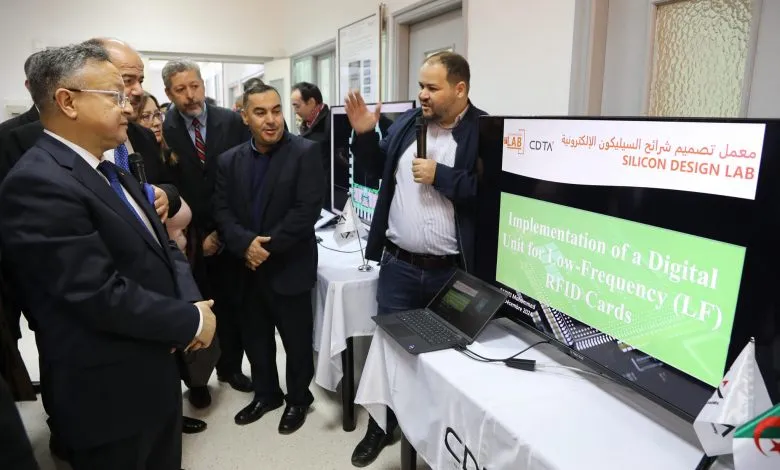
In a historic development for Algeria’s technological landscape, Minister of Higher Education and Scientific Research Kamel Baddari inaugurated the country’s first national laboratory for electronic chip design and production on Monday.
Located at the Centre for the Development of Advanced Technologies (CDTA) in Baba Hassen, Algiers, the state-of-the-art facility marks a major step towards achieving technological sovereignty and boosting applied research across key economic sectors.
Minister Baddari described the laboratory as a “turning point” for Algeria, proudly announcing the nation’s success in mastering 65-nanometer chip design technology. “This is the first time our researchers have mastered 65-nanometer technology design,” he said, emphasizing that this achievement firmly places Algeria on the global map of advanced chip production.
The laboratory is set to begin manufacturing electronic chips by April 2025, focusing on high-performance electronic boards, and is expected to facilitate the creation of 25 startups, signaling a transformative shift in Algeria’s technological infrastructure.
The laboratory’s roadmap includes the ambitious goal of producing 13-nanometer chips by 2026 for applications such as biometric cards. This initiative is anticipated to drive significant economic growth, create wealth, and generate jobs, transforming research centers into engines of industrial development.
Since 2023, specialized teams have been working to achieve these milestones, utilizing local expertise to reach new technological frontiers.
Alongside the laboratory, the CDTA is launching an incubator aimed at supporting 25 startups by 2025, which will be integrated into Algeria’s industrial value chains.
The CDTA has already developed groundbreaking prototypes, including a forest fire detection system and an aquatic robot for measuring silt levels in dams.
Minister Baddari highlighted these innovations as a testament to Algeria’s commitment to linking scientific research with practical solutions to national challenges, in alignment with President Abdelmadjid Tebboune’s vision.
The launch of this laboratory is expected to create nearly 1,000 jobs by 2027, offering opportunities for young university graduates and reinforcing the role of Algeria’s higher education institutions in fostering national development.
With initiatives like the electronic chip laboratory and its associated startups, Algeria is poised to emerge as a leading player in advanced technology, with a clear path towards technological and economic sovereignty.