AI geopolitics takes center stage at high-stakes summit

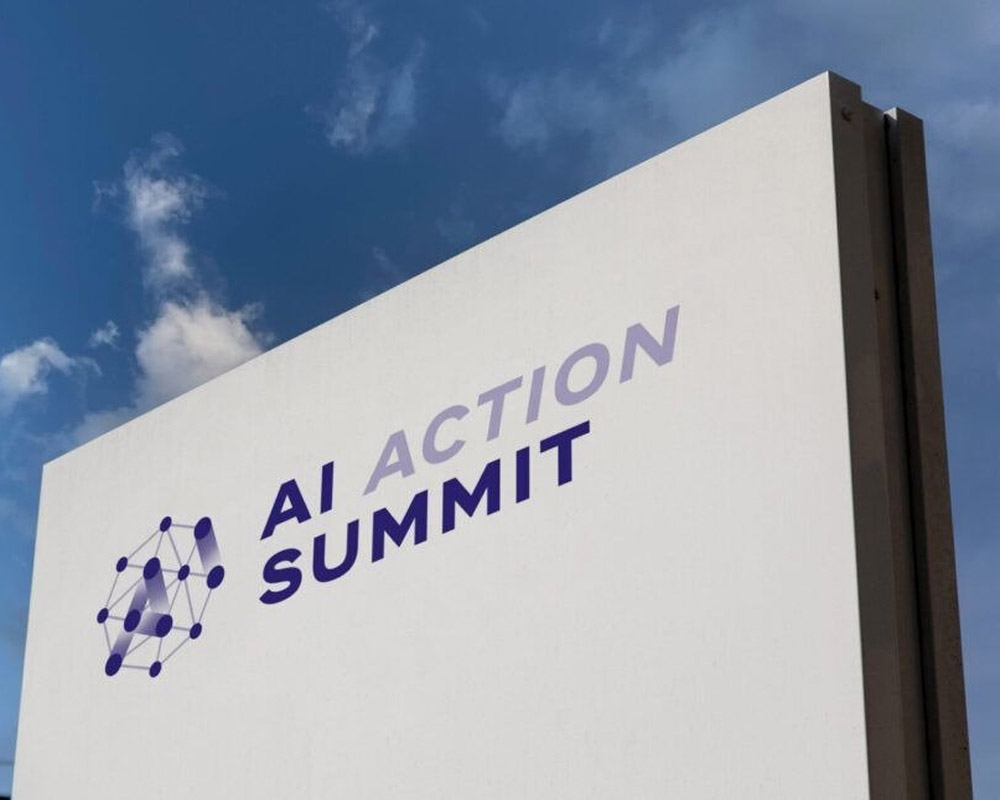
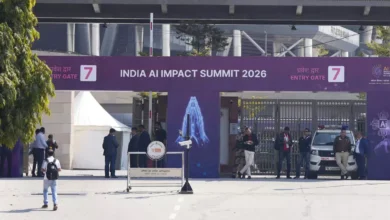
The geopolitics of artificial intelligence will be in focus at a major summit in France, starting on Monday, where world leaders, executives, and experts will hammer out pledges on guiding the development of the rapidly advancing technology.
It’s the latest in a series of global dialogues around AI governance, but one that comes at a fresh inflection point as China’s buzzy and budget-friendly DeepSeek chatbot shakes up the industry.
Heads of state and top government officials, tech bosses, and researchers are gathering in Paris for the two-day summit, which aims to address how to harness artificial intelligence’s potential so that it benefits everyone, while containing the technology’s myriad risks.
European Commission President Ursula von der Leyen is attending, along with company officials from 80 countries, including German Chancellor Olaf Scholz, Canadian Prime Minister Justin Trudeau, OpenAI CEO Sam Altman, Microsoft President Brad Smith, and Google CEO Sundar Pichai.
Tesla chief Elon Musk, and DeepSeek founder Liang Wenfeng have been invited, but it’s unclear if either will attend.
Organizers are working on getting countries to sign a joint political declaration gathering commitments for more ethical, democratic, and environmentally sustainable AI. But it’s unclear whether the U.S. would agree to such a measure.
A public-interest partnership named “Current AI” is to be launched with an initial $400 million investment. The initiative aims at raising $2.5 billion over the next five years for the public-private partnership involving governments, businesses, and philanthropic groups that will provide open-source access to databases, software, and other tools for “trusted” AI actors.
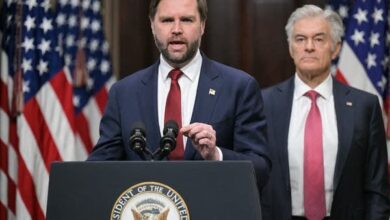
U.S. President Donald Trump has spoken of his desire to make the U.S. the “world capital of artificial intelligence” by tapping its oil and gas reserves to feed the energy-hungry technology. Meanwhile, he has moved to withdraw the U.S.—again—from the Paris climate agreement and revoked former President Joe Biden’s executive order for AI guardrails.
Trump is replacing it with his own AI policy designed to maintain America’s global leadership by reducing regulatory barriers and building AI systems free of “ideological bias.”
The U.S. position might undermine any joint communique, said Nick Reiners, senior geotechnology analyst at the Eurasia Group.
“Trump is against the very idea of global governance,” Reiners said. “It’s one thing to get countries to agree that AI should have guardrails and that AI safety is something worth caring about. But they’ve widened the scope to talk about the future of work and the environment and inclusivity and so on—a whole range of concepts. So, it’s hard to imagine getting a widespread agreement on such a broad range of subjects.”
Chinese leader Xi is sending Vice Premier Zhang Guoqing, who’s been elevated to the role of Xi’s special representative.
It’s a big step up from the 2023 Bletchley meeting in England, when the Chinese government sent the vice minister of science and technology.
This comes following DeepSeek’s release last month, which stunned the world because of its ability to rival Western players like ChatGPT. It also escalated the wider geopolitical showdown between Beijing and Washington over tech supremacy.