Yemen: A3+ Group at UNSC Expresses Serious Concern Over Food Insecurity

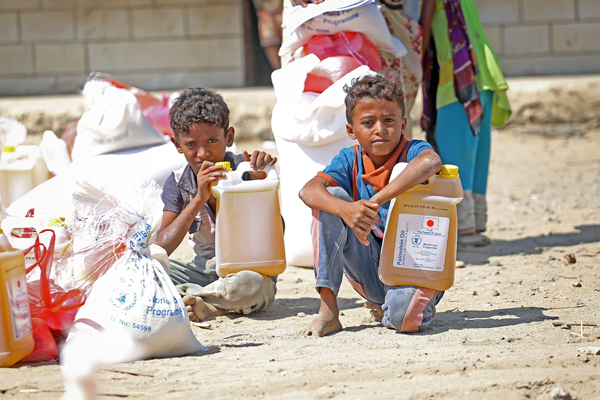
The A3+ group at the UN Security Council voiced its profound concern on Wednesday regarding the alarming level of food insecurity in Yemen, urging donors to “mobilize the necessary resources” to help the nation address this crisis.
In a speech before fellow Security Council members convened to discuss the situation in the Middle East, Sierra Leone’s representative, Ambassador Michael Imran Kanu, emphasized that “the A3+ group (comprising Algeria, Mozambique, Sierra Leone, and Guyana) is gravely worried about the extent of food insecurity” in Yemen.
Referencing data from the World Food Program (WFP), Ambassador Kanu highlighted that “62% of households in Yemen are unable to meet their minimum food requirements.”
He further elaborated that “an alarming 30% increase has been recorded compared to the previous year, as noted in the Global Humanitarian Outlook for 2025 published by OCHA (the UN Office for the Coordination of Humanitarian Affairs).”
The Sierra Leone representative also pointed out that OCHA predicts persistently high levels of food insecurity and malnutrition.
“We estimate that 17 million people—nearly half of the population—will face severe food insecurity, with 3.5 million individuals suffering from acute malnutrition,” he stressed.
To combat this “catastrophic” situation, the A3+ group called on donor countries to “significantly increase their contributions to the humanitarian response plan for Yemen for 2025” and to “mobilize the necessary resources.”
The Permanent Representative of Sierra Leone to the UN reminded attendees that Yemen is “at the center of a multidimensional crisis,” which includes ongoing conflict, the devastating impacts of climate change, economic collapse, and one of the “most severe humanitarian emergencies in modern history.”
“The A3+ fully supports the efforts of the United Nations and regional actors to achieve a political resolution to the Yemeni conflict based on the already established framework,” he affirmed.
He deemed it “essential” for the political process aimed at achieving a “sustainable and just” resolution to be led and directed by Yemenis themselves.
“We believe that an inclusive and balanced process ensuring the participation of women and youth can help end the conflict, break the political deadlock, and lay the groundwork to meet the needs of the Yemeni people,” he explained, highlighting the “importance of ongoing mediation efforts under the auspices of the United Nations” and the “continued preservation of gains made during peace talks.”
“The A3+ is concerned that Yemen is losing the attention of the international community amid ongoing instability and tensions throughout the Middle East,” he added, expressing alarm over the “escalation of attacks on Yemeni territory by foreign actors.”
These assaults “jeopardize ongoing mediation efforts,” he cautioned, asserting that “military intervention cannot resolve the Yemeni crisis.”
For the A3+, “only diplomatic efforts and political dialogue can pave the way for lasting peace” in Yemen.
“The A3+ strongly believes that an immediate and permanent ceasefire in Gaza is crucial for long-term peace in the region,” he urged, calling on “all parties to the conflict and external regional actors to cease all military actions and choose the path of peace.”