Key takeaways from the 2024 U.S. Presidential Election
Kamala Harris and Donald Trump are neck and neck in key battleground states, which are set to determine the outcome.

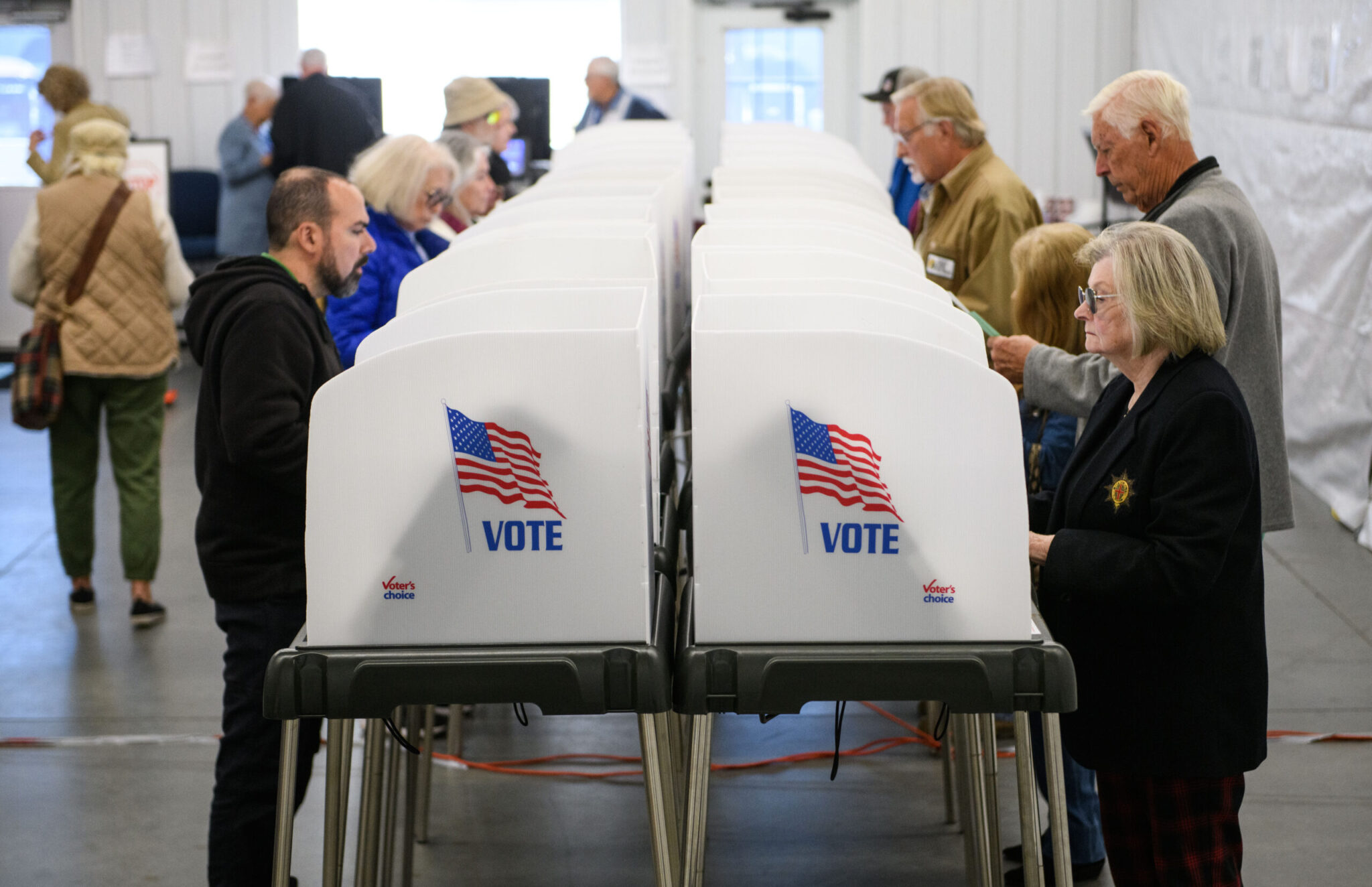
The 2024 U.S. presidential election has been marked by a roller-coaster of events and is set to conclude on Tuesday, with millions of voters across the country preparing to cast their ballots on Election Day.
Using US East Coast time (ET), voting will kick off as early as 5am (10:00 GMT) on Tuesday and continue as late as 1am (06:00 GMT) on Wednesday.
There are 230 million eligible voters, but only about 160 million of them are registered. However, nearly half of the 50 states allow voters to register on the day of the election, making it possible for eligible individuals to vote even if they haven’t registered in advance. Additionally, in North Dakota, citizens can vote without needing to be registered at all.
More than 82 million people have already voted through postal ballots or at early in-person polling stations.
In parallel, voters will also elect 34 US senators (out of 100) and all 435 members for the US House of Representatives. Additionally, gubernatorial races will take place in 11 states and two territories (Puerto Rico and American Samoa).
According to recent polls, Democratic candidate Kamala Harris and Republican Donald Trump are locked in a tight race, with the outcome still uncertain. Nevertheless, the next president will be decided by the electoral college rather than a simple count of the national vote; that is, the winner will be the one who secures a majority of 270 of the 538 electors across the 50 states, regardless of the votes received nationwide.
As a result, the outcome is likely to hinge on who wins in the seven battleground states — Arizona, Georgia, Michigan, Nevada, North Carolina, Pennsylvania, and Wisconsin—which both sides have identified as key to securing victory.
Who is winning in swing state polls?
Pennsylvania: A very tight race, with Harris leading by just 0.2 points in the FiveThirtyEight average. Polls show a virtual tie, with both candidates at 48% in some surveys, while Emerson has Trump up by 1 point.
Nevada: Another close race, with Trump ahead by 0.3 points in the FiveThirtyEight average, but Harris leads in some polls, including Times/Siena (49%-46%) and YouGov (48%-47%).
Georgia: Trump holds a narrow 0.7-point lead in FiveThirtyEight’s average. Polls show mixed results, with Trump slightly ahead in Emerson, Morning Consult, and YouGov, while Harris leads in the Times/Siena poll (48%-47%).
North Carolina: Trump leads by 0.9 points in FiveThirtyEight, with small margins in other polls (Emerson, Morning Consult, YouGov). Harris leads in the Times/Siena poll (48%-46%).
Michigan: Harris has a slight edge, leading by 1 point in the FiveThirtyEight average, with Emerson and Morning Consult showing her ahead by 2 points. The Times/Siena poll is tied at 47%.
Wisconsin: Harris has a small lead of 1.1 points in FiveThirtyEight’s data, with her being ahead in some polls (YouGov, Times/Siena), while others (Emerson, Morning Consult) show a slight Trump lead.
Arizona: Trump leads by 2.2 points in the FiveThirtyEight average. Polls show Trump ahead in most surveys (Times/Siena, Emerson, YouGov), but Morning Consult found a tie.
It is noteworthy that polls generally reflect public sentiment, not precise election predictions, especially when the margin is less than a percentage point. Additionally, individual polls have a margin of error of 3-4 percentage points, meaning either candidate could be performing better or worse than the current numbers suggest.