In recent years, Algeria has made significant strides in supporting vulnerable people and implementing social justice. The social sector has been given great importance through efforts to improve citizens’ living conditions and protect their dignity. The Algerian state has focused on various measures to combat poverty, reduce inequality, support vulnerable people, increase wages and pensions, assist people with disabilities and low-income families, and enhance social security and housing systems.
Distribution of Over 1.1 Million Homes
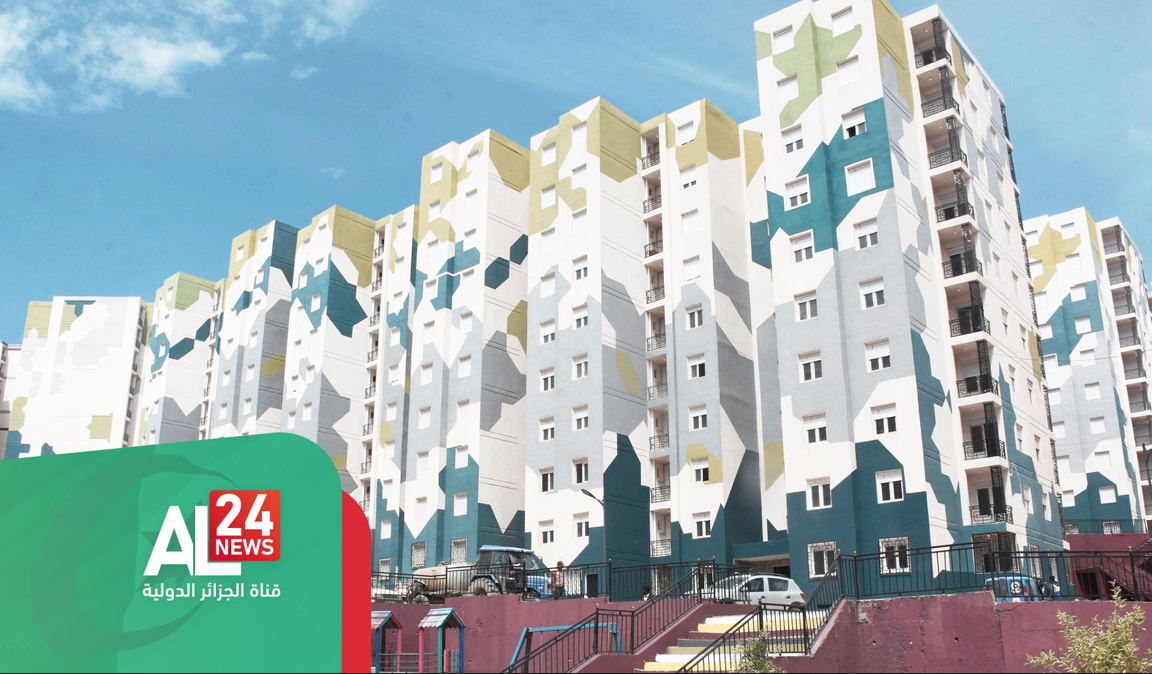
The Algerian state has made substantial efforts to provide housing, with nearly 1.1 million housing units completed in various types of housing programs since 2020, an unprecedented number in the history of independent Algeria. According to the National Economic, Social, and Environmental Council’s report on development, public rental housing units totaled 215,790, with 404,888 units delivered between 2020 and 2023.
For the Subsidized Promotional Housing program, 61,364 units were completed, with 56,275 units delivered. In the Lease to Own program “AADL”, 372,541 units were completed and 427,850 units delivered, including 123,850 units in the specified period. The Promotional Public housing program saw notable development, with 23,687 units completed and 9,166 units delivered between 2020 and 2023.
The Rural housing program saw a total of 294,056 units completed, with 229,309 units delivered between 2020 and 2023. The self-built program yielded 37,947 units between 2020 and 2023, with 119,343 units delivered, including 31,343 units in 2023 alone.
Eliminating Substandard Housing
The implementation of the precarious housing absorption program has led to the removal of approximately 45,000 units in recent years, according to the National Economic, Social, and Environmental Council’s report on social and human development. The report indicates that the absorption program removed around 45,000 units, with 6,117 units removed in 2023, 6,210 units in 2022, 11,291 units in 2021, 10,759 units in 2020, and 10,225 units in 2019.
Improving Citizens’ Living Standards
The National Economic, Social, and Environmental Council highlighted the importance of measures taken to improve citizens’ living standards. In 2020, the minimum guaranteed basic wage was increased from 18,000 Algerian dinars per month to 20,000 DZD per month. The salary scale for employees was also revised, with salary increases ranging from 4,500 DZD to 8,500 DZD based on categories, implemented in two phases, starting from January 1, 2023, and the second phase at the beginning of 2024.
Pensions and allowances were reviewed, increasing by 3% to 5% based on income starting from May 1, 2023. Additionally, pension law was amended to ensure the annual pension amount is not less than the minimum guaranteed basic wage and introduced a pension for workers aged 60 and above. The solidarity allowance for people with 100% disability increased from 10,000 DZD to 12,000 DZD for those over 18 with no income, and from 3,000 DZD to 7,000 DZD for those under 18 and families with disabled dependents who have less than 100% disability and no income.
The number of beneficiaries of the solidarity allowance increased by 11% between 2019 and 2023, from 930,000 in 2019 to 1,034,000 in 2023. The measures also included unemployment benefits introduced in 2022, raised to 15,000 DZD per month starting January 1, 2023.
Supporting Women’s Participation in National Production
During the same period, several plans and programs were implemented within the framework of social activities of national solidarity to support specific social groups, with significant progress in the joint inter-sectoral program to support women’s participation in national production. More than 27,257 women benefited from micro-loans, 27,549 women received vocational training, and 137,849 female artisans created 84,993 jobs across 1,272 municipalities.
Connecting 12,561 Grey Areas Home to 6.8 Million People
Regarding efforts to de-isolate and develop disadvantaged areas, with a broad initiative that connected 12,561 grey areas in 1,361 municipalities, covering 6.8 million people. These areas benefited from 29,541 development projects with a budget of 453 billion DZD, leading to various achievements. Over 585,000 households gained access to drinking water, 300,000 households to sewage systems, and more than 100,000 homes to electricity. Additionally, over 8,000 solar panels were installed, and more than 200,000 households received natural gas.
To improve education in these areas, 104 primary schools were built, and 1,000 primary schools were renovated. The areas also saw the renovation of over 9,000 km of roads and the opening of more than 5,000 km of pathways, along with 149 new health centers and the renovation of 510 centers, with 187 others equipped.
In terms of employment and social security, the number of job offers through the National Employment Agency rose to 439,508 in 2023 from 379,051 in 2021, a 15.9% increase. By the end of January 2023, over 554,000 beneficiaries had been integrated into jobs, including more than 320,000 benefiting from the social integration assistance program in public institutions.
In February 2022, Algerian President Abdelmadjid Tebboune announced a new unemployment benefit for first-time jobseekers aged 19 to 40. On March 28, 580,000 young Algerians received their first monthly payment. In January 2023 ,Tebboune increased the unemployment benefit from DZD13,000 to DZD15,000.
Algeria could have achieved even better social gains in recent years, had it not been for the coronavirus pandemic, which disrupted most sectors in the country. This indicates even greater achievements in the coming years.