Venezuela on Edge: Maduro in custody, Trump says US will run the country

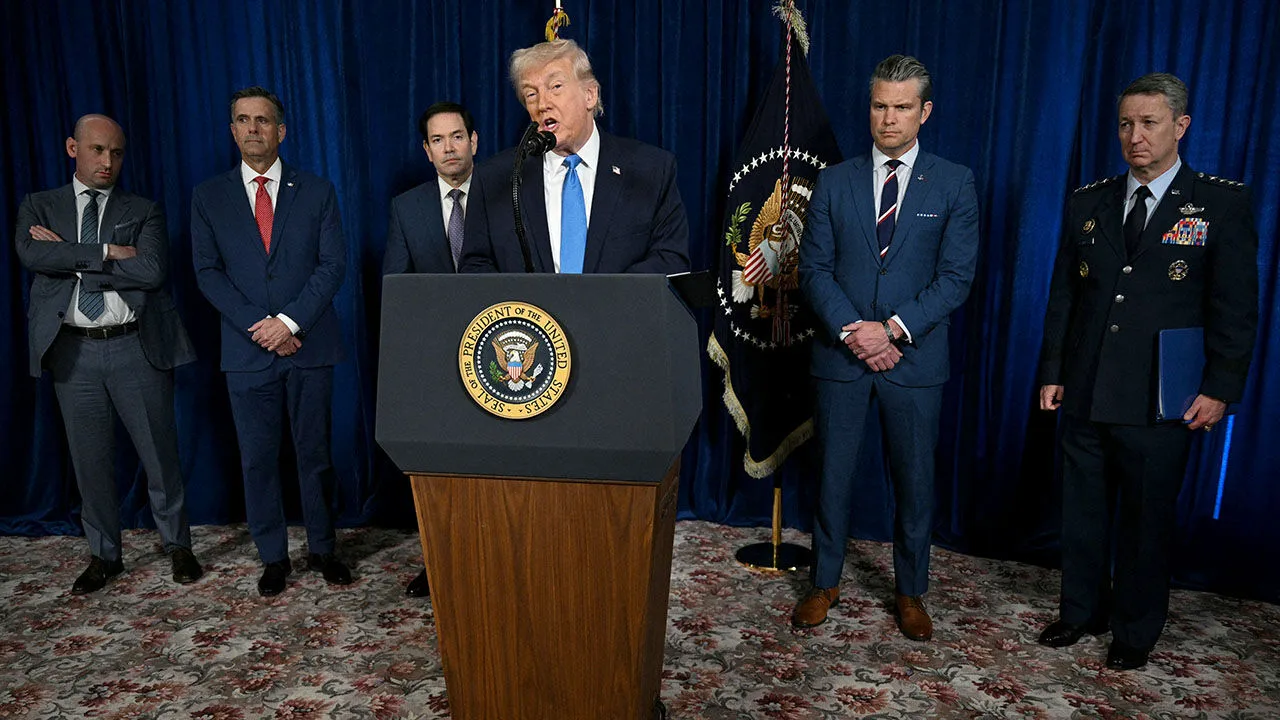
Venezuelan President Nicolas Maduro was in a New York detention center on Sunday after President Donald Trump ordered a U.S. raid to capture the South American leader and take control of the country and its vast oil reserves, the Reuters news agency reported.
As part of the attack early on Saturday that knocked out electricity in parts of Caracas and included strikes on military installations, U.S. Special Forces seized Maduro and his wife, Cilia Flores, and transported them via helicopter to a U.S. Navy ship offshore before flying them to the U.S.
A plane carrying Maduro landed near New York City on Saturday night, and he was helicoptered to the city before being taken by a large convoy to the Metropolitan Detention Center in Brooklyn under a heavy police guard.
Images released by U.S. authorities showed the leader handcuffed and blindfolded during the flight, and later being led down a hallway at the offices of the U.S. Drug Enforcement Administration, where he was heard wishing a “happy New Year.”
According to a Justice Department official, Maduro is expected to make an initial appearance in Manhattan federal court on Monday.
Maduro’s vice president, Delcy Rodriguez, appeared on Venezuelan television on Saturday afternoon with other top officials to decry what she called a kidnapping.
“We demand the immediate release of President Nicolas Maduro and his wife Cilia Flores,” Rodriguez said, calling Maduro “the only president of Venezuela.” A Venezuelan court ordered Rodriguez to assume the position of interim president.
Some Venezuelan civilians and members of the military were killed, said Rodríguez, who didn’t give a number. Trump said some U.S. forces were injured, but none were killed.
Following the attack, the streets of Venezuela were mostly calm after a rush for groceries and fuel. Soldiers patrolled some parts and small pro-Maduro crowds gathered in Caracas.
Echoes of Past U.S. Interventions
At a press conference at his Mar-a-Lago resort in Florida, Trump said the U.S. “will run the country until such time as we can do a safe, proper and judicious transition.”
Trump said as part of the takeover, major U.S. oil companies would move back into Venezuela, which has the world’s largest oil reserves, and refurbish badly degraded oil infrastructure, a process experts said could take years.
He said he was open to sending U.S. forces into Venezuela. “We’re not afraid of boots on the ground,” he said.
Trump’s comments about an open-ended military presence in Venezuela echoed the rhetoric around past invasions in Iraq and Afghanistan, both of which ended in American withdrawals after years of costly occupation and thousands of U.S. casualties.
It is worth noting that Venezuela has the world’s largest oil reserves, as it holds about 17% of global reserves or 303 billion barrels, ahead of OPEC leader Saudi Arabia, according to the London-based Energy Institute.
Its reserves are made up mostly of heavy oil in Orinoco in central Venezuela, making its crude expensive to produce, but technically relatively simple, according to the U.S. government’s energy department.
The United States used to be the main buyer of Venezuelan oil but since the introduction of sanctions, China has become the main destination in the last decade.
Exports have stopped since Trump announced a blockade of all vessels entering or leaving the country in December 2025.
Francisco Monaldi, director of the Latin America Energy Program at Rice University’s Baker Institute in Houston, said that Chevron is immediately positioned to benefit the most from any potential oil opening in Venezuela. Still, he said that other U.S. oil companies will be paying close attention to political stability and wait to see how the operational environment and contract framework unfold.
Rule of Law?
Lawmakers from both American political parties have raised reservations and flat-out objections to the U.S. attacks on boats suspected of drug smuggling. Congress has not approved an authorization for the use of military force for such operations in the region, according to the Associated Press.
Connecticut Rep. Jim Himes, the top Democrat on the House Intelligence Committee, said he had seen no evidence that would justify Trump striking Venezuela without approval from Congress and demanded an immediate briefing by the administration on “its plan to ensure stability in the region and its legal justification for this decision.”
Experts in international law said the Trump administration had muddled the legal issues by claiming the operation was both a targeted law enforcement mission and the potential prelude to long-term control of Venezuela by the U.S.
“You cannot say this was a law enforcement operation and then turn around and say now we need to run the country,” said Jeremy Paul, a professor at Northeastern University specializing in constitutional law. “It just doesn’t make any sense.”
In New York, the U.N. Security Council, acting on an emergency request from Colombia, planned to hold a meeting on the U.S. operations in Venezuela on Monday morning.