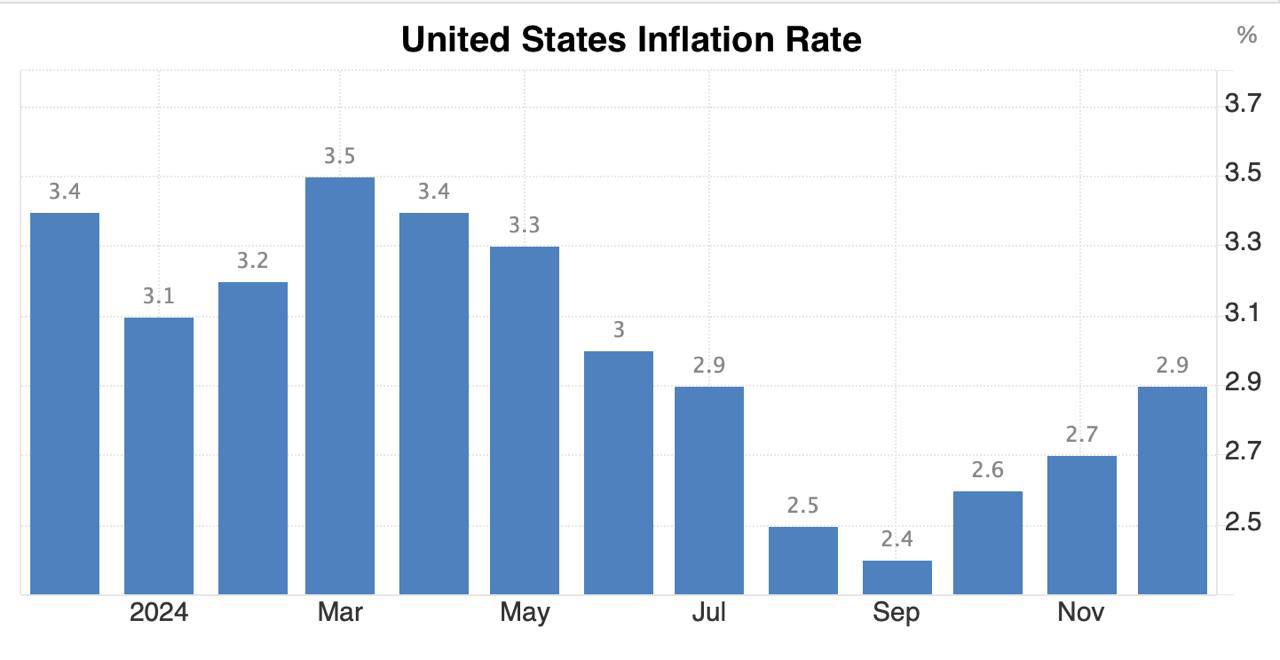
December inflation saw a notable increase, rising to 2.9% year-over-year, marking the highest level since July, according to the latest data released on Wednesday. This uptick, though anticipated by economists, underscores the ongoing presence of higher prices for consumers. The Consumer Price Index (CPI), which tracks inflation, also rose by 0.4% from November to December on a seasonally adjusted basis, signaling that inflationary pressures remain persistent despite efforts to curb them.
The 2.9% annual inflation figure aligns with economist expectations, though core inflation, which excludes volatile categories like food and energy, came in at 3.2%. This is slightly better than the forecasted 3.3% but still well above the Federal Reserve’s long-term target of 2%. The relatively favorable core inflation reading can largely be attributed to the fact that last month’s price increases were largely confined to the energy sector, particularly a 4.4% rise in gasoline prices.
The rising inflation in December can be partly attributed to the typical year-end price adjustments. Over the past few years, inflation has been a central concern for the U.S. economy, especially following the economic recovery from the COVID-19 pandemic. Prices peaked in 2022 at a 41-year high of over 9% but have since decreased gradually. The Federal Reserve has implemented aggressive interest rate hikes to combat inflation, impacting everything from mortgages to corporate loans. While inflation showed signs of easing in the latter half of 2023, the increase in December signals that progress may be stalling.
Looking ahead, economists from Goldman Sachs predict that core CPI inflation will fall to 2.7% by the end of 2025, which would represent the lowest rate since March 2021 but still higher than levels seen in the pre-pandemic era. Analysts suggest that inflationary pressures are likely to persist due to anticipated changes in trade, fiscal, and immigration policies, potentially stymieing further progress in controlling price hikes.
The increase in inflation for December marks a significant concern for the Biden administration, which has faced criticism over rising costs during his presidency. The consumer price index has increased by 21.3% from December 2020 to December 2024, contributing to an annualized inflation rate of 5.3%. Despite the positive impacts of job growth and stock market performance, inflation remains a key issue overshadowing other economic indicators.