The Green March : A Cover for Morocco’s Expansionist Goals in Western Sahara

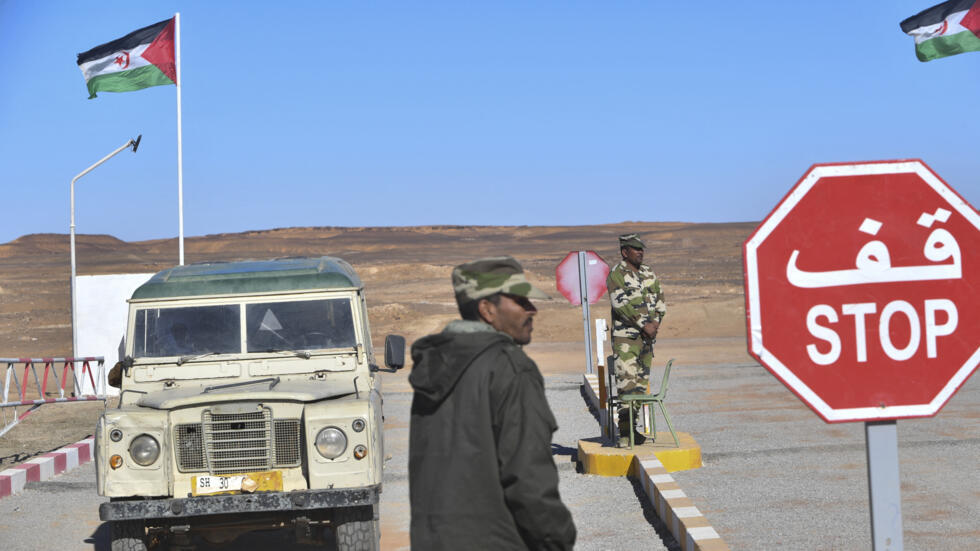
Morocco’s celebration of the Green March, which led to the occupation of Western Sahara, is often framed as a restoration of national territory. However, historical facts and international law tell a different story, shedding light on Morocco’s underlying expansionist motives.
The Green March was a mass mobilization of 350,000 Moroccans who crossed into Western Sahara on November 6, 1975, after King Hassan II authorized the action. The march lasted just a few days, culminating in the king’s announcement that the goal had been achieved. However, the true nature of the march was not about reclaiming lost land, as Morocco claimed, but about solidifying its control over the disputed region. This aggressive action followed the Madrid Agreement, signed on November 14, 1975, just days after the march began. Under the agreement, Spain, Mauritania, and Morocco divided the Sahara, with Morocco securing the largest portion, all while prioritizing Spanish interests in the area’s wealth.
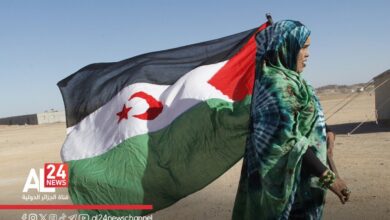
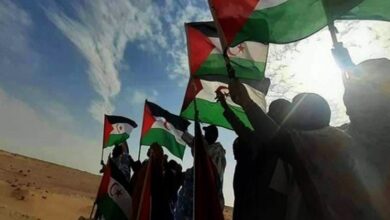
For the Sahrawi people, the Green March marked the beginning of their oppression. While Morocco heralded it as a triumph, the Sahrawis refer to it as the Black March, symbolizing the start of their forced occupation. Others call it the Red March—not for the red flags of Morocco, but for the bloodshed and war crimes Morocco committed against the Sahrawi population during this period.
The march, rather than being a movement for liberation, is seen as a cover for a foreign invasion, with Morocco masking its expansionist objectives under a veneer of patriotism and nationalism.
The 1963 Sand War : A Hostile Beginning with Algeria The roots of Morocco’s expansionist ambitions can be traced back to the Sand War of 1963. Just a year after Algeria’s hard-won independence from France, King Hassan II led Morocco into a conflict over disputed territories in the Tindouf and Béchar regions. The war, based on unfounded territorial claims, was deeply hostile to Algeria’s sovereignty. Despite Morocco’s military aggression, Algeria resisted fiercely, and the war ended only after intense diplomatic efforts. The conflict fostered long-lasting mistrust between the two nations, exacerbated by support from international powers. While Morocco received backing from Western allies like the United States and France, Algeria found support from countries like Egypt and Cuba, as well as the Soviet bloc.
The 1975 Green March : Disregarding International Law The Green March was not just an act of military aggression, but also a direct challenge to international law. Despite the International Court of Justice (ICJ) ruling that Morocco had no legal claim over Western Sahara, King Hassan II continued with his plans, organizing the march to assert Morocco’s presence in the region. Rather than a genuine territorial claim, the Green March was a populist move to bolster national pride and gain domestic support for his expansionist policies.
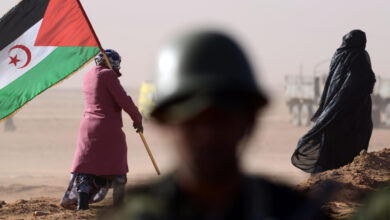
The march led to years of violent conflict, with the Sahrawi people, represented by the Polisario Front, fighting for their independence. Morocco’s response included the construction of a heavily fortified sand berm, known as the “wall of shame,” which divided families, restricted movement, and left the region strewn with landmines. Western Sahara became one of the most mined regions in the world, a legacy of Morocco’s militaristic actions.
Stalling Self-Determination : Human Rights Violations and Diplomatic Obstacles In 1991, the UN brokered a ceasefire and proposed a referendum on self-determination for Western Sahara. However, Morocco blocked any meaningful progress, stalling the process with political maneuvering. Human rights abuses by Moroccan forces in the occupied territories have been well-documented, but Morocco, under King Mohammed VI, has refused to address these violations, instead tightening its grip on the region.
The long-standing deadlock over Western Sahara remains unresolved largely due to Morocco’s refusal to accept Sahrawi self-determination, a stance that reflects King Hassan II’s earlier expansionist actions against Algeria. His refusal to honor the sovereignty of neighboring nations and the rights of the Sahrawi people shows a pattern of aggression aimed at furthering Morocco’s territorial ambitions at the cost of regional stability.
A Legacy of Regional Instability King Hassan II’s reign left behind a legacy of unresolved conflicts and regional instability. His expansionist policies, which began with the Sand War and continued with the Green March, created lasting tensions with Algeria and Western Sahara. His aggressive actions were not just violations of sovereignty, but also infringements on the rights of peoples striving for independence and autonomy.
Hassan II’s legacy is one of disruption, with his expansionist ambitions contributing to an environment of instability in North Africa. His refusal to respect international law and the self-determination of neighboring nations illustrates the destructive power of unchecked ambition. Today, as the call for a free and fair referendum in Western Sahara persists, Hassan II’s actions remain a symbol of how territorial ambition can destabilize entire regions and impede justice for generations.