Progress made on mineral deal amid US threat to cut off Starlink for Ukraine


U.S. negotiators pressing Kyiv for access to Ukraine’s critical minerals have raised the possibility of cutting the country’s access to Elon Musk’s vital Starlink satellite internet system, three sources familiar with the matter told Reuters.
Ukraine’s continued access to SpaceX-owned Starlink was brought up in discussions between U.S. and Ukrainian officials after Ukrainian President Volodymyr Zelenskiy turned down an initial proposal from U.S. Treasury Secretary Scott Bessent, the sources said.
The issue was raised on Thursday during meetings between Keith Kellogg, the US special Ukraine envoy, and Zelenskiy, said one of the sources, who was briefed on the talks.
During the meeting, Ukraine was told it faced imminent shutoff of the service if it did not reach a deal on critical minerals, said the source, who requested anonymity to discuss closed negotiations.
“Ukraine runs on Starlink. They consider it their North Star,” said the source. “Losing Starlink … would be a massive blow.”
Musk rushed thousands of Starlink terminals to Ukraine to replace communications services destroyed after February 2022. However, he later curtailed access at least once before in the fall of 2022 as he became more critical of Kyiv’s handling of the war.
Melinda Haring, a senior fellow with the Atlantic Council, said Starlink was essential for Ukraine’s operation of drones, a key pillar of its military strategy.
“Losing Starlink would be a game changer,” Haring said, noting that Ukraine was now at 1:1 parity with Russia in terms of drone usage and artillery shells. Ukraine has a wide range of different drone capabilities, ranging from sea drones and surveillance drones to long-range unmanned aerial vehicles.
The Ukrainian embassy in Washington, the White House and the US Department of Defense did not immediately respond to a request for comment.
SpaceX, which operates Starlink, also did not immediately respond to a request for comment.
Last fall, Ukraine floated the idea of opening its critical minerals to investment by allies. This was part of a “victory plan” that sought to put it in the strongest position for talks and force Moscow to the table.
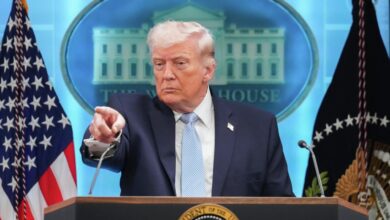
Trump has embraced the idea, saying he wants Ukraine to supply the US with rare earths and other minerals in return for financially supporting its war effort.
Last week, however, Zelenskiy rejected a detailed US proposal that would have seen Washington and US firms receiving 50% of Ukraine’s critical minerals, which include graphite, uranium, titanium, and lithium, a key component in electric car batteries.
Since then, a rift has emerged between the leaders, with Trump denouncing Zelenskiy as “a dictator without elections” on Wednesday after Zelenskiy said Trump was trapped in a disinformation bubble, in response to the US president suggesting Ukraine started the war.
The Associated Press reported on Saturday that the White House and Ukraine have made significant progress toward reaching the mineral agreement, following the three-day visit to Ukraine by retired Lt. Gen. Keith Kellogg.
As Kellogg returned to Washington on Friday evening, Zelenskyy, in his nightly address, said the two sides were still working on a draft agreement. It was a notably optimistic tone after Trump, earlier in the day in a Fox News Radio interview, said Treasury Secretary Scott Bessent’s visit to Kyiv had been a “wasted trip.”
“Today, Ukrainian and U.S. teams are working on a draft agreement between our governments,” Zelenskyy said in his address. “This agreement can add value to our relations—what matters most is getting the details right to ensure it truly works. I look forward to a just result.”