Morocco: Widespread political corruption brings Makhzen government under scrutiny

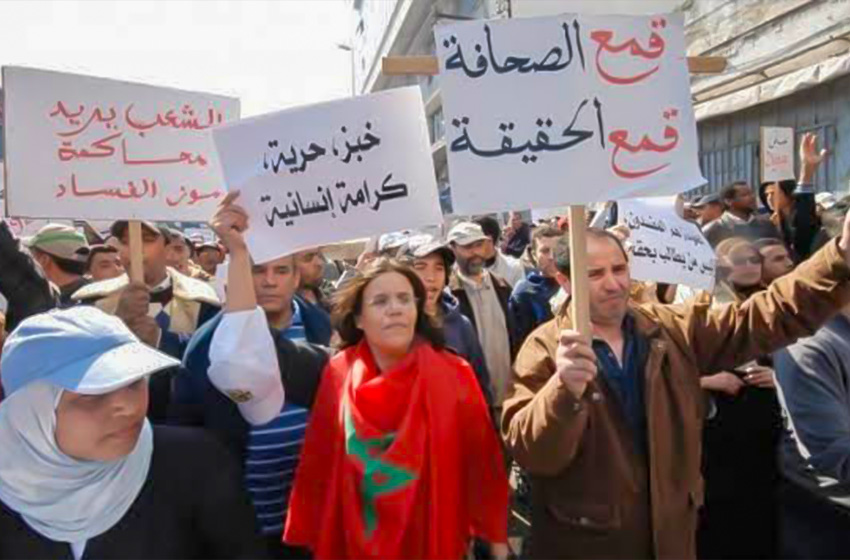
The debate in Morocco rages on over a new report published by the “National Authority for Probity, Prevention, and Fight Against Corruption,” which exposes the widespread corruption within the Makhzen Kingdom.
The Justice and Development Party (PJD) has called on the government to explain the reasons behind Morocco’s decline in the Corruption Perceptions Index. Mustafa Ibrahimi, a member of the PJD parliamentary group, raised this issue in a written question to Ghita Mezzour, the Minister Delegate to the Head of Government in charge of Digital Transition and Administrative Reform. Ibrahimi pointed out that the latest report showed Morocco’s ranking had fallen from 73rd to 97th place out of 180 countries between 2018 and 2023.
The deputy emphasised that this decline was linked to rising political corruption, as reflected in Morocco’s fall in the political corruption index published by the V-Dem Democracy Project, which has continued its downward trend since 2020, alongside a decline in the rule of law index.
Regarding freedom of the press, Ibrahimi noted that Morocco scored 3.44 out of 10, a notably low rating, especially given the judicial prosecutions against several journalists by government officials. He called for transparency in addressing the reasons behind Morocco’s declining corruption perception index and the troubling spread of political corruption, citing “electoral corruption” as a key factor in the rise of corrupt elites. These elites, Ibrahimi argued, have set records for judicial prosecutions following the 2021 elections, both locally and in parliament.
The source further revealed that 79% of respondents in the African Barometer survey believe the government’s efforts to combat administrative corruption are either poor or very poor. Experts have also pointed out the close relationship between access to basic rights and the lack of transparency and good governance, with 30% of businesses reporting being asked for bribes to obtain public services, such as building permits, export licenses, tax services, or bank loans.
In addition, the PJD deputy demanded an explanation for the government’s failure to respond to the National Authority for Probity, Prevention, and Fight Against Corruption request to hold the National Anti-Corruption Committee meeting. He also sought details on the legislative and regulatory measures the government would take to address this issue and its socio-economic impacts, particularly regarding conflicts of interest, rent-seeking, and illicit enrichment.
The new report, the first of its kind, exposed significant cases of mismanagement that have raised concerns within Prime Minister Aziz Akhannouch’s government. According to the report, Morocco scored 38 points out of 100 on the 2023 Corruption Perceptions Index, marking a decline of 5 points over the last five years. This drop reflects a fall in the country’s ranking from 73rd place in 2018 to 97th in 2023. The report also noted that countries prioritising corruption prevention and combating corruption had seen significant improvements in their rankings.
The source highlighted Morocco’s decline in the political corruption index as well as in indicators related to the rule of law, open government, judicial independence, press freedom, and online services.
The report also detailed the high costs of corruption, especially for vulnerable groups. Experts estimate that corruption drains between 4% and 6% of Morocco’s GDP, equivalent to a loss of about 20 billion dirhams annually. Meanwhile, 68% of Moroccan entrepreneurs consider corruption to be widespread or very widespread, particularly in areas such as obtaining licenses, permits, and public procurement, as well as hiring or promotion in the private sector.