Gaza’s Two-Year Genocide: Relentless Bombardment, Widespread Famine, and Collapse

The Palestinian group Hamas slammed on Tuesday what it called the “shameful international silence and complicity, and unprecedented Arab failure” for the situation in Gaza on the two-year anniversary of the start of the genocidal war on the besieged enclave.
In parallel, the second day of indirect negotiations were resuming in the Red Sea resort of Egypt’s Sharm el-Sheikh, focusing on a plan proposed by U.S. President Donald Trump last week to bring about an end to the war.
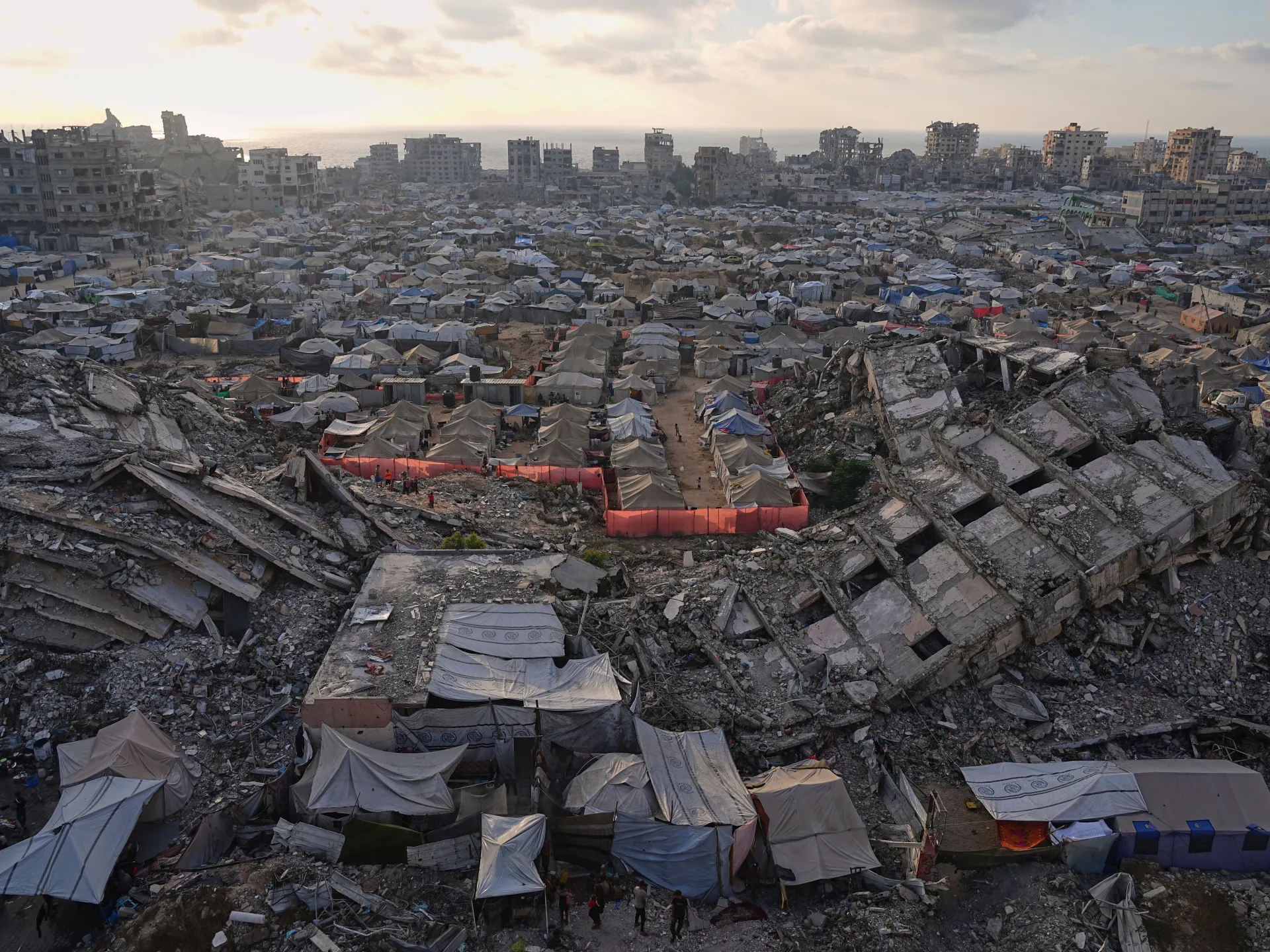
After two years of almost nonstop bombardment, the Zionist occupation’s genocidal war has left the Gaza Strip in ruins, with international organizations and local monitors documenting mass casualties, widespread destruction, famine and the collapse of basic infrastructure.
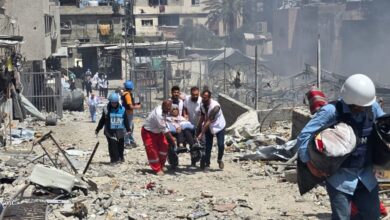
Genocide on camera
Since the ceasefire broke down in March, the indiscriminate occupation’s attacks have intensified. Fifteen out of every 16 Palestinians killed were civilians, said the independent global violence monitor Armed Conflict Location & Event Data (ACLED).
In this regard, a U.N. commission of inquiry last month assessed that “Israel” had committed genocide in Gaza.
The commission cites examples of the scale of the killings, aid blockages, forced displacement and the destruction of a fertility clinic to back up its genocide finding, adding its voice to rights groups and others that have reached the same conclusion.
“Genocide is occurring in Gaza,” said Navi Pillay, head of the Commission of Inquiry on the Occupied Palestinian Territory and a former International Criminal Court judge.
The 1948 U.N. Genocide Convention defines genocide as crimes committed “with intent to destroy, in whole or in part, a national, ethnic, racial or religious group, as such”. To count as genocide, at least one of five acts must have occurred.
The U.N. commission found that “Israel” had committed four of them: killing; causing serious bodily or mental harm; deliberately inflicting conditions of life calculated to bring about the destruction of the Palestinians in whole or in part; and imposing measures intended to prevent births.
It cited as evidence interviews with victims, witnesses, doctors, verified open-source documents and satellite imagery analysis compiled since the war began.
Famine: a war tactic
The bombardment by occupying forces devastated 98% of Gaza’s cropland and significantly limited food access.
In late August, the Integrated Food Security Phase Classification (IPC), a UN-backed monitoring system, officially declared a famine, reporting that more than half a million people were facing catastrophic conditions.
Famine is confirmed when three thresholds are crossed – extreme lack of food, high rates of acute malnutrition and evidence of starvation-related deaths.
The situation has steadily worsened, according to the IPC.
At least 460 people have died from starvation, including 154 children, according to Health Ministry figures released on Oct. 6. Moreover, some 2,610 people have been killed and 19,143 injured while trying to obtain food at aid distribution sites.
The grim toll of orchestrated genocide
The Zionist occupation’s genocidal war has killed at least 67,160 Palestinians and wounded 169,679 others since October 2023. Thousands more are believed to be buried under the rubble.
Nearly 20,000 children have been killed and more than 42,000 injured, making up over 30% of the death toll. In two years, an estimated 1,015 babies under one year old were directly killed, according to Gaza’s government media office.
As for women, more than 10,100 Palestinian women have been killed and nearly 23,000 injured, according to Health Ministry figures.
The World Health Organization (WHO) reported that the war has taken a severe toll on pregnant and breastfeeding women, with more than 40% severely malnourished.
The Zionist occupation also systematically targeted journalists, with at least 254 having been killed, according to the Gaza government and The International Federation of Journalists (IFJ).
The occupation also displaced more than 1.9 million people, according to OCHA. This comes as over 90% of homes have been targeted, with 60,000 completely destroyed and 276,000 damaged. Therefore, around 1.4 million people now require emergency shelter and household goods.