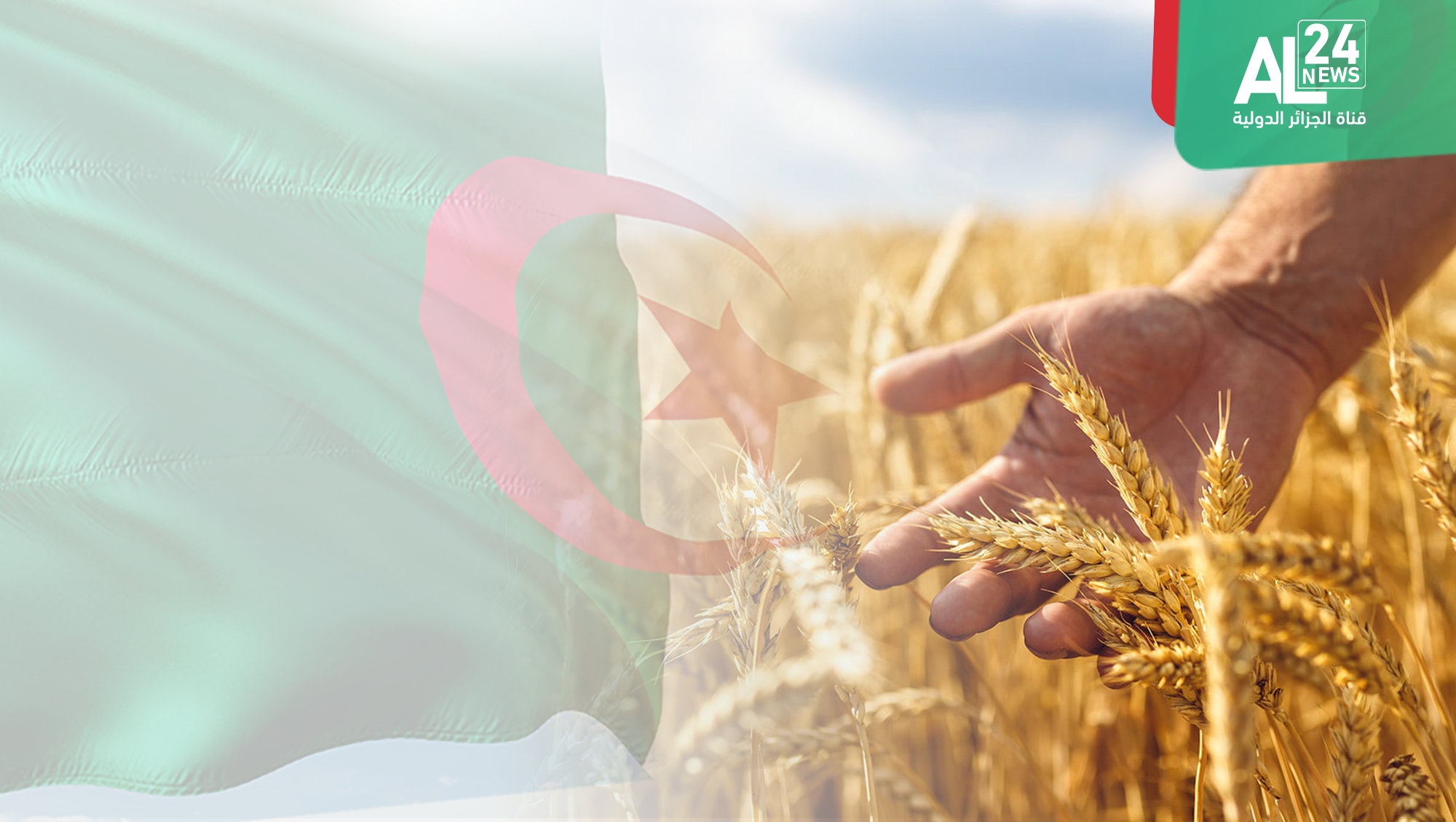
Algeria has made substantial strides toward achieving food security through a series of promising agricultural strategies. Despite challenging international circumstances and climate changes affecting many regions worldwide, the country has experienced significant progress in its agricultural sector in recent years. This advancement has been recognized multiple times by the United Nations Food and Agriculture Organization (FAO), which has highlighted Algeria’s considerable improvements in food security. The FAO also noted that Algeria could assist and share its experience in enhancing food security and promoting healthy nutrition with several other countries. Furthermore, the Global Food Security Index ranked Algeria at the top among African countries, placing it 54th out of 113 countries globally in 2021, underscoring the advanced level Algeria has reached in this sector.
Developing Agriculture and Encouraging Investment in the Agricultural Sector
In recent years, Algerian authorities have placed significant emphasis on the agricultural sector, leveraging its potential to lead a positive transformation aimed at reducing reliance on hydrocarbons. This commitment is evident from the statistics and figures published by official bodies and international organizations regarding the current state of agriculture in Algeria. Official data revealed that the agricultural sector contributed $35 billion to Algeria’s total economic output in 2023, with agricultural production growing at an annual rate of 12 to 14 percent. As part of its efforts to achieve national food security, the Algerian government has taken several measures, including encouraging investors to strongly engage in this trajectory and creating major integrated agricultural hubs in the southern provinces. One notable project recently achieved by Algeria to protect its biological resources was the establishment of a seed bank in 2022, housing over 4,000 plant species.
The South: Algeria’s Food Basket
In recent years, the majority of vegetables and fruits consumed by Algerians have predominantly come from the country’s desert regions, specifically the provinces of Biskra, Oued Souf, and Adrar. The extensive agricultural activities by farmers in these areas have resulted in abundant production, some of which is exported. These regions have also become preferred destinations for foreign investors. An exemplary project is the Algerian-Qatari venture to produce powdered milk for the first time, a $3.5 billion joint investment between the Algerian National Investment Fund and Qatar’s Baladna Company. This project became feasible after the introduction of a new investment law that opened new horizons for the sector, allowing the integration of experience and technology to enhance yields in strategic crops.
Continuing the Path Towards Achieving Food Security: Present and Future Challenges
Achieving food security and ensuring all necessary conditions for its realization are central to Algeria’s strategies, given their impact on the country’s economic and social development indicators, particularly on the independence of political and economic decision-making. For the past three years, ensuring sustainable food security has been an urgent priority for Algerian authorities. This aligns with the comprehensive and forward-looking vision implemented by Algerian President Abdelmadjid Tebboune. Over the past four years, Algeria’s agricultural sector has seen a qualitative leap, now covering 75 percent of the national market’s needs. With a clear strategy and defined objectives, the Algerian government remains steadfast in its commitment to guaranteeing food security.