Iran said Monday it had summoned all of the European Union ambassadors in the Islamic Republic to protest the bloc’s listing of the Revolutionary Guard as a “terror group.”
The move came as Turkey tried to organize a meeting between the U.S. special envoy Steve Witkoff and Iranian officials, seeking to jump-start talks to ease the threat of U.S. military action against Iran, The Associated Press reported, citing two Turkish officials.
Iranian Foreign Ministry spokesman Esmail Baghaei told journalists that the ambassadors had begun to be summoned on Sunday and that process went into Monday as well.
“A series of actions were reviewed, various options are being prepared and were sent to the related decision-making bodies,” Baghaei said. “We think that in coming days, a decision will be made about a reciprocal action by the Islamic Republic of Iran toward the illegal, unreasonable and very wrong move by the EU.”
Iran’s parliament speaker said Sunday that the Islamic Republic now considers all EU militaries to be “terrorist groups,” citing a 2019 law.
U.S.–Iran Talks via Turkey
In Turkey, officials have been trying to organize talks with Iran and Witkoff there, two Turkish officials said. They spoke on condition of anonymity as they were not authorized to brief journalists. One described the goal as trying to have Witkoff meet the Iranians by the end of the week, if possible.
Iranian Foreign Minister Abbas Araghchi and Witkoff met multiple times last year in negotiations over Iran’s nuclear program in Rome and Oman, but never finalized a deal. On June 13, “Israel” launched a series of attacks on Iran that sparked a 12-day war between the countries, effectively halting those talks. The U.S. during the war bombed three Iranian nuclear sites.
Baghaei declined to give any specifics about the possibility of talks in Ankara.
“What is clear is that we are engaged with reviewing either principles and details related to this diplomatic process,” he said. “It is natural that regional countries have intensified their efforts.”
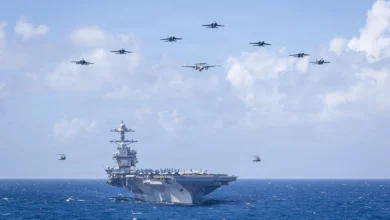
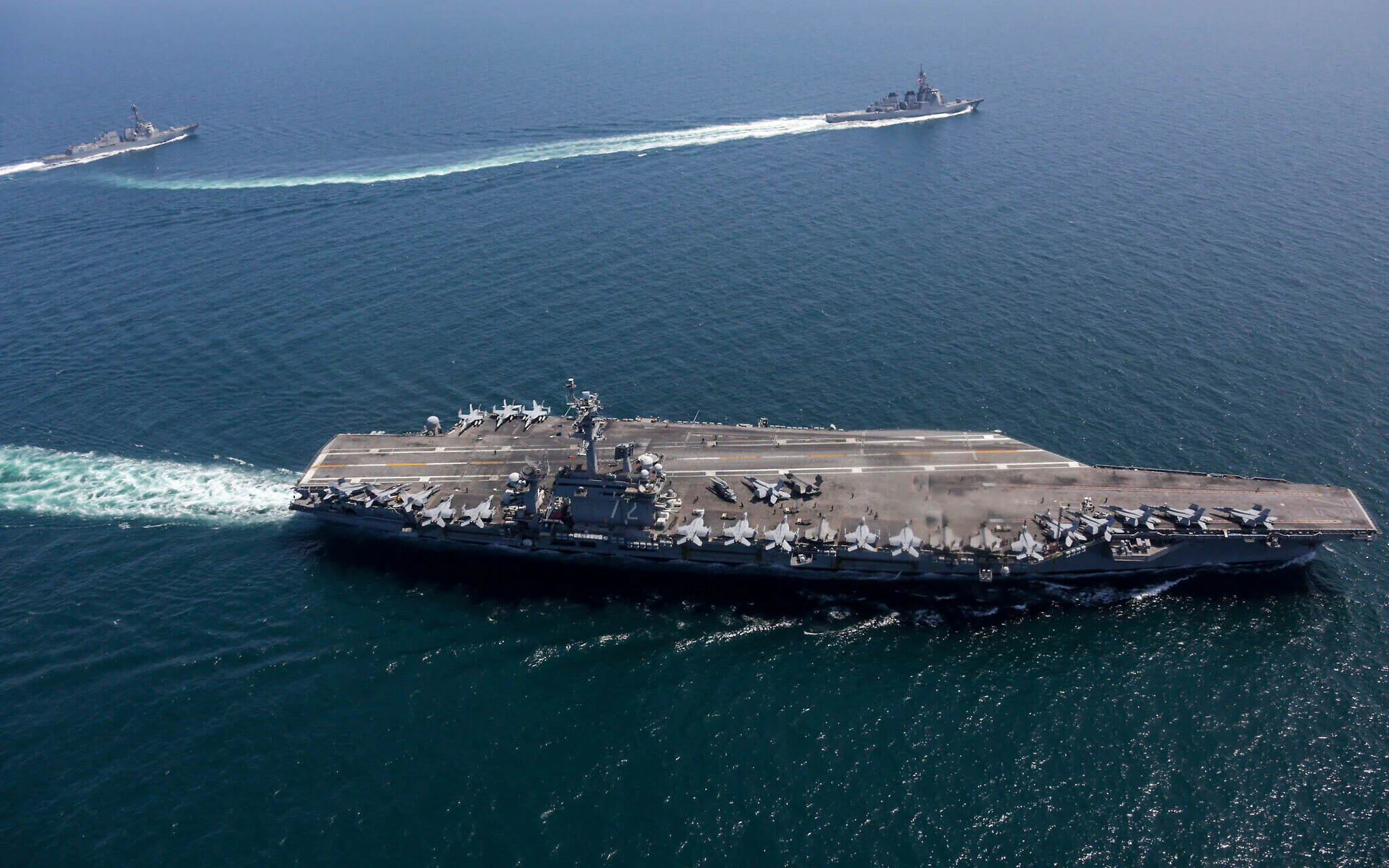
In parallel, the American military has moved the USS Abraham Lincoln and several guided-missile destroyers into the Mideast. But it remains unclear whether President Donald Trump will decide to use force, though regional countries have engaged in diplomacy in an effort to halt a new Mideast war breaking out.
Meanwhile, Baghaei said a drill by the Guard in the Strait of Hormuz, the narrow mouth of the Persian Gulf through which a fifth of all oil traded passes, was “ongoing based on its timetable.” Iran warned ships last week that a drill would be carried out on Sunday and Monday, but prior to Baghaei’s comments had not acknowledged it taking place. The U.S. military’s Central Command issued a strong warning to Iran not to harass its warships and aircraft, or impede commercial vessels moving through the strait.
Satellite photos taken Sunday by Planet Labs PBC and analyzed by The Associated Press showed small vessels moving at speed in the strait between Iran’s Qeshm and Hengam islands, some distance away from the corridor commercial vessels take.
Asked about whether Iran could face a war, Baghaei told the public “don’t worry at all.” He declined, however, to discuss whether Trump set a deadline for Iran to respond to America’s demands.