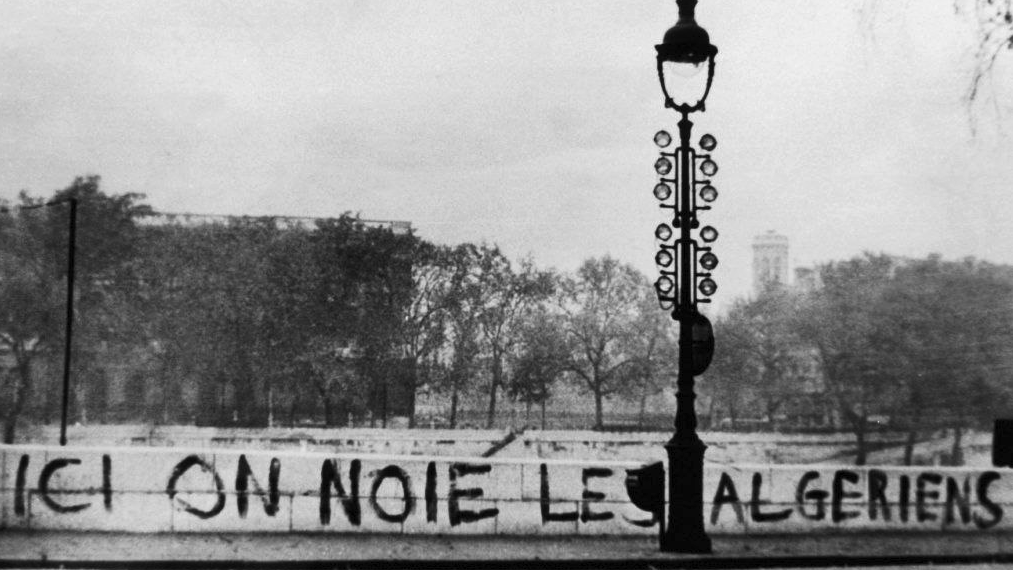
October 17, 1961, is a date forever imprinted in the collective memory of Algerians, signifying one of the most brutal acts of colonial violence against them. On this day, the French government perpetrated a horrific massacre against Algerian demonstrators who took to the streets in peaceful protest against a discriminatory curfew in Paris.
In response to a call from the National Liberation Front, thousands of Algerians demonstrated in the streets of Paris on October 17, 1961, to oppose the curfew imposed on them just days earlier, on October 5. This curfew restricted Algerians residing in Paris and surrounding areas from 8 PM to 5:30 AM, an act viewed as both racist and unjust.
Approximately 30,000 Algerians participated in the peaceful protest, raising slogans such as “End the curfew! Independence for Algeria! Long live the National Liberation Front!” However, the French authorities could not tolerate this expression of defiance. Paris police chief Maurice Papon issued orders to violently suppress the demonstrations and deter Algerians from protesting.
Brutal Suppression
The police responded with extreme brutality, intentionally killing dozens of demonstrators in the streets and subway stations. Many others were thrown off bridges into the Seine River, leading to what is now known as the “Paris Massacre of 1961.” Historians describe the violence faced by Algerians on that day as “the most violent suppression of a protest in contemporary Western European history.” Experts consider this event the largest massacre in Europe since World War II, motivated by political and racial animosity.
Estimates of the death toll from the police crackdown range from 300 to 400 Algerians, with many bodies disposed of in the Seine and countless individuals reported missing. For decades, the massacre remained largely forgotten until historian Jean-Luc Einaudi revived these tragic events in his book “The Battle of Paris,” which documented the brutal repression and identified 390 Algerian victims of the police violence.
Human rights organizations and various French figures have urged the French government to officially recognize the events of October 17, 1961, and take responsibility for its historical role.
France’s Admission of Guilt
For 37 years, France denied any wrongdoing regarding the massacre. In 1998, it acknowledged responsibility for the deaths of 40 individuals. On October 17, 2001, Paris’ socialist mayor Bertrand Delanoë unveiled a plaque on the Saint-Michel Bridge over the Seine River in memory of those who lost their lives that night.
Despite this recognition, France has not classified the horrific events as a “state crime.” In 2012, President François Hollande acknowledged the atrocities in a speech delivered in Algeria but refrained from offering an official apology, recognizing the “tragedy” that befell Algerians who were protesting for their independence.
For the first time in the history of the Fifth Republic, President Emmanuel Macron commemorated the October 17, 1961 massacre in 2021 by visiting the site of the tragedy. He laid a wreath by the Seine River near the “Bigeon Bridge” crossed by the Algerian protesters. The Élysée released a statement acknowledging the events and declared that “the crimes committed that night under the authority of Maurice Papon, the then head of Paris police, were unjustifiable for the republic.” Macron tweeted, “In Paris, 61 years ago, the suppression of a demonstration by Algerians demanding independence left hundreds wounded and dozens dead. These are crimes that cannot be justified for the republic. France does not forget the victims. Truth is the only path to a shared future.”
The legacy of colonial violence continues to overshadow Algerian-French relations, especially in recent years, as discussions about this painful chapter in history have been reignited following a report by historian Benjamin Stora.
Algeria remains resolute in its demand for acknowledgment of this horrific crime, which marks a crucial and painful moment in the history of the Algerian revolution that began in November 1954.