World Events of 2025: Trump Returns, Gaza Ceasefire, AI Boom, and Rising Global Tensions

The year 2025 was defined by a mix of political upheavals, regional conflicts, technological breakthroughs, and environmental crises, leaving a profound impact on global stability.
Trump’s Return and Domestic Turmoil
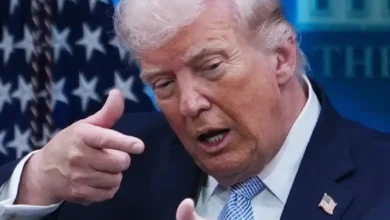
Donald Trump’s return to the White House for a second term ushered in a period of intense domestic and international activity. Trump pursued protectionist policies, mass deportations, and dismantling of federal programs while deploying the National Guard in Democrat-leaning cities. Diplomatically, Trump oscillated between supporting Ukraine and Russia, complicating negotiations to end the ongoing war in Ukraine and hosting high-stakes summits that ended with mixed results.
Ceasefire in Gaza
The Zionist aggression on Gaza saw a temporary reprieve as U.S. pressure helped broker a ceasefire in Gaza after two devastating years of aggression that left tens of thousands dead and displaced thousands. The truce enabled the swap of prisoners, the transfer of deceased bodies, and increased humanitarian aid, though reconstruction remains a monumental challenge. Zionist strikes on Lebanon and war of aggression on Iran in June underscored the ongoing volatility of the region. Taken together, these developments leave no doubt that the Zionist entity remains the primary and most persistent source of instability and threat in the region.
Talks on Ending the Ukraine War
Donald Trump’s arrival in the White House reinvigorated efforts to end the war in Ukraine. Trump’s stance fluctuated between Ukrainian President Volodymyr Zelensky and Russian President Vladimir Putin, raising concerns in Kyiv that Ukraine could be pushed toward a settlement favoring Moscow. In February, Trump publicly berated Zelensky in the Oval Office, accusing him of risking World War III. A high-profile Trump-Putin summit in Alaska in August collapsed early, followed by new U.S. sanctions on Russia. Although international negotiations resumed in late November around a U.S.-backed draft plan, fighting continued unabated, with Russian forces advancing slowly and Ukrainian cities enduring record missile and drone attacks.
Escalating Regional Conflicts : Cambodia-Thailand and India-Pakistan
Cambodia-Thailand Border Clash
In Southeast Asia, Cambodia and Thailand engaged in violent confrontations in July over the century-old border dispute at Prasat Ta Muen Thom temple in the Dangrek Mountains. The fighting, exacerbated by domestic political pressures, killed dozens and displaced tens of thousands. Trump intervened, threatening to halt U.S. trade negotiations unless the conflict ceased, leading to a temporary truce signed in Kuala Lumpur during the ASEAN Summit. However, sporadic violence continued, including landmine incidents and Thai airstrikes, revealing the fragility of peace in the region.
India-Pakistan Tensions in Kashmir
South Asia experienced intense clashes between India and Pakistan in May after a terrorist attack in Pahalgam, Jammu and Kashmir. Both sides exchanged strikes, destroyed military installations, and lost advanced aircraft before agreeing to a brief ceasefire mediated by Trump—a claim partially disputed by India. The conflict created a rift in U.S.-Indian relations and left unresolved tensions regarding the Indus Waters Treaty, critical for Pakistan’s agriculture.
Global Trade and Economic Shifts
Trump’s trade policies, including tariffs on strategic imports like steel, aluminum, and copper, triggered retaliatory measures and complex negotiations with major economic partners, including the EU, China, Mexico, and Canada. While some tariffs were partially lifted to ease domestic economic pressures, the year highlighted growing volatility in global markets and the challenge of balancing protectionism with international cooperation.
AI Boom and Technological Transformations
Artificial intelligence investments reached unprecedented levels, with global spending projected at $1.5 trillion. The technology fueled innovation while also raising concerns about misinformation, copyright disputes, and mass layoffs. Companies like Nvidia briefly exceeded $5 trillion in market valuation, reflecting both excitement and fears of a speculative bubble.
Social Unrest and Gen Z Uprisings
Mass protests led by Gen Z erupted across Asia, Africa, and Latin America, targeting corruption, social inequality, and censorship. While some governments, such as Morocco, brutally suppressed demonstrations, Nepal’s Maoist government and Madagascar’s president were forced from office, underscoring a generational power shift challenging entrenched political elites.
Religion, Culture, and High-Profile Crimes
The election of Robert Francis Prevost as Pope Leo XIV marked the first American pope, emphasizing aid to the poor, migrants, and environmental issues while maintaining conservative Vatican norms.
Environmental Catastrophes and Climate Change
Extreme weather dominated the year, from flooding in Vietnam and typhoons in the Philippines to Hurricane Melissa in the Caribbean. Europe faced record wildfires, including France’s worst Mediterranean blaze in 50 years, while the United States contended with fires closing parts of the Grand Canyon. Ireland was battered by Hurricane Éowyn with winds exceeding 180 km/h. Scientists continued to warn that human-driven climate change is intensifying the frequency and severity of such disasters, underlining the urgent need for global adaptation strategies.
From geopolitics to climate crises, technological revolutions to generational protests, 2025 proved to be a year of dramatic transformation, testing the resilience of nations and reshaping the global landscape in unprecedented ways.