World Bank Official Warns of Death Toll if Climate Change Finance Targets Are Not Met

A senior World Bank official issued a stark warning on Thursday, emphasizing the devastating consequences if necessary climate change finances are not met. Valerie Hickey, the Global Director for Climate Change at the World Bank, stated that “too many people will die” if the required financial commitments are delayed.
Speaking at the “Breathe Pakistan” climate change conference in Islamabad, Hickey pointed out that the shift from $100 billion to $300 billion in climate financing may seem substantial, but much of it already exists in the form of lending, not grants.
Hickey’s comments echoed the concerns raised at the recent COP29 summit in Azerbaijan, where global leaders proposed raising climate financing to $250 billion by 2035.
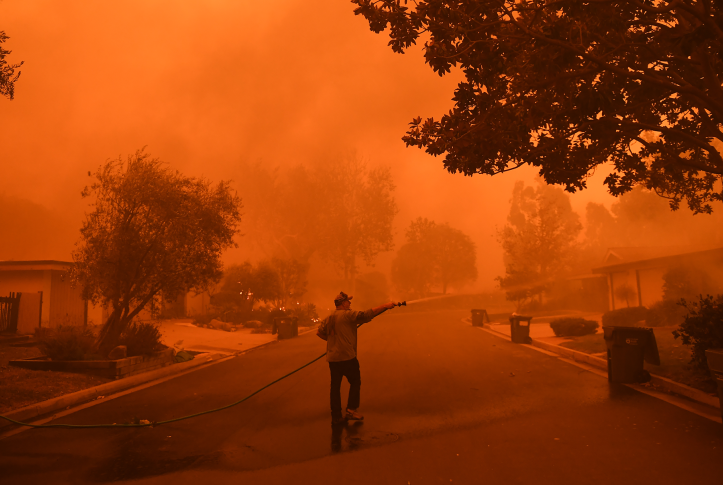
The urgency of this call was amplified by UN Resident Coordinator Mohamed Yahya, who emphasized that climate change is not a future threat but a present reality. Yahya highlighted the increasing frequency of extreme weather events, such as droughts, floods, and wildfires, which are already causing devastating impacts.
Reflecting on the 2022 monsoon floods that submerged a third of Pakistan, Yahya urged for climate finance that is “predictable, accessible, adequate, and fair” while calling for accountability from polluting countries and corporations.
Justice Mansoor Ali Shah, a senior judge of Pakistan’s Supreme Court, noted that while Pakistan and other Global South countries contribute the least to global emissions, they suffer the most from the consequences of climate change. Pakistan, in particular, is one of the most vulnerable nations, with recent catastrophic floods causing widespread destruction.
Planning Minister Ahsan Iqbal also stressed that climate change is not a distant challenge for Pakistan but a harsh reality, with the country facing extreme weather events despite contributing less than 1% to global emissions. The two-day conference aims to bolster Pakistan’s climate resilience by 2047 and foster regional cooperation in South Asia to address the growing climate crisis.