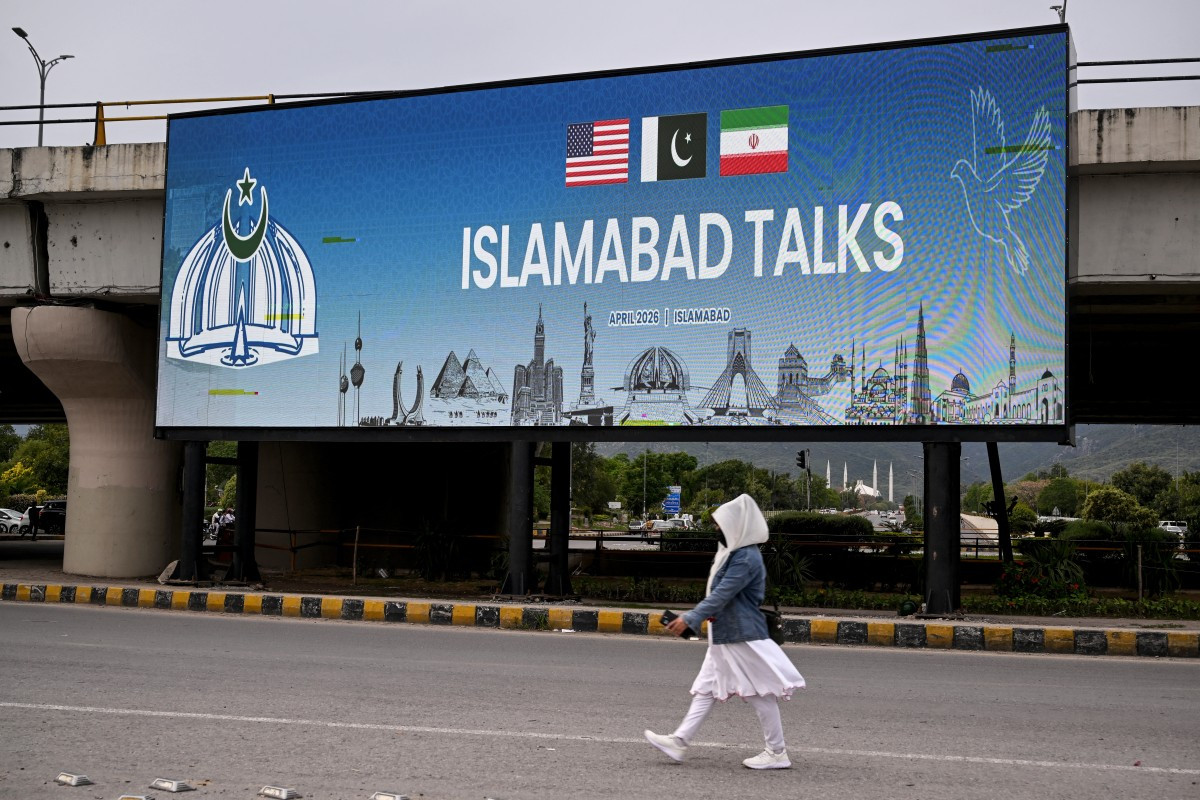
A U.S. delegation led by Vice President JD Vance arrived in Pakistan on Saturday for high-level talks with Iranian representatives, the first such meeting since the war began more than a month ago that will test whether they can shore up a fragile ceasefire and pave the way for peace.
The Iranian delegation arrived early Saturday in Pakistan’s capital Islamabad, led by Parliament Speaker Mohammad Bagher Qalibaf, who said on X that discussions will only take place if there is an “Israeli” ceasefire in Lebanon and the release of blocked Iranian assets.
The normally bustling streets of Islamabad were deserted Saturday morning as security forces sealed roads ahead of the talks. Pakistani authorities urged residents to stay inside, leading the city to look like it was under curfew.
Pakistan Prime Minister Shehbaz Sharif said Friday that the conflict was entering a “difficult phase” as the sides try to shift from a temporary pause in fighting to a more lasting settlement, adding that they were at a “make-or-break” moment.
Vance is leading a negotiation with Trump’s special envoy Steve Witkoff and Trump’s son-in-law Jared Kushner. Before his departure from Washington on Friday, Vance said he believed the negotiations with Iran will be “positive.”
But he added, “If they’re going to try and play us, then they’re going to find that the negotiating team is not that receptive.”
“We have good intentions, but we do not trust,” Iranian state TV quoted Ghalibaf as saying. “Our experience in negotiating with the Americans has always been met with failure and broken promises.”
US President Donald Trump demanded the opening of the Strait of Hormuz as a condition for the two-week ceasefire which has made the negotiations possible.
The spot price of Brent crude, the international standard, was around $97 Friday, up more than 30% since the war started.