UNSC Rejects Moroccan Claims, Western Sahara Issue Remains Open, Says Attaf

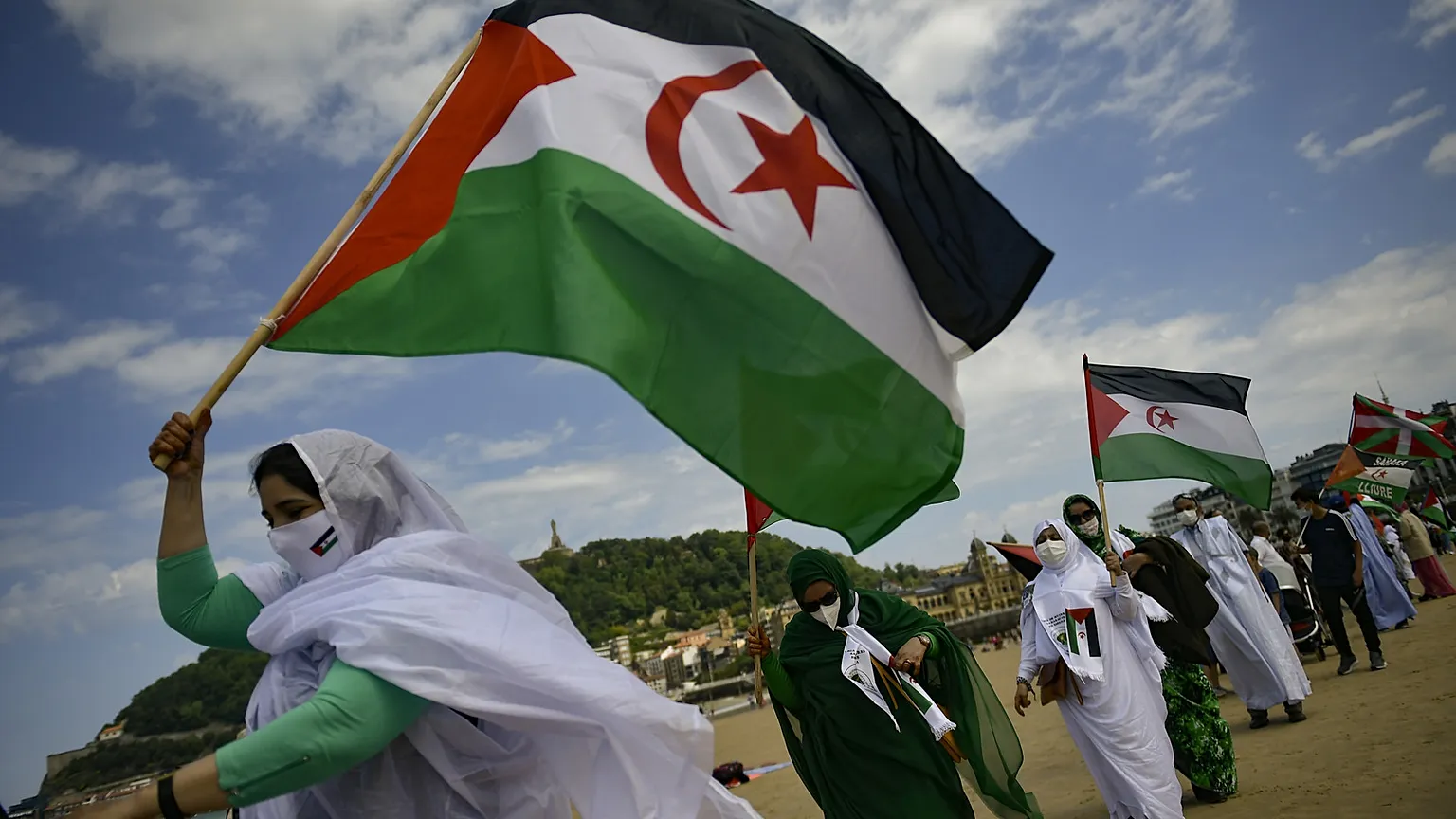
The Algerian Minister of State and Foreign Minister Ahmed Attaf said on Tuesday that the UN Security Council (UNSC) has not endorsed Morocco’s position on Western Sahara, and the file “has not been closed” but remains open before the United Nations.
At a press conference he held at the ministry’s headquarters, Attaf said “Western Sahara issue has not been closed and remains on the United Nations agenda before the General Assembly, the Security Council, and the UN Decolonization Committee (Committee of 24).” The minister of state pointed out that “the resolution adopted by the Security Council has maintained, in its content, all the fundamental principles of the Western Sahara issue, without affecting any of its interrelated and complementary components.” Besides preserving the fundamental principles of a just, lasting and final solution to the Western Sahara issue, Security Council Resolution 2797 “has achieved major gains that enable the Polisario Front to defend its stance from a position of strength firmly rooted in international legitimacy.” The first of these gains, Attaf said, lies in the one-year renewal of the MINURSO mandate in line with operative paragraph 1 of the resolution – a mission tasked with organizing the self-determination referendum in Western Sahara, as indeed its very name explicitly indicates.
The minister noted that the second gain consists in lifting the exclusive status previously accorded to the Moroccan autonomy proposal, which had been intended to be enshrined as the sole and unique basis for negotiations.
In its operative paragraph 3, he pointed out, the resolution has now opened the door wide for the Polisario Front to submit its own visions and proposals within the framework of the negotiation process.
The third gain, he said, lies in the fact that the resolution does not prejudge either the nature or the outcome of what the negotiations should lead to, leaving that to be determined by agreement between the two parties to the conflict, the Kingdom of Morocco and the Polisario Front, in accordance with the provisions of operative paragraph 3 of the same resolution.
The minister explained that the Security Council “has neither predetermined the basis of the negotiations nor their outcome, leaving both their definition and any agreement on them to the two parties to the conflict, the Kingdom of Morocco and the Polisario Front,” noting that “the resolution adopted by the Security Council has maintained, in its content, all the fundamental principles of the Western Sahara issue, without affecting any of its interrelated and complementary components.” This concerns, said Attaf, the fundamental principles explicitly and directly enshrined in the resolution’s text, namely the political solution process for the Western Sahara issue, which remains under United Nations auspices and supervision and does not fall outside this UN framework, as stipulated throughout most of the resolution’s preambular and operative paragraphs.
The resolution also maintained, added the minister, “the requirement for direct negotiations between the two parties to the conflict, the Kingdom of Morocco and the Polisario Front, as affirmed in several paragraphs of the resolution, particularly operative paragraph three. Additionally, it emphasizes the necessity for both parties to reach agreement on the final terms of a solution, as the Security Council resolution confirms in numerous preambular and operative paragraphs, particularly operative paragraph three.” Fourth, the resolution preserved, Attaf added, “the imperative that the final solution must enable the Sahrawi people to exercise their right to self-determination, as explicitly affirmed in two paragraphs of the resolution: the third preambular paragraph and the third operative paragraph.”
This milestone was accompanied, the minister noted, by a propaganda campaign “that is entirely familiar in the context of the Western Sahara issue.” Those who have followed this issue from the beginning, Attaf said “are well aware that the rhetoric of a “closed case” or “settled matter” is nothing new, but rather a refrain that is repeated and recycled each time this issue comes before various UN bodies, particularly the Security Council.” The Minister of State affirmed that “Algeria will spare no effort in supporting any mediation initiative between the two parties to the conflict, provided such an initiative operates within the UN framework and adheres, in both form and substance, to the principles of a just, lasting, and definitive solution to the issue of Western Sahara, as outlined in all relevant Security Council resolutions, including the most recent resolution 2797.”
Attaf emphasized that “Algeria’s commitment to contributing to a resolution of the Western Sahara conflict stems from its enduring commitment to the security and stability of its neighborhood,” pointing out that “this commitment is grounded in our country’s firm conviction that its own security and stability are inseparable from the security and stability of its neighbors, region, and broader community of nations.” In this regard, Attaf emphasized that “Algeria has never viewed its security and stability from a unilateral, isolationist, or self-interested perspective. On the contrary, Algeria’s vision is comprehensive and inclusive of all its brothers, particularly in the Sahel-Saharan region.”