UNSC: Algeria Condemns Attempts to Justify Zionist Crimes in Gaza as Futile, Reprehensible

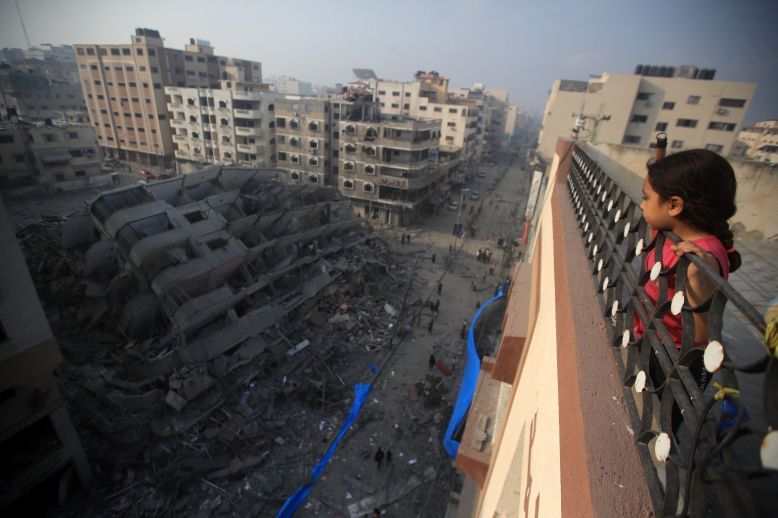
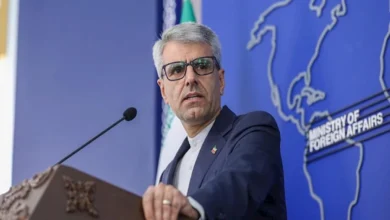
On Thursday, Algeria firmly condemned any attempt to justify the actions of the Zionist occupation in the Gaza Strip during a speech delivered by its Deputy Permanent Representative to the United Nations, Toufik Laïd Koudri. He characterized such justifications in light of the aggression and massacres against Palestinians as “futile and reprehensible.”
Speaking at the Security Council meeting concerning the protection of civilians in armed conflict, Koudri highlighted the alarming statistic that out of 56,000 missing persons recorded globally last year, 11,000 were from the Gaza Strip.
He noted that, despite its small size, the Gaza Strip had suffered five tragedies within just one year. “Anyone who remains indifferent to this figure lacks a sense of humanity,” he asserted, calling any attempt to rationalize the situation in Gaza “futile and reprehensible.”
The Algerian diplomat further stated that “the suffering of Palestinians due to disappearances does not date back to October 2023; it has persisted since the beginning of the occupation.” He revealed that in 2024 alone, the Zionist occupier seized at least 198 Palestinian dead bodies, not including those who fell in the Gaza Strip, raising the total number of detained bodies to 641.
According to the logic of the occupying forces, Koudri explained, this practice is seen as legal, following a ruling by the occupying court last September that permitted the seizure and temporary burial of executed Palestinians’ bodies for future use as “bargaining chips.”
“By adopting such a policy, we forfeit any right to preach morality, offer lessons, or play the role of the victim,” he emphasized.
In this context, Koudri reminded attendees that “the international legal system has left no area unregulated regarding the disappeared, through both the Geneva Conventions and binding resolutions of the Security Council, particularly resolution 2474 initiated by Kuwait and Presidential Declaration 4/2024 presented by Algeria last year.”
Despite these frameworks, he lamented that “the number of missing persons continues to rise. In 2024, the International Committee of the Red Cross (ICRC) recorded over 56,000 new disappearances across more than 120 conflicts.”
Koudri reiterated Algeria’s call for the establishment of “clear, rigorous, and transparent” mechanisms to ensure full compliance with international humanitarian law and effective accountability for violators.
He also urged that “persons deprived of liberty be duly registered and their families provided with accurate information,” advocating for respect for the mandate given to the ICRC, which enables it to monitor and ensure humane treatment of detainees effectively.
Furthermore, he called on all parties involved in armed conflicts to “register and communicate to the opposing party information regarding detained individuals or those under their authority, facilitating the identification of deceased persons and the return of their remains to their families.”
He underscored the importance of “searching for deceased individuals in conflicts, evacuating their bodies, and treating them with dignity,” asserting that adherence to the law is not a luxury but a fundamental condition for survival.