UNSC: Algeria Calls in New York for Equal Access to AI Technologies Among States

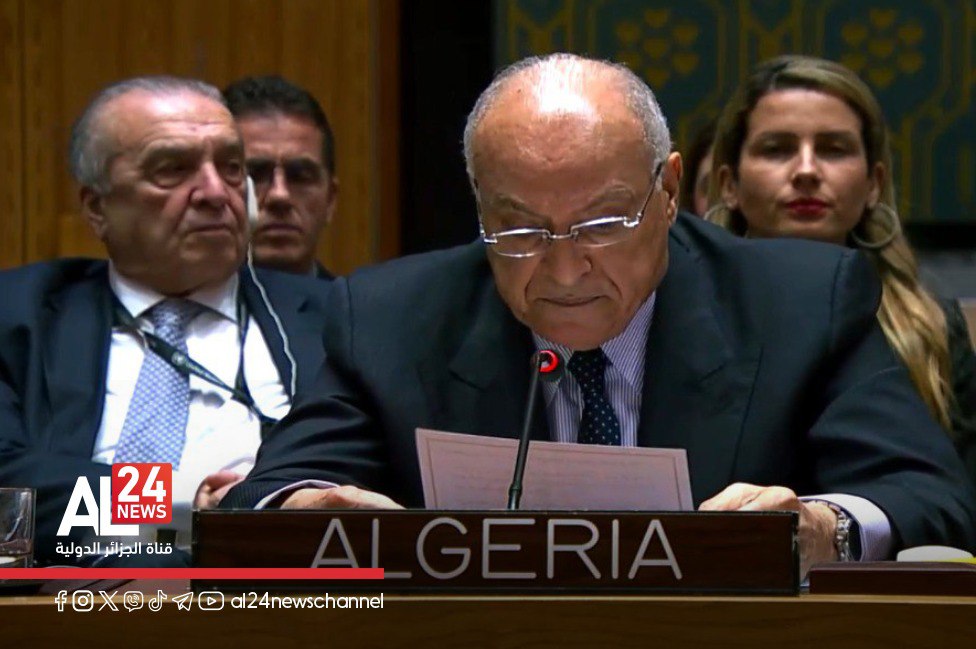
Algeria’s Minister of State, Minister of Foreign Affairs, National Community Abroad, and African Affairs, Ahmed Attaf, stressed Wednesday evening in New York the need to guarantee equal opportunities for all states in accessing artificial intelligence (AI) technologies, in order to reduce the digital and development divide between the North and South. He noted that the UN Convention against Cybercrime, for which Algeria led the negotiation process, “could serve as a legal foundation to strengthen states’ sovereignty over their data and protect them against cyberattacks.”
Speaking at the high-level UN Security Council debate on the impact of artificial intelligence on international peace and security, held on the sidelines of the 80th UN General Assembly, Attaf underlined that “AI is no longer just a technical tool; it has become a key geostrategic factor in redefining power relations on the international stage.” He added that AI, while promising for humanity, now raises numerous legal, ethical, and security challenges affecting state sovereignty and social cohesion. It has also become a “double-edged sword” in peace and security: a constructive tool for building capacity and advancing sustainable development, and a destructive one when misused to destabilize, compromise peace, and threaten collective security.
Attaf outlined three priorities for a successful global dialogue on AI governance. First is sovereignty, tied to adherence to UN Charter principles to safeguard states’ independence and territorial integrity. Second is security, requiring clear rules on the use of AI in military and security domains, limiting the unchecked arms race, keeping advanced weapons away from non-state actors, and ensuring human oversight in decisions involving lethal force. The third is development, stressing the need to guarantee equal access to AI technologies to bridge the digital and development gap between North and South.
He emphasized that developing countries face daunting challenges in keeping pace with the digital revolution, particularly in Africa. Internet penetration across the continent remains below 38%, compared to a global average of over 68%. Fewer than 10 of the 55 African Union states have achieved the necessary organizational level in information technology, reflecting fragile legislative and regulatory frameworks. Moreover, Africa, home to 18% of the world’s population, holds only 1% of global data storage and processing capacity, posing a serious challenge to digital sovereignty.
These gaps, Attaf stressed, are not insurmountable obstacles but correctable shortcomings that can be turned into opportunities through serious work, including investment in digital infrastructure, skills development, and modern governance systems. He noted that Algeria is implementing its own national digital transformation strategy and reaffirmed its commitment to helping Africa address these challenges.
He also underlined that Africa is fully aware of the stakes in the current technological revolutions and is striving not to be left behind as it was during previous industrial and information revolutions, which were hindered by the legacies of colonialism. Africa, he said, is responsibly working to build effective, beneficial international partnerships to integrate into the global technological transformation and contribute to shaping its governance.
Attaf concluded by firmly rejecting any attempt to turn Africa into a testing ground for the development and trial of these technologies, particularly in the security and military fields. He stressed that the continent is determined to avoid a repeat of past tragedies and their bitter consequences, which have cost it dearly.