UNSC: A3+ Reaffirms Commitment to Peaceful Resolution of Yemen Conflict

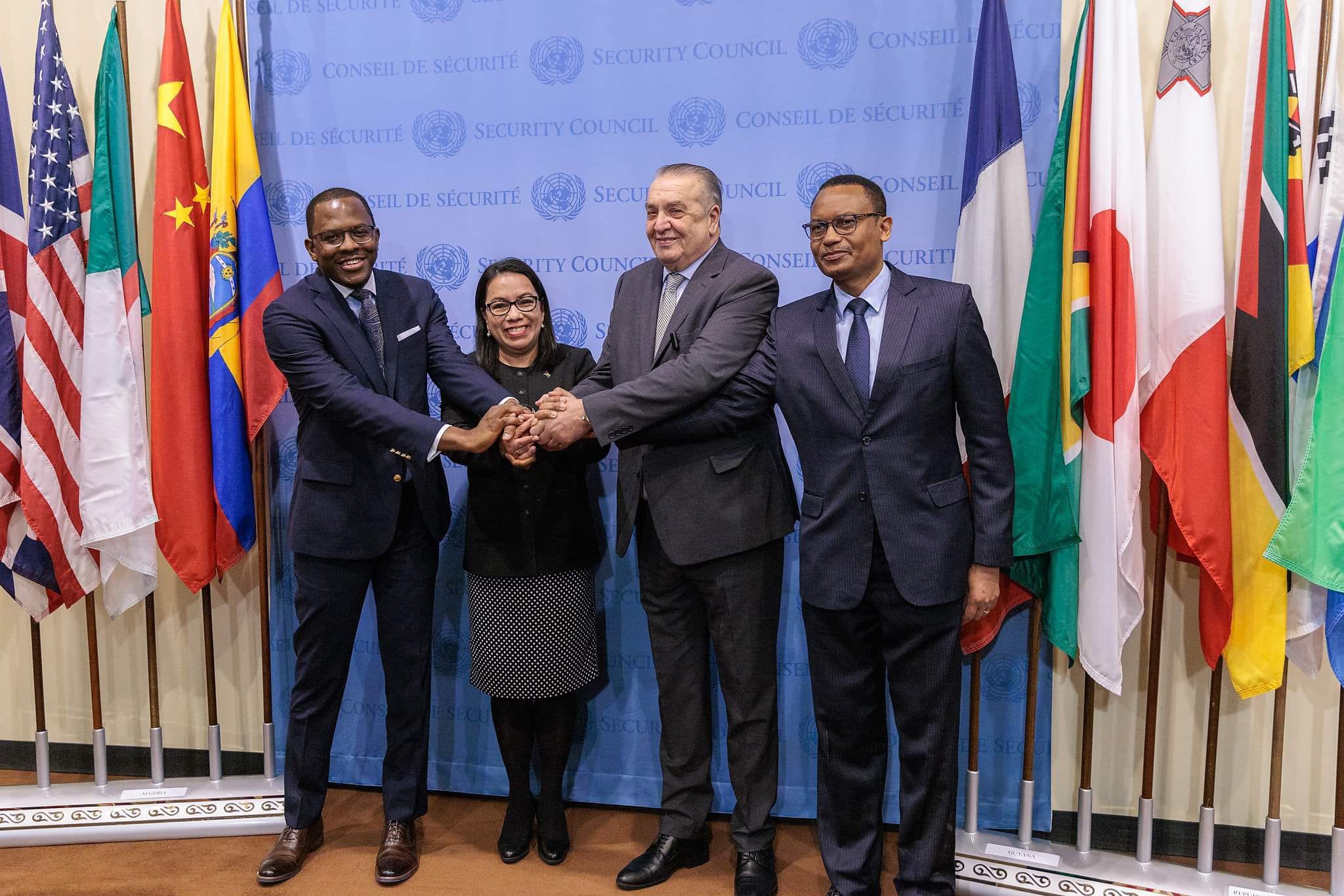
The A3+ group at the United Nations Security Council (comprising Algeria, Somalia, Sierra Leone, and Guyana) reiterated its commitment on Wednesday to achieving a “sustainable, inclusive, and peaceful” resolution to the conflict in Yemen. The group emphasized the necessity of upholding the country’s sovereignty, unity, and territorial integrity.
“The A3+ advocates for a sustainable, inclusive, and peaceful resolution to the conflict in Yemen,” stated Somalia’s UN ambassador, Abukar Dahir Osman, while representing the A3+ during a Security Council session focused on Yemen. He urged “all external actors to respect Yemen’s sovereignty and to refrain from any military escalation,” asserting that it is “essential” to “halt actions that could exacerbate the conflict or undermine hard-won achievements, further worsening the humanitarian crisis.”
The group expressed its “concern” over the ongoing Israeli airstrikes on Yemen and the ramifications of the genocidal Israeli aggression against Gaza, which could “undermine peace efforts and destabilize an already fragile situation.”
In this context, the A3+ asserted that a “permanent and immediate” ceasefire in the Palestinian enclave is “crucial” for lasting peace throughout the region. “We urge all parties to act responsibly and call upon the Security Council to remain united in its support for Yemen’s path toward stability and recovery,” he added.
Reaffirming “the importance of Yemen’s unity, sovereignty, and territorial integrity,” the group expressed its “full support” for the efforts of the United Nations Special Envoy for Yemen, Hans Grundberg. The A3+ called on all Yemeni parties to “resume the political process under the auspices of the United Nations,” emphasizing that “only a political, inclusive, and negotiated settlement can bring lasting peace to Yemen.”
The group also articulated concerns regarding the safety of humanitarian and diplomatic personnel operating in Yemen, as well as food insecurity in the country. Humanitarian needs continue to rise due to the deteriorating economic situation, security issues impacting humanitarian operations, the collapse of essential services, and significant funding shortfalls.
“The delivery of aid must never be politicized or obstructed,” they insisted, demanding “the protection of all humanitarian workers and unfettered access to those in need of assistance.” Noting that “more than half of the Yemeni population relies on humanitarian aid,” the group voiced support for calls for “flexible, increased, and predictable funding for the 2025 Humanitarian Response Plan,” given the severe malnutrition crisis facing the country.
They stressed the “urgency” for the international community to intensify its efforts in supporting Yemen’s recovery. Indeed, the United Nations Office for the Coordination of Humanitarian Affairs (OCHA) warned that as of May 13, the Yemen Humanitarian Response Plan (HRP) for 2025 was only 9% funded, representing “the lowest financial coverage in over a decade.”
In this regard, OCHA reported an “urgent” funding requirement of $1.42 billion to assist 8.8 million people by the end of the year.