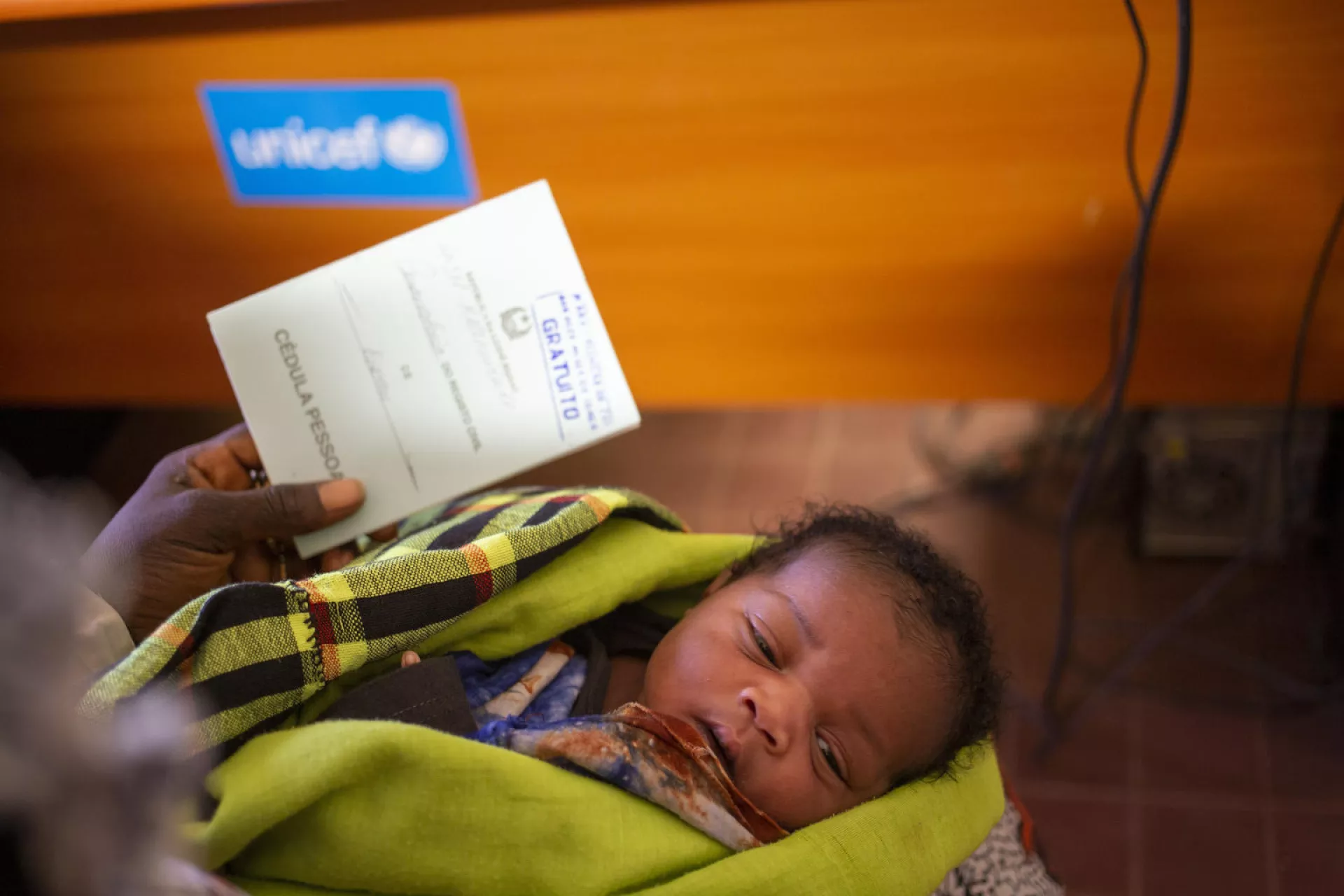
Despite advancements in birth registration in recent years, approximately 150 million children globally remain “invisible,” lacking legal identity and thereby facing increased risks of rights violations, warns UNICEF.
In a report released on Tuesday, the UN agency highlights that 77% of children under the age of five have had their births registered within the last five years, an increase from 75% in 2019.
However, despite this “notable” progress, 150 million children under five years old are still not legally recognized due to lack of registration, and an additional 50 million, although registered, do not possess a birth certificate.
A birth certificate is essential for establishing one’s identity, age, and nationality. These documents are often crucial for accessing healthcare, education, and legal protections, as well as for monitoring violations of children’s rights, such as child labor, early marriage, and the recruitment of minors into armed forces.
“Birth registration ensures children are immediately recognized under the law, providing a foundation for protection from harm and exploitation, as well as access to essential services like vaccines, healthcare, and education,” stated UNICEF Executive Director Catherine Russell.
“Despite progress, too many children remain uncounted and unaccounted for — effectively invisible in the eyes of the government or the law,” she added, urging for “greater efforts to ensure that every child, everywhere, is registered at birth” and receives a birth certificate.
With only 51% of children registered, Sub-Saharan Africa accounts for more than half of the total number of “invisible” children worldwide, estimated at 90 million, according to the report.
Among the key barriers to registration, UNICEF identifies a lack of family awareness regarding administrative processes, insufficient political will, long distances to administrative offices, administrative costs, and, in some regions, discrimination based on gender, ethnicity, or religion.